

Shams Irfan

A journalist with seven years of working experience in Kashmir.
Ballot in India – a platter-full of lies
Arshad Malik
India is hot these days, with mercury jumping degrees with every passing day and the heat of the ongoing elections further firing up the emotional thermodynamics of the nation. In India, like elsewhere in democracies, “election” or the exercise of the right to vote is the highest and most extensive form of civilizational discourse that majorly alters the contours of the nation society. But over the decades, long since India gained independence from the British, elections in this country have attained the character of a gambit, where the initiative of the common man – the citizenry – to exercise the ballot power least attributes to the whole process of electing the so-called “representatives of the masses”. Nowadays, it is more about personal vendettas of political parties who have locked horns over power and less about the pure practice of electing a representative government to power.
India is hot these days, with mercury jumping degrees with every passing day and the heat of the ongoing elections further firing up the emotional thermodynamics of the nation. In India, like elsewhere in democracies, “election” or the exercise of the right to vote is the highest and most extensive form of civilizational discourse that majorly alters the contours of the nation society. But over the decades, long since India gained independence from the British, elections in this country have attained the character of a gambit, where the initiative of the common man – the citizenry – to exercise the ballot power least attributes to the whole process of electing the so-called “representatives of the masses”. Nowadays, it is more about personal vendettas of political parties who have locked horns over power and less about the pure practice of electing a representative government to power.
Frozen in time
Popular Kashmiri serial of 80’s, Hazaar Dastaan depicts the golden era of its lead actor Nazir Josh and of Doordarshan Srinagar. Haroon Mirani analyses...
From paper to glass
CDI is introducing glass painting among Papier Machie artists. Haroon Mirani reports.
Aiming to diversify the skill of Papeir Machie artists in Kashmir. Glass painting is...
Global meltdown and Islamic financial systems
Zamir Ahmed
Now that the dust of the fallen financial empires has settled, the reasons behind this cataclysm have become common knowledge: inadequate discipline in the financial system resulting from the absence of profit and loss sharing (PLS); the mind-boggling expansion in the size of derivatives, particularly Credit Default Swaps (CDS); and the belief of the banks that central banks will come to their rescue.
Excessive and irrational usage of derivatives was the prime cause of this multi-faceted crisis. Derivatives are financial instruments that allow the transfer of risk about the value of the underlying asset from one party to another. George Soros—of the South Asian Crisis fame—calls them Hydrogen Bombs while as Warren Buffet, the famous investor and businessman, has named them financial ‘Weapons of Mass Destruction’.
Now that the dust of the fallen financial empires has settled, the reasons behind this cataclysm have become common knowledge: inadequate discipline in the financial system resulting from the absence of profit and loss sharing (PLS); the mind-boggling expansion in the size of derivatives, particularly Credit Default Swaps (CDS); and the belief of the banks that central banks will come to their rescue.
Excessive and irrational usage of derivatives was the prime cause of this multi-faceted crisis. Derivatives are financial instruments that allow the transfer of risk about the value of the underlying asset from one party to another. George Soros—of the South Asian Crisis fame—calls them Hydrogen Bombs while as Warren Buffet, the famous investor and businessman, has named them financial ‘Weapons of Mass Destruction’.
Rather Readies For Budget
With the parliamentary polls over, J&K government has started resuming normal activity. On top of the agenda is the state budget that government is planning to present formally for seven months of the fiscal 2009-10.
To begin with, sources said, finance minister Abdul Rahim Rather will have detailed interactions with trade leaders, industry chieftains and individuals with know how of the subject. “The government has some hard ideas in mind and they would be laid on the table as part of the budget,” a source informed.
To begin with, sources said, finance minister Abdul Rahim Rather will have detailed interactions with trade leaders, industry chieftains and individuals with know how of the subject. “The government has some hard ideas in mind and they would be laid on the table as part of the budget,” a source informed.
Living the IPL dream
At 19, Parvez Rasool Zargar is already aiming to play in the Indian Premier League - his failure this year seems no setback. Hamidullah...
In the name of Manmohan Singh
Naeem Akhtar
Irrespective of the results that must be out by now, one fact came out clearly in the just concluded Lok Sabha elections. That is the complete ideological bankruptcy of National Conference and its near total dysfunction as the premier political organisation of the state.
There was not a single issue of substance the ruling party touched in its campaign. After having declared in the wake of his personal setback in January this year at the hands of his son, Farooq Abdullah was asked as to what would happen to the Autonomy proposal of his party. Farooq who can be brutally honest at times made a plain declaration. The newspapers reported him as saying “it will go with me to my grave”.
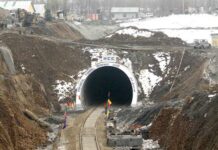
Connectivity postponed
While the Northern Railways is adding one more train on the isolated track connecting south Kashmir and north Kashmir, the larger and ambitious proposal...
Srinagar
Srinagar district, after the creation of new districts that carved district Ganderbal in its vicinity, comprises of only two tehsils – Srinagar North and Srinagar South, divided by river Jhelum. Srinagar North is the portion falling on the right side of river Jehlum while Srinagar South comprises of the area falling on the left side of the river.
It is said that emperor Ashoka laid the foundation of his capital of the region near the present Srinagar city and named it ‘Srinagari’. Various rulers from time to time changed their capitals from place to place in the neighborhood and gave their own names to the city. In 1223 A D, famous ruler Sadru-din-Rinchan Shah named the city as Rinchanpora. Ultimately, the original name Srinagar was restored and it continues to be called by that name ever since.
It is said that emperor Ashoka laid the foundation of his capital of the region near the present Srinagar city and named it ‘Srinagari’. Various rulers from time to time changed their capitals from place to place in the neighborhood and gave their own names to the city. In 1223 A D, famous ruler Sadru-din-Rinchan Shah named the city as Rinchanpora. Ultimately, the original name Srinagar was restored and it continues to be called by that name ever since.
Engineering social help
After setting up one of the best managed orphanages in Kashmir, Dr Rouf Mohi-ud-Din Malik is now exploring alternatives to orphanages. Shazia Khan narrates...
Newsmakers
LISTED: Kashmir has been listed as the “largest militarized territorial dispute” of the planet by the Guinness world book of records. The record book...
Perseverance pays, even if at last
Zamir Ahmed
Quffal Shasi was a reputed jurist in the times of Caliph Haroon Rashid. But before that, he was a skilled locksmith who...
Mufti Mohammad Sayeed
Former Chief Minister and Peoples Democratic Party patron Mufti Mohammad Sayeed joined the boycott league as he desisted from
Birth pangs
In a civil society that has an extraordinarily high sense of ethnic, class and nationality issues,
Women in cross fire
In a seminar on Women’s day at Gandhi Bhawan in Kashmir University, I got the opportunity to examine the problems of the women from the perspective of patriarchy and gender bias as built in the idea of nation when some women activists working at grassroots level shared their experiences in the one day seminar.




