SRINAGAR: A book focusing on diabetes prevention and management in the regional context of Kashmir was released during an academic and awareness programme organised to mark World Diabetes Day 2026, with medical experts stressing the need for locally relevant research, public awareness and lifestyle changes to address the growing burden of the disease.
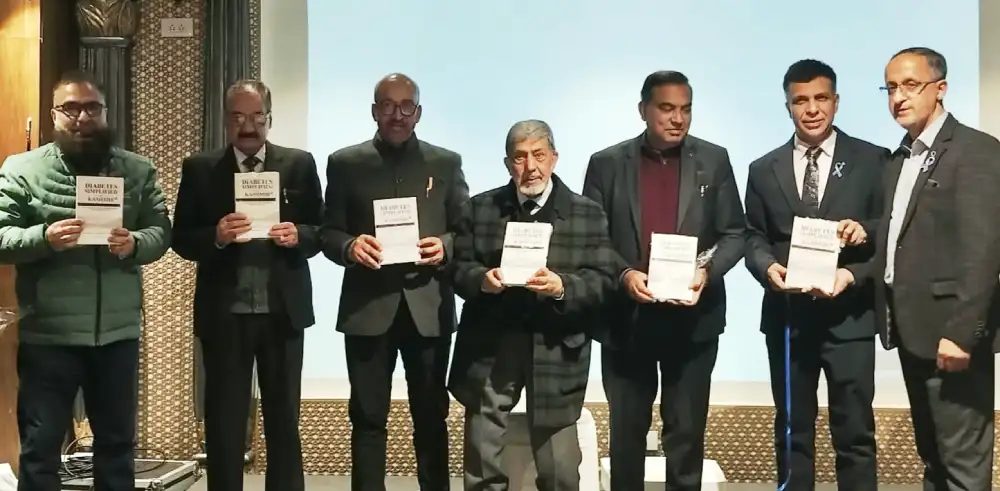
Titled Diabetes Simplified for Kashmir, the book has been jointly authored by Dr Shahnawaz Mir, Associate Professor in the Department of Endocrinology at Government Medical College (GMC), Srinagar; Dr Nasir Shamas, Consultant Physician and Head of Unit at JLNM Hospital; and Prof M. Hayat Bhat, Head of the Department of Endocrinology at GMC Srinagar.
The publication examines diabetes in the context of Kashmir’s dietary habits, cultural practices, food preferences and lifestyle patterns. It also offers practical, evidence-based recommendations for prevention and management, aiming to make medical knowledge more accessible to the local population.
The programme began with an introductory address by Dr M. Hayat Bhat, who highlighted the significance of World Diabetes Day.
Prof Abdul Hamid Zargar, former Director of SKIMS, delivered the Lecture of Excellence, discussing the regional diabetes scenario, emerging challenges and research contributions made over the past three decades. He emphasised the importance of locally relevant research and evidence-based interventions.
The book was formally released by a panel comprising Prof Ab Wahid, Prof Salim Khan, Prof Shariq Masoodi, Prof Nazir Mushtaq, Saleem Beigh and Prof A.R. Nasti. The panel members highlighted the role of region-specific publications in improving health literacy and raising awareness by addressing local dietary and cultural realities.
The event also focused on dietary choices and physical activity as important components of diabetes prevention and management. Participants were introduced to ‘Sugar Cut Rice’, a low-glycaemic-index rice initiative by Aadil Jeelani, as an example of efforts to explore healthier food alternatives.
A walking guidebook titled Five Miles, authored by Dr Nasir Shamas, was also distributed. The publication encourages daily walking and physical fitness through routes along Kashmir’s heritage sites.
In his vote of thanks, Dr Shahnawaz Mir acknowledged the contribution of teachers, students, patients, researchers and others who supported the book project.
Doctors, researchers, writers, historians, journalists, dieticians, students, conservationists, innovators and entrepreneurs attended the programme.
The event concluded with a call for sustained community awareness, culturally appropriate dietary choices, regular physical activity, research and public participation alongside medical treatment to address diabetes in Kashmir.