DELHI
For months, residents across south Kashmir lived with quiet dread as proposed railway lines through Shopian and Pahalgam threatened to cut through orchards that sustain thousands of families. Dinner conversations revolved around land loss, felled trees and uncertain compensation. Survey teams arrived unannounced, planting yellow poles across apple fields and even courtyards, often without clear documents or explanations. Farmers feared that a 100-foot-wide alignment could wipe out decades of investment, leaving fragmented land and livelihoods in ruin.
Apple orchards here are more than crops; they are income, savings and inheritance. Trees take years to mature, and no compensation could replace lost time. From Shopian to Pulwama and Anantnag, growers, hoteliers and labourers worried about survival. Protests grew, committees formed, and political parties demanded a rethink, citing the absence of social and environmental assessments.
Relief came abruptly when the Union Railway Minister announced the projects were on hold due to potential damage to horticulture. Anxiety eased, routine returned, and farmers resumed tending their trees. For now, the tracks have paused, and the orchards breathe again.
The Centre has allocated Rs 9,925.50 crore for Jammu and Kashmir Police in the current budget, a 16% rise from last year, aimed at addressing security challenges and bolstering policing capacity.
UNITED STATES
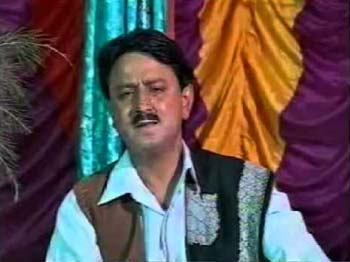
Arfat Sheikh, a Srinagar-born filmmaker and son of legendary Kashmiri singer Ghulam Nabi Sheikh, turned to cinema to reclaim his people’s narrative after his father’s enforced disappearance in 2003 and the media’s speculative reporting denied the family dignity and truth. After studying in the UK and later moving to the US, Arfat committed himself to telling overlooked stories from Kashmir, which were reported in the last 35 years. His debut film, Saffron Kingdom, emerged from years of research, cross-border interviews, and discreet filming, largely outside Kashmir due to political sensitivities. The film centres on a half-widow and her son, using women’s experiences to portray the human cost of the crisis. Arfat describes the project as a collective expression of Kashmiri grief rather than a personal story. Critical of Bollywood’s stereotypical portrayals, he aims to humanise Kashmiris and foreground suppressed histories, with plans to screen the film widely and continue documenting marginalised communities.
For 2025-26, Jammu and Kashmir’s GSDP is estimated at Rs 1.50 lakh crore, and the per capita income is at Rs1,68,243.
PUGA VALLEY
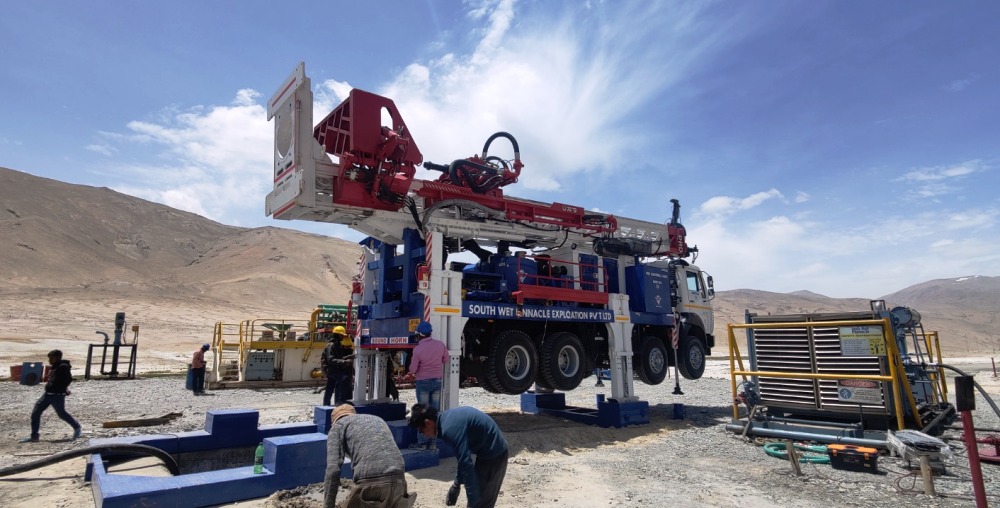
Seros, India’s largest integrated energy services company, is close to completing the country’s first geothermal resource-mapping well in Ladakh’s Puga Valley, marking a key step toward tapping geothermal power. Drilling, begun in 2024 within a brief summer window, is set to reach 900-1,000 metres despite extreme terrain and high-altitude challenges. Executed with the ONGC Energy Centre, the project aims to demonstrate round-the-clock, low-emission baseload power using binary cycle technology. With temperatures above 200°C and an initial 10 MW potential, the initiative could diversify India’s clean energy mix and unlock an estimated 10 GW geothermal capacity nationwide.
Consumer complaints in Jammu and Kashmir were negligible until 2022 but rose steadily, surging to 317 filings in 2025, according to official Ministry data.
SRINAGAR
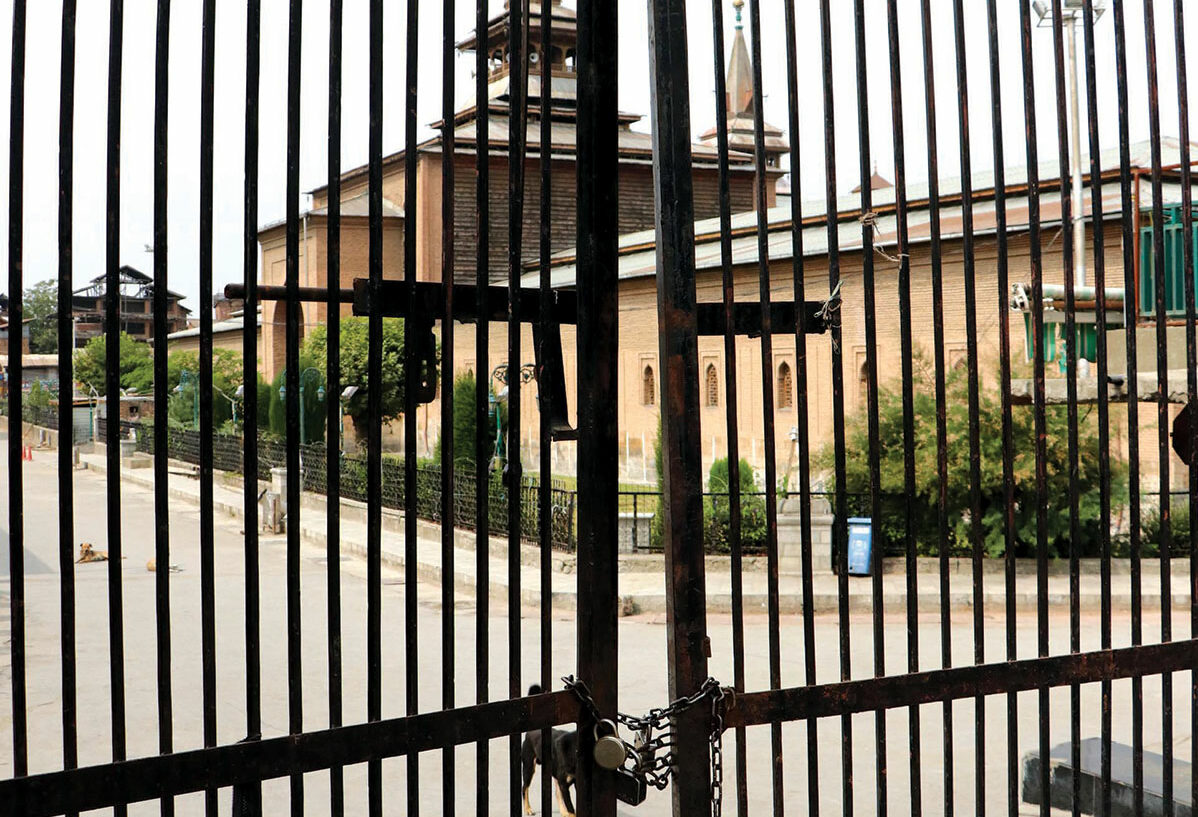
Authorities barred congregational Shab-e-Baraat prayers at Srinagar’s Jamia Masjid, keeping the historic mosque shut and placing Mirwaiz Umar Farooq under house detention. The Anjuman Auqaf said police denied permission and ordered closure, continuing a pattern since 2019 that prevents major religious gatherings and raises questions over claims of normalcy.
Jammu and Kashmir reported 7,151 missing persons in 2023, with 4,190 still untraced by year-end despite police recoveries, MHA data shows.
ANDRA PRADESH
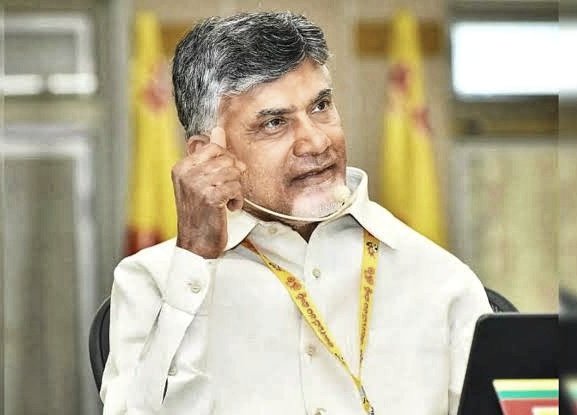
Andhra Pradesh Chief Minister N Chandrababu Naidu has proposed large-scale saffron cultivation in Lambasingi, dubbed the Kashmir of the South, through a public-private partnership model, inviting entrepreneurs, agriculture firms, and private investors. The government will offer incentives, land allotments, licences, and logistical support, with prior consultations and consent from local tribal communities. Several companies have already expressed interest. Alongside saffron, Naidu announced plans for a 500-acre Cocoa City in Eluru to integrate cultivation, processing, and marketing. The state aims to promote natural farming, reduce chemical fertilisers, ensure certification and traceability, and expand Andhra Pradesh’s agricultural exports to national and international markets.
Jammu and Kashmir recorded 11,950 tuberculosis cases in 2025, according to Health Ministry data
JAMMU
Leader of Opposition and BJP MLA Sunil Sharma triggered uproar in the Jammu and Kashmir Assembly by rejecting the term “Pir Panjal region” for Rajouri and Poonch, asserting that no such official region exists and that the Union Territory remains a single, undivided entity. His remarks, made during an interview and reiterated to reporters, sparked protests from MLAs of the twin border districts, who demanded an apology, calling his comments disrespectful to the area’s identity and sacrifices. The region has been an erstwhile state like Jammu and Kashmir.
The dispute led to noisy scenes, slogan-shouting and verbal clashes between BJP and ruling alliance members, forcing Speaker Abdul Rahim Rather to adjourn the House. While BJP MLAs backed Sharma, legislators from Rajouri and Poonch staged protests inside and outside the Assembly.
Sharma defended his stance, citing historical and Puranic references that described the area as Chandrabhaga, and accused parties of promoting separate regional identities for political gain. He maintained that any official nomenclature or reorganisation must come formally from the government, warning against divisions that could fragment Jammu and Kashmir’s unity.
Jammu and Kashmir recorded 604 HIV/AIDS deaths between 2020–24, while people living with HIV rose from 3,806 to 4,577, with 174–284 new infections annually, official data shows.
LADAKH
The Union Home Ministry’s High Powered Committee meeting on Ladakh, held in New Delhi after over three months, ended without resolution. Representatives of the Leh Apex Body and Kargil Democratic Alliance reiterated demands for full statehood and Sixth Schedule status, citing protection of land, jobs, culture and tribal rights. Officials offered safeguards under Article 371 and stronger Hill Councils, but differences persisted. Leaders also sought the release of detained activist Sonam Wangchuk and others. With no consensus, both sides agreed to reconvene within 15–20 days for further discussions.
Water-borne disease cases in Jammu and Kashmir rose from 54,990 in 2021 to a peak of 81,002 in 2024, before easing slightly to 78,300 in 2025.
KANGRA
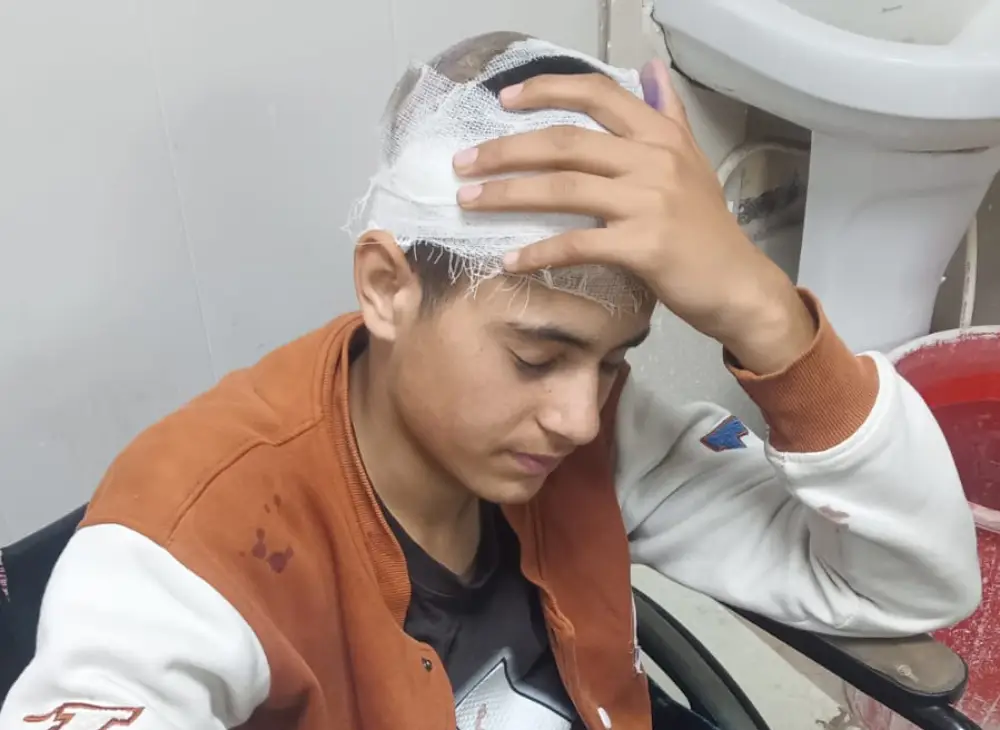
A Kashmiri shawl seller was allegedly harassed and assaulted in Himachal Pradesh’s Kangra district, days after two traders from the Valley were attacked in Uttarakhand, heightening concerns over the safety of non-local vendors. The victim, Mohammad Ramzan, was reportedly stopped, questioned about his identity, and asked to prove his citizenship before his merchandise was searched. He was mockingly accused of carrying weapons instead of shawls and later assaulted. Community representatives said the accused had been linked to multiple similar incidents targeting Kashmiri traders in recent weeks, describing a pattern of intimidation and threats. They alleged that complaints often fail to translate into strong legal action, with few FIRs registered. The episode follows the recent assault on two Kashmiri brothers in Uttarakhand, where police arrested the main accused after an FIR. Repeated incidents across northern states have triggered anxiety among Kashmiri traders and students working outside the region, prompting calls for stronger protection and swift enforcement action.
Farmers in Jammu and Kashmir filed Rs 122.52 crore in PMFBY crop insurance claims over five years, with Rs 120.28 crore settled and Rs 2.24 crore pending, the Centre informed Parliament.
KOTA
Police in Rajasthan’s Kota have arrested two Jammu and Kashmir residents and detained three others over suspected irregularities linked to collecting donations for madrassas. The three detainees, from Poonch district, were picked up while seeking contributions and are being questioned to verify their purpose and credentials, with checks underway in Jammu and Kashmir. Earlier, two other men from the same district were arrested and jailed for allegedly disturbing the peace. Police said one was authorised to collect funds only in Madhya Pradesh, while the other represented a madrassa that had already closed.
HYDERABAD
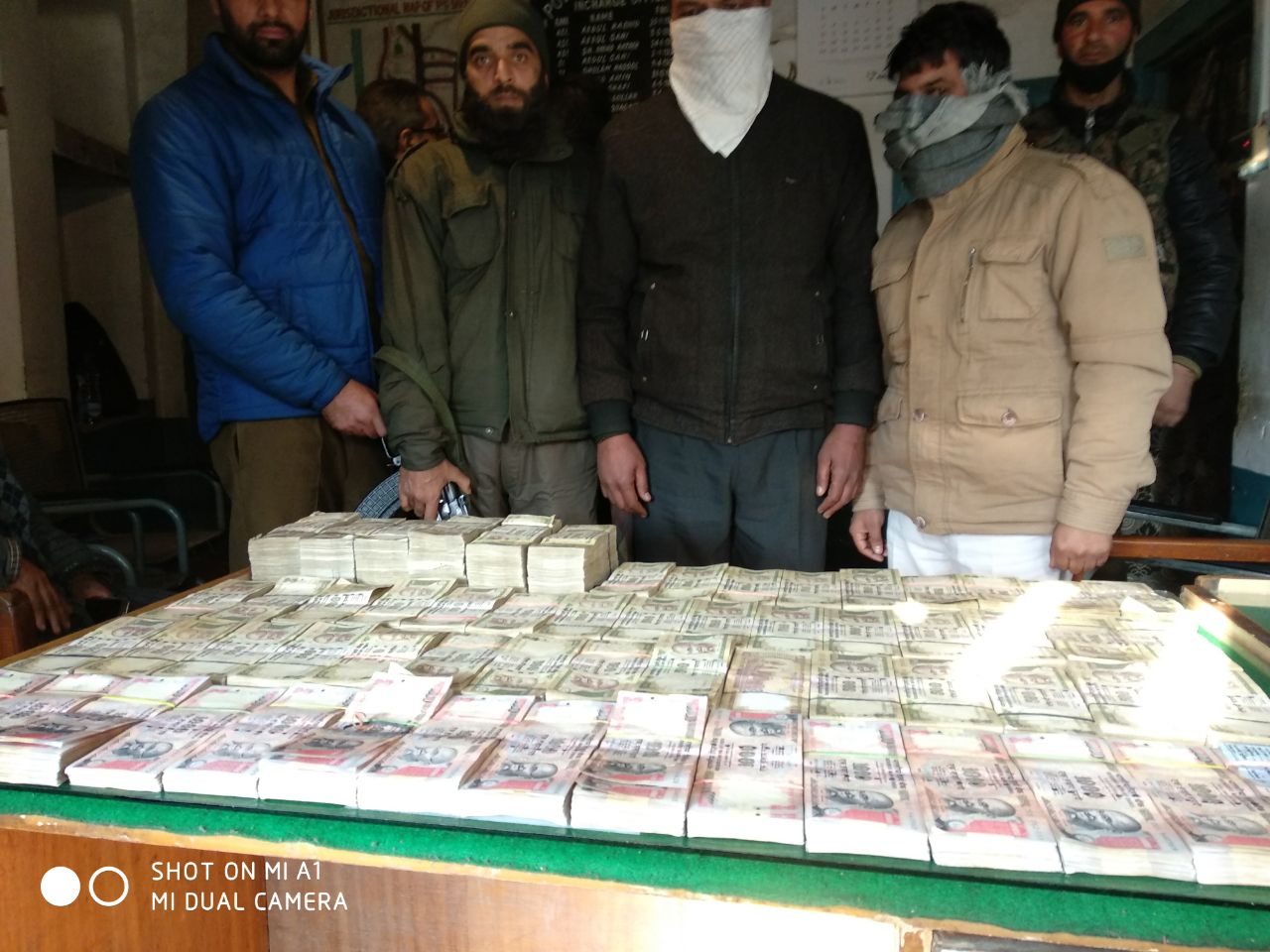 Jammu Police have filed a chargesheet against six accused, including a serving sub-inspector, in a Rs 3 crore cheating and fraud case involving fake Kashmir blue sapphires. The group allegedly duped a Hyderabad-based businessman by posing as agents of a self-styled “Raja of Jammu” and claiming to sell rare royal gemstones. Investigators uncovered a broader conspiracy and seized fake stones, forged documents and other incriminating material during searches. Police recovered Rs 62 lakh and returned it to the complainant. Properties allegedly bought with the proceeds have been identified, and attachment proceedings initiated under Section 107 BNSS.
JAMMU KASHMIR
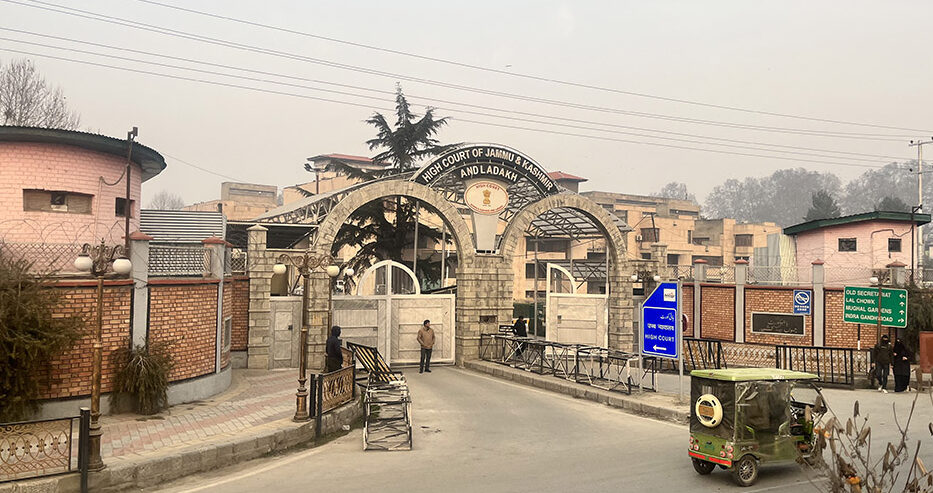
The Jammu and Kashmir and Ladakh High Court has upheld a trial court order directing authorities to release all pension and retiral benefits, along with arrears, to retired employee Gulzar Ahmad Khan within two months, ruling that the government cannot question an employee’s appointment after permitting him to serve for over two decades. Chief Justice Arun Palli and Justice Rajnesh Oswal observed that Khan worked nearly 25 years without any departmental or judicial proceedings and retired honourably, making the benefits earned through “long service,” not “charity.” The court rejected the state’s claim that his 1999 appointment and 2007 regularisation were illegal, noting no timely action or chargesheet despite an ongoing probe. The bench ordered 6% annual interest on all dues from the date of entitlement until payment, stating that belated challenges to service status are untenable.
KASHMIR

The Marylebone Cricket Club’s decision to permit hybrid cricket bats in amateur play, amid soaring English willow costs, has triggered concern among Kashmir’s bat makers, who fear the move will erode the identity and global standing of pure Kashmir willow. The laminated bats, combining an English willow face with cheaper woods like Kashmir willow, aim to cut costs, but manufacturers say they compromise quality and authenticity. Industry bodies, including the Kashmir Cricket Bat Association, have refused to produce hybrids, arguing 100 per cent Kashmir willow bats, priced around Rs 12,000 versus Rs 1.75 lakh for English willow, are durable, affordable and already used by dozens of international players.