SRINAGAR: The Jammu and Kashmir government has formally ended the trade chapter at Salamabad by handing over the Cross-LoC Trade Facilitation Centre in Uri to the Tourism Department, paving the way for the long-shut facility to be repurposed for border tourism.
The facility had remained deserted since cross-LoC trade was suspended in April 2019. The latest administrative decision gives the sprawling complex a new institutional purpose, with the Tourism Department planning to use its existing infrastructure to promote tourism in the Uri border belt.
The Trade Facilitation Centre at Salamabad was established to regulate duty-free, cashless barter trade between the two sides of the Line of Control. Unlike conventional international commerce, transactions were conducted through the exchange of goods of equivalent value without banking channels or foreign exchange. Twenty-one mutually agreed commodities, including apples, dry fruits, handicrafts and textiles, were traded through the facility.
Cross-LoC trade began in October 2008, following the launch of the Srinagar-Muzaffarabad bus service in 2005. Both initiatives were conceived as confidence-building measures aimed at reconnecting the divided parts of Jammu and Kashmir. The trade continued for 11 years before being suspended in April 2019.
A Tourism Department official said the government was formally taking over the Salamabad facility and intended to involve private operators in its tourism plans.
“We are formally taking over the facility at Salamabad and will use it for tourism. We are planning to outsource it to create jobs and livelihoods for local youth and make them partners in promoting border tourism,” the official said.
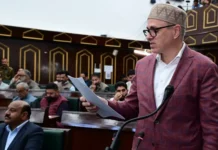
The move has been welcomed by Uri MLA Dr Sajad Shafi, who said the conversion could put Uri more prominently on Jammu and Kashmir’s tourism map and generate employment for residents affected by the cessation of cross-LoC trade.
“The trade facility was defunct since the suspension of trade in 2019. I thank Chief Minister Omar Abdullah and the government for taking this decision and handing over the facility to the Tourism Department for promotion of border tourism,” Shafi said.
Shafi said the Salamabad complex already possessed infrastructure that could be used by tourists, including accommodation, while the wider Uri area had considerable tourism potential.
The facility itself now bears the physical marks of its years of disuse. Cargo halls have deteriorated, the weighbridge has fallen into disrepair, and dust covers machinery that once handled goods moving between the two sides. A weathered sign identifying a “P.O.K. Drivers’ Rest Room” remains at the site.
The Tourism Department is expected to assess the existing infrastructure, including rooms, a cafeteria, a park and a viewpoint, and determine how these can be adapted for visitors. The proposed tourism focus includes border tourism and designated viewpoints along the Line of Control.
For Uri, the Salamabad complex carries significance beyond its commercial history. Abdul Ahad, former general secretary of trade in Uri, described the area as part of the historic Jhelum Valley Road, portions of which now lie across the Line of Control.
“This is a heritage road, which used to be called the Jhelum Valley Road. Some part of that went to PoK, and to reconnect that, trade used to take place and this place was abuzz. This is a positive thought to convert it into a tourism place,” Ahad said.
The cross-LoC trading system was ultimately brought to a halt amid security concerns. The Government of India cited alleged misuse of the routes for illegal activities, including the movement of weapons, narcotics and counterfeit currency. The suspension followed the February 2019 Pulwama terror attack, in which 40 CRPF personnel were killed.
The closure of the trade facility comes seven years after the trucks stopped moving through Salamabad. During that period, the buildings and infrastructure remained in place even as the commercial system they were designed to support did not resume.
The site will now acquire a different identity. Infrastructure once built around the movement of permitted goods across the Line of Control is being repositioned for visitors, sightseeing and border tourism.
For nearly two decades, Salamabad had been associated with one of the most distinctive confidence-building measures between the two sides of divided Jammu and Kashmir. Its transition to a tourism facility marks a formal change in that role: the trade centre remains physically intact, but its intended function has moved from cross-LoC commerce to tourism.