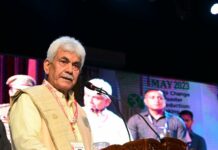
SRINAGAR: Peoples Democratic Party (PDP) leader Waheed-ur-Rehman Para on Friday called for a major administrative restructuring of Jammu and Kashmir, stressing the need for new divisions and districts to strengthen grassroots governance and decentralisation.
Speaking to Kashmir Life, the MLA said several regions, particularly Chenab Valley and Pir Panjal, remain far from their respective divisional headquarters, forcing residents to travel long distances—up to 300 km in some cases—for administrative work. He said areas such as Rajouri, Doda, Arnas, Dachhan and Tangdar require better administrative representation.
Para argued that governance structures should be brought closer to the people, especially in hilly and border areas. “If senior officials can be stationed in remote regions for security purposes, there is no reason why civil administration cannot be decentralised. People should not have to travel such long distances for basic services,” he said.
He clarified that the demand is not about dividing Jammu and Kashmir, but about improving administrative efficiency and accessibility. “The focus is on decentralisation and grassroots governance. Regions like Chenab are distant and face difficulties. Creating a division in Rajouri would benefit the wider area,” he added.
Highlighting public inconvenience, Para said decentralisation would significantly improve access to government services. He proposed separate divisions for Chenab Valley and Pir Panjal, along with the creation of new districts, including one in Ashmuqam to manage yatra-related activities.
He also noted that areas such as Sopore, Handwara and Tral already function as police districts and should be granted full administrative status.
Para further said that if required, delimitation could be undertaken to increase the number of Assembly and Lok Sabha seats in line with administrative changes.
“This is not a one-time event but an ongoing process. The discussion on administrative decentralisation in Jammu and Kashmir has begun with the aim of ensuring better governance at the grassroots level,” he said.