SRINAGAR: The use of heavy machinery near Sheshnag Lake in south Kashmir has sparked concerns over the potential impact of excavation and construction activities on the fragile Himalayan ecosystem, with environmental activists and political leaders calling attention to the area’s ecological and religious significance.
The issue came into focus after a video showing a crawler excavator operating near the lake circulated widely on social media on Sunday. The footage was initially shared by a JCB operator but was later removed from his social media accounts following objections from residents.
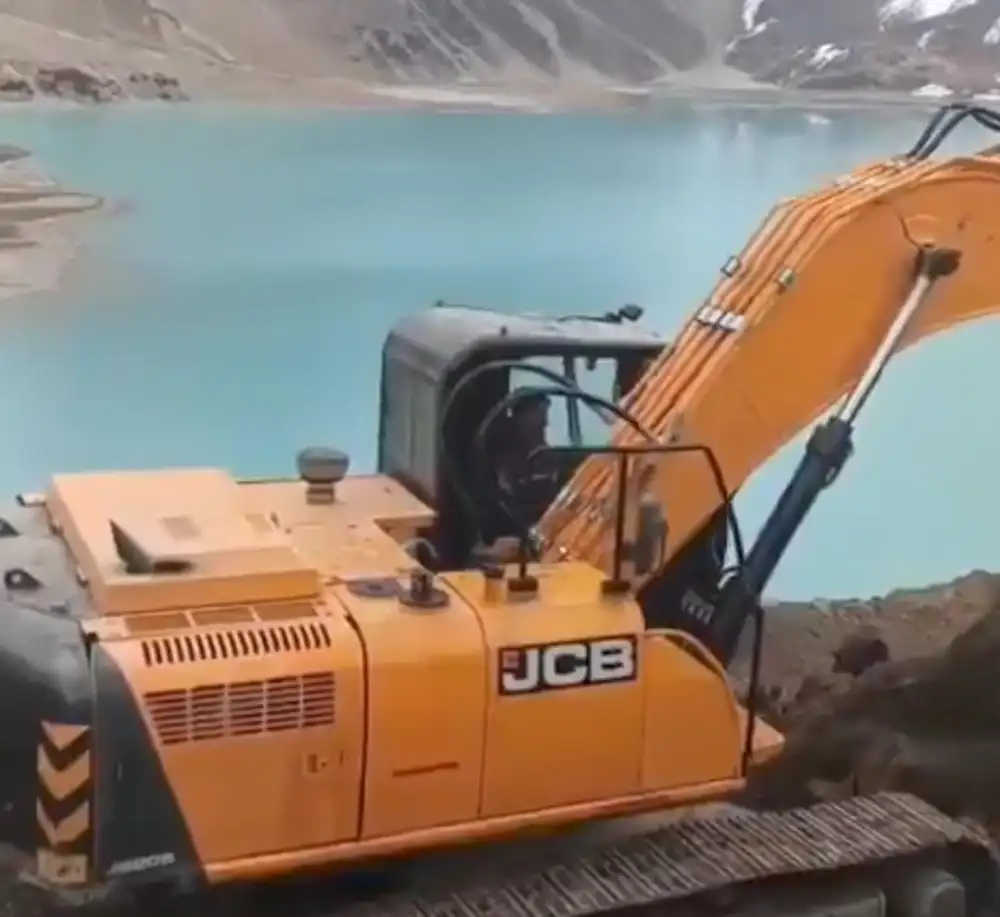
Climate activist Raja Muzaffar Bhat questioned the deployment of heavy equipment in the glacier region. In a post on X, he expressed concern over how such machinery had reached Kashmir’s ecologically sensitive high-altitude areas.
What is all this ? Can anyone update ?
— Dr Raja Muzaffar Bhat (@rtimuzaffar) November 22, 2026
Peoples Democratic Party (PDP) leader Mohit Bhan also criticised the activity, describing it as an affront to Hindu religious beliefs and the sanctity of nature.
In his post on X, Bhan highlighted the religious significance of Sheshnag, saying Hindu belief associates the place with Lord Shiva leaving behind the serpents before proceeding towards the Amarnath Cave to narrate the Amar Katha to Goddess Parvati.
A Crime Against Hinduism and Faith in Nature.
Sheshnag is not just another lake in the mountains of Kashmir. In Hinduism , it is the sacred landscape where Lord Shiva is believed to have left behind the serpents before proceeding towards the Amarnath Cave to narrate the Amar Katha to Goddess Parvati.
For generations, Hinduism has revered rivers, springs, lakes and mountains as sacred manifestations of nature. There is a profound contradiction in invoking Hindu faith while allowing the very landscape associated with that faith to be disturbed through unnecessary construction, road cutting and surface levelling.
What is being projected as development must not come at the cost of a fragile alpine ecosystem and a landscape deeply embedded in Hindu religious belief. Faith and ecology are not competing interests. Both demand protection.
You cannot celebrate the sanctity of a pilgrimage while disregarding the sanctity of the landscape through which it passes. If we cannot respect Sacred Sheshnag, what exactly are we preserving in the name of the Amarnath Yatra?
— Mohit Bhan ( موہت بھان ) (@buttkout) November 23, 2026
He argued that construction, road cutting and surface levelling in the area contradicted the traditional reverence for rivers, lakes, springs and mountains in Hinduism.
Bhan said development activities should not undermine the fragile alpine environment or the religious significance of the landscape, maintaining that protecting the natural ecosystem and preserving the sanctity of the pilgrimage route were equally important.
Mirwaiz Umar Farooq, Kashmir’s chief cleric, also expressed concern over the deployment of heavy machinery near the lake.
The visuals and reports of heavy machinery operating near the pristine Sheshnag Lake, in the glacial zone of Pahalgam are very disturbing, raising serious concern among people about the ecological impact of construction in this fragile Himalayan region. With our glaciers already retreating, and recent devastating glacier-related floods in neighbouring Nepal reminding us of the growing vulnerability of the Himalayas, such activities raise alarm.
Kashmir has always warmly welcomed Amarnath Yatra pilgrims, and improving facilities for them has never been an issue. But not at the cost of our fragile ecosystem.
Those governing owe answers to people for the serious environmental concerns created by such “developmental projects”!
Our precious mountains, glaciers and water bodies need protection not plunder, for now and for the future generations. So this must be immediately stopped.
— Mirwaiz Umar Farooq (@MirwaizKashmir) November 23, 2026
Sheshnag is among 14 high-risk glacial lakes identified across Jammu and Kashmir. Authorities have previously conducted expeditions to vulnerable lakes, including Sheshnag, to assess their susceptibility to potential hazards and strengthen preparedness.
The development has renewed concerns over the environmental consequences of infrastructure activities in the Himalayan region, particularly around ecologically sensitive locations along the Amarnath pilgrimage route.