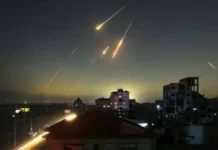
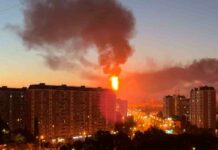
Houthi military spokesperson Yahya Saree said the targets included Aramco facilities in Riyadh and Khurais, King Khalid International Airport in Riyadh, a Saudi National Guard camp in the Najran region and military positions along both sides of the Saudi-Yemeni border.
In a statement posted on X, Saree said the operations involved ballistic missiles, cruise missiles and unmanned aerial vehicles. He claimed that strikes on the airport, oil storage tanks and an Aramco distillation tower in Riyadh, as well as installations in Khurais and Pumping Station No. 8 in Dawadmi, had achieved their intended objectives.
He further claimed that attacks on Saudi troop concentrations at the National Guard camp in Najran and military positions in Yemen’s Al-Jawf and Marib governorates had resulted in several casualties.
Saudi Arabia had not immediately confirmed the reported attacks or provided details of any damage.
Saree described the operations as retaliation for Saudi airstrikes on Al-Hadara Market in the Al-Wazi’iyah district of Taiz province on Friday. He alleged that the strikes killed and injured dozens of civilians, including traders and shoppers.
He also accused Saudi forces of targeting residential properties in Bani Hashish district, claiming that dozens of people, mostly women and children, were killed or wounded and at least six houses destroyed. These allegations could not be independently verified.
Meanwhile, Saudi Arabia’s Civil Defense issued an alert on Saturday warning of a possible threat in the Najran region. A subsequent update, issued around 10 minutes later, said the danger had passed.
Separately, at least 25 people were killed and 30 others injured in airstrikes on houses in a village near Yemen’s capital, Sanaa, earlier on Saturday, according to a spokesperson for the Houthi-run Health Ministry, cited by the Associated Press. Most of the reported casualties were women and children.
The spokesperson blamed Saudi Arabia for the strikes in Al-Shariya, although the allegation could not be independently verified.
The latest developments come amid renewed hostilities in Yemen’s protracted civil war following the collapse of a years-long truce over the summer.
The conflict involves the Iran-backed Houthis, who control Sanaa and large parts of northern and western Yemen, and forces backed by Saudi Arabia that support the internationally recognised government, which is based in the country’s south and east.