SRINAGAR: Israel is facing an unprecedented political and diplomatic crisis, with Arab parties emerging as potential kingmakers in government formation following a fractured parliamentary election. It is happening at a time when the country confronts the prospect of an abrupt withdrawal of billions of dollars in annual US military assistance.

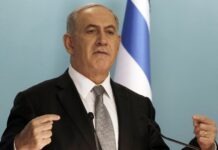
The twin developments have placed Prime Minister Benjamin Netanyahu under mounting pressure, threatening both his political future at home and Israel’s traditionally privileged relationship with Washington.
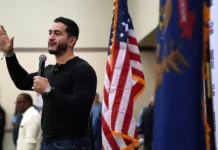
In the October 27 parliamentary elections, neither Netanyahu’s right-wing coalition nor the opposition alliance led by former military chief Gadi Eisenkot secured the 61 seats required for a majority in the 120-member Knesset. Netanyahu’s right-wing and ultra-Orthodox alliance won 53 seats, while Eisenkot’s broader opposition grouping secured 48.
The decisive shift came from Israel’s Arab electorate. Two Arab-led political formations, the United Arab List (Ra’am) and the Joint List, together won 19 seats, an unprecedented parliamentary strength that has transformed them into potential kingmakers.
Ra’am secured eight seats, while the Joint List, comprising Hadash, Ta’al and Balad, won 11. Their combined support could take Eisenkot’s parliamentary backing to 67, comfortably above the majority threshold.
According to reports in The Times of Israel, both Arab formations have endorsed Eisenkot’s bid to form the next government, although he and his allies have historically resisted relying on Arab parties for political survival.
President Isaac Herzog, who has held consultations with political parties, is expected to announce on Sunday, November 8, whom he will invite to form the government. While 67 lawmakers have recommended Eisenkot, Netanyahu has received recommendations from 46. The difference reflects the refusal of the ultra-Orthodox United Torah Judaism party to endorse a candidate.
Eisenkot now faces a difficult political choice. Accepting Arab support could give him the numbers to dislodge Netanyahu, but it would also expose divisions within his own alliance, particularly among right-wing leaders who have campaigned against any government dependent on Arab parties.
The political dilemma is particularly significant because the Arab parties themselves have different priorities. Ra’am, led by Mansour Abbas, has demonstrated a willingness to participate in Israeli governing coalitions in return for improvements in the socioeconomic conditions of Arab communities. The Joint List, meanwhile, has placed greater emphasis on Palestinian national rights, social justice and opposition to Israeli policies in the occupied territories.
Eisenkot has laid down conditions for joining his prospective government, including recognition of Israel as a Jewish, democratic, liberal and equal state, universal national or civilian service, and dismantling Hamas’s military and governing capabilities in Gaza. These positions could complicate negotiations with the Arab formations.
The other possibilities include securing outside support from ultra-Orthodox lawmakers or a national unity arrangement involving Netanyahu. Neither option appears straightforward. The ultra-Orthodox parties are demanding preservation of military-service exemptions for religious students, while Eisenkot has insisted on universal national service. He has also repeatedly ruled out serving under Netanyahu.
The electoral deadlock has acquired an additional dimension with an unexpected announcement from US President Donald Trump that Washington intends to terminate its annual military assistance to Israel by the end of 2026.
The announcement, made during a Fox News interview, concerns approximately $3.8 billion in annual military assistance under the existing US-Israel memorandum of understanding. The current agreement, however, runs until September 2028, making Trump’s proposed timeline a substantial departure from the existing arrangement.
Israel’s political and security establishment was reportedly caught off guard. President Herzog described the announcement as having hit him “like a bolt from the blue”.
Netanyahu’s office, in its first response, did not directly deny the proposed withdrawal. Instead, it described the transition from military aid to a partnership based on mutual investment as evidence of the strength and sophistication of bilateral relations.
The shift comes against the backdrop of changing political attitudes in the United States. The Democratic Party’s sweeping victories in the November 3 midterm elections, including gains in both chambers of Congress, have intensified concerns in Israel about the future of bipartisan American support.
According to the BBC, Israel’s military campaign in Gaza, the war involving Iran, and the growing financial and strategic costs of Washington’s involvement in the region featured prominently in the American electoral debate. Even within Republican ranks, criticism of the relationship has become more visible.
The implications extend beyond the annual aid allocation. Israel remains heavily dependent on American-made combat aircraft, weapons, spare parts and missile-defence systems. Security analyst Yaakov Katz told the BBC that a slowdown in supplies and joint military projects could significantly alter Israel’s defence calculations.
Although American assistance accounts for less than 10 per cent of Israel’s annual military budget, its strategic importance is considerably greater. Israel has received more than $300 billion in inflation-adjusted American economic and military assistance since its establishment in 1948, according to figures cited by the Council on Foreign Relations.
The political crisis and the uncertainty surrounding American support are therefore unfolding simultaneously. Netanyahu’s government has lost its parliamentary majority just as the strategic relationship on which Israel has relied for decades faces growing political scrutiny in Washington.
For the Arab parties, the election has opened a rare opportunity to exercise decisive parliamentary influence in a political system in which their participation in governing coalitions has traditionally faced resistance.
Whether that influence translates into actual power remains uncertain. The coming days could determine not only who succeeds in forming the next government but also how much leverage Israel’s Arab citizens can exercise and whether the Netanyahu-era model of political and strategic dependence on Washington is approaching a turning point.