SRINAGAR: Jammu and Kashmir Chief Secretary Atal Dulloo on Friday directed administrative departments to complete preparations for introducing Sustainable Development Goal (SDG)-aligned budgeting in the next financial year, with a proposed high-level committee to oversee the exercise across departments.
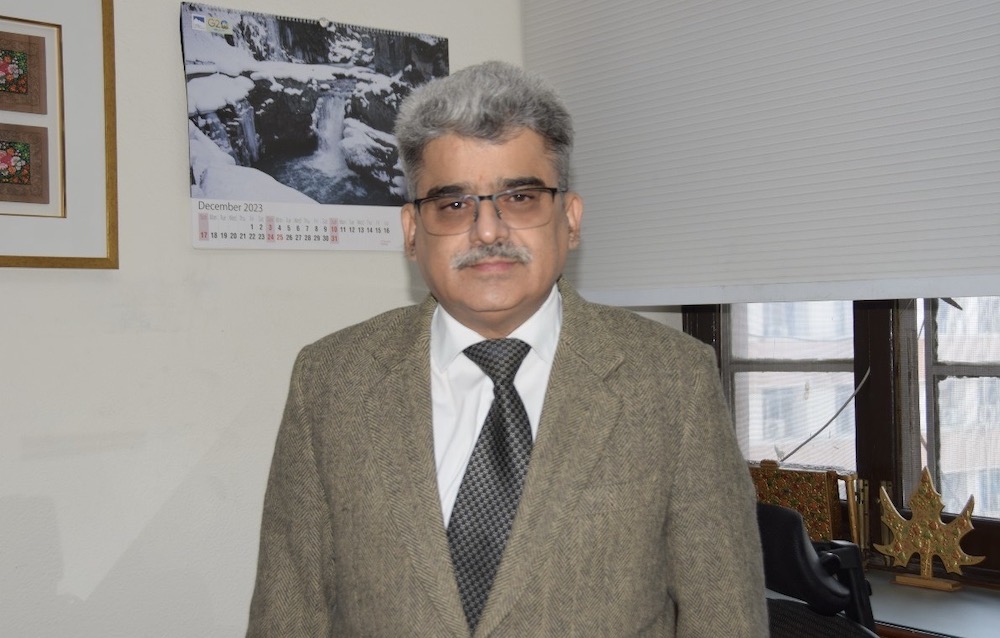
Chairing an interdepartmental meeting in Srinagar, Dulloo stressed the need to expedite the formalities required to incorporate SDG mapping and budget tagging into the forthcoming budget process.
He also called for integrating the proposed SDG Monitoring Dashboard with the Public Financial Management System (PFMS) and the Budget Estimation, Allocation and Monitoring System (BEAMS) to enable real-time tracking of allocations and expenditure and improve transparency and accountability in public spending.
The Chief Secretary directed the Higher Education Department to carry out its pilot project systematically, address implementation challenges and document lessons before the framework is extended to other departments. He also emphasised the need to familiarise officials with the methodology and strengthen their capacity to implement it.
The initiative is being pursued by the Planning, Development and Monitoring Department (PD&MD) in collaboration with the United Nations Development Programme (UNDP). It aims to link government expenditure with measurable development outcomes by identifying how departmental schemes contribute to specific SDG targets.
During the meeting, Secretary PD&MD Owais Ahmad shared the National Indicator Framework (NIF)-aligned goals, targets and indicators with administrative departments and district administrations to guide the mapping of schemes and their budgetary provisions.
Ahmad said that, following the completion of Phase-I workshops for master trainers, regional Phase-II training sessions were planned for departmental heads and district officers to ensure a common understanding and consistent application of the scheme-mapping and budget-tagging methodology.
Under the proposed institutional arrangements, a High-Level SDG Steering Committee will oversee the exercise, while the Finance and Planning departments will coordinate the reconciliation of departmental frameworks. Individual departments will identify the SDG contributions of existing and proposed schemes, with a dedicated SDG Cell facilitating cross-referencing against the State Indicator Framework (SIF).
The framework separates scheme-SDG mapping, which examines whether a scheme’s objectives and guidelines correspond with specific SDG targets, from SDG budget tagging, which identifies the financial allocations associated with those targets.
The exercise is intended to cover all five stages of the budget cycle: preparation, approval, execution, accounting and oversight.
Technical teams from the National Informatics Centre (NIC) and UNDP are working on integrating the SDG Monitoring Dashboard with financial management and budget monitoring systems, including BEAMS. The proposed arrangement is expected to enable expenditure tracking alongside physical outputs and relevant socio-economic indicators.
The Higher Education Department has been selected to pilot the initiative during the Revised Estimates exercise for 2026-27. Its schemes will be mapped against relevant SDG targets and indicators to develop an operational model for wider implementation.
The meeting was attended by the Additional Chief Secretary, Finance; the Secretary, PD and MD; other administrative heads; the State Informatics Officer of NIC; and officers from various departments.