by Faiqa Masoodi
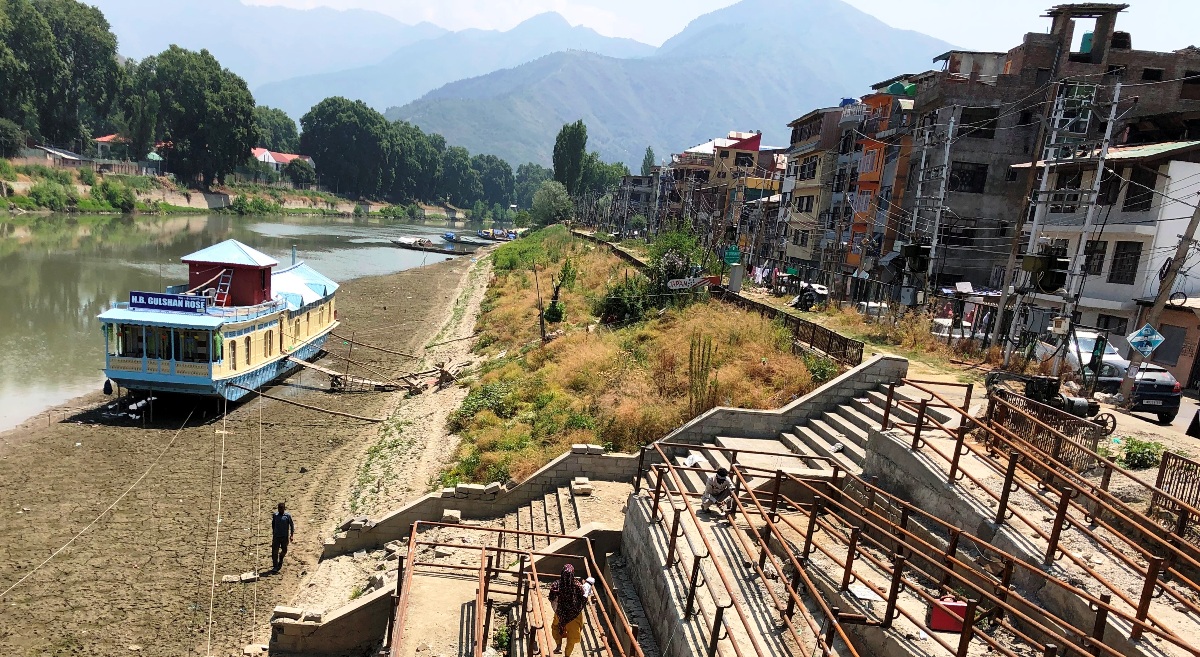
SRINAGAR: As Kashmir reels under a severe drought-like situation threatening the region’s paddy cultivation, a high-level meeting convened at the Civil Secretariat in Srinagar on Tuesday failed to convince several legislators who openly criticised the government’s response, calling it inadequate and disconnected from the urgent realities on the ground.
The meeting, chaired by Minister for Jal Shakti, Forest, Ecology and Environment Javed Ahmed Rana and Agriculture Minister Javid Ahmad Dar, was held to assess the current irrigation crisis and the department’s preparedness. Also in attendance were several legislators, including Justice (Retd) Hasnain Masoodi (MLA Pampore), Irshad Rasool Kar (MLA Sopore), Ghulam Ahmad Mir (Dooru), Hilal Akbar Lone (Sonawari) and Irfan Hafiz Lone (Wagoora-Kreeri).
But what was expected to be a roadmap to crisis management quickly became, in the words of the MLAs, a frustrating session marked by “meaningless presentations” and “bureaucratic diversions” that failed to address the urgent need for water in the fields.
“We were told there are no funds for canals, no new investments, and that the situation is critical because of the heat wave. But what we saw was a presentation diverging from the real issue,” said Irshad Rasool Kar, MLA from Sopore. “There is no efficient use of the existing resources. Infrastructure is collapsing, and farmers are being left helpless.”
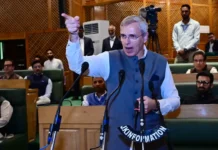
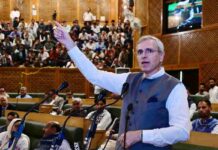
Justice Hasnain Masoodi, MLA from Pampore and a former judge of the J&K High Court, was even more blunt in his remarks. “It was a meaningless presentation. The real crisis lies in the existing system, which doesn’t require big money but resolve and initiative. We have schemes that are ready to be implemented but are languishing because there is no will,” he said.
Masoodi cited the example of the Lethpora Lift Irrigation Scheme, a proposal that has been pending for over six years despite being operationally viable. “It doesn’t involve major funding. We had managed to make it work once in 2017, but it was never taken forward. They do not understand the urgency of the situation.”
He accused the administration of misleading the public by projecting the crisis as one that can only be solved through mega projects and huge capital investments. “Even if long-term plans are needed, right now this is a 10–15 day crisis. People are not demanding mega projects; they need water today. Submersible pumps in a few key locations could save entire crops. That may not even cost Rs 1 crore.”
Both Kar and Masoodi also flagged the lack of desilting in canals, a recurring issue in Kashmir’s irrigation infrastructure, and said the government had failed to implement even basic maintenance despite an earlier commitment to undertake it under MGNREGA.
“This is not a crisis of money but a crisis of will,” Masoodi added. “Seven of our lift irrigation schemes are either non-operational or underperforming. We need quick, simple solutions, not bureaucratic slides.”
The government, in its official statement, acknowledged the criticality of the situation. Minister Javed Rana called for both short- and long-term strategies to ensure water supply reaches paddy fields during the sowing season. “There is no doubt that we are facing a critical situation due to adverse climatic conditions, and there are shortcomings also, but we have to find solutions,” he said.
Additional Chief Secretary Jal Shakti, Shaleen Kabra, gave a detailed presentation on the status of irrigation infrastructure across Jammu and Kashmir. He informed the legislators about the decline in average river gauge readings and the impact of low precipitation on schemes under NABARD, PMKSY-HKKP and the Capex Budget 2025–26.
However, legislators said the presentation was heavy on numbers and light on urgency. “We already know the rivers are drying up,” said another MLA. “What we needed was a plan of action. Instead, we got bureaucracy.”
The meeting did discuss revival of encroached canals and the need to curb illegal mining, which officials said is undermining irrigation infrastructure. Superintending Engineers were asked to submit reports identifying solutions to improve lift and gravity irrigation schemes.
But with the paddy fields of Kashmir visibly drying out and farmers raising alarm, the mood among elected representatives was grim. “A crisis is staring us in the face, and the government is still caught up in documentation and delays,” said Kar.
As Kashmir battles this emerging agrarian emergency, the legislators’ collective message was clear: it’s not big money but basic resolve that’s missing from the government’s drought response.