by Afreen Ashraf
SRINAGAR: In October 2025, two sisters arrived at SMHS Hospital in Srinagar, not for the first time, and not for the last. The elder, approximately 52 years old, had developed a severe wound and gangrene in her right leg.
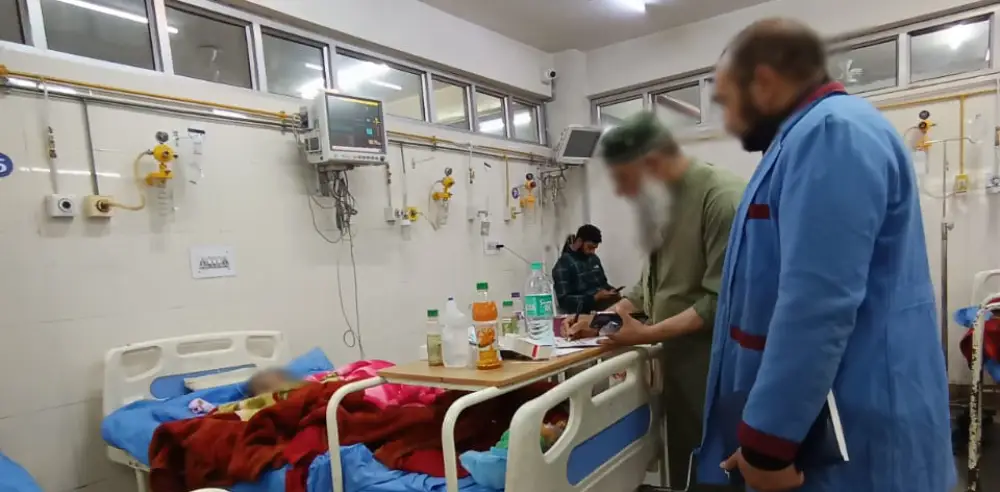
Beside her was her younger sister, visibly unwell in a different way: withdrawn, volatile, and battling severe depression. Their family had allegedly abandoned both. Both had no one to take them home.
They were not strangers to hardship. Volunteers who later traced their background found that the sisters had, at some point, left their family home, though the exact reasons remain unknown. For stretches of time, they had slept on hospital benches and on the stairs of shrines. Their brother, himself suffering from depression, offered little clarity.
The younger sister’s mental state made basic care difficult. Caretakers kept their distance. In the absence of family, the sisters depended entirely on hospital staff and the goodwill of volunteers, a fragile arrangement that would be tested over the months ahead.
After nearly two months of intensive treatment, including multiple surgeries, the elder sister’s condition stabilised enough for discharge. But without anyone at home to manage wound dressings and follow-up care, the relief was short-lived.
By February 2026, both sisters were back at SMHS. The elder had developed septic shock. The younger’s mental health had worsened visibly; she had become almost entirely uncommunicative. They remained hospitalised for 15 days before being discharged again.
The sisters first arrived at SMHS in October 2025. After nearly two months of intensive treatment, including multiple surgeries on the elder sister’s infected leg, doctors considered her stable enough to send home. But home offered nothing: no one to change dressings, no one to monitor her condition. The discharge proved temporary.
By February 2026, they were back. The elder sister had gone into septic shock. The younger sister, already struggling with severe depression, had deteriorated further; she had grown almost entirely uncommunicative, spending most of her time sedated on prescribed medication. They remained for 15 days before being discharged once more into the same void that had brought them back the first time.
On April 11, 2026, the sisters were admitted for a third time. The elder had collapsed into septic shock again. This time, she did not recover. Doctors declared her brain dead, and she was placed on a ventilator. Weeks later, she died in the same ward where she had spent the better part of seven months, quietly, without family, surrounded only by the staff and volunteers who had come to know her.
Police were eventually able to trace the sisters’ relatives after repeated efforts. Family members were informed of their condition. None visited. Not once during the final month of hospitalisation, not through any of the three admissions, did a relative accompany or receive either sister. People familiar with their situation say the sisters were never officially forced out of their home. But what led them to become separated from their family life remains unknown.
Volunteers found that the sisters came from a financially struggling household. A rehabilitation centre reportedly offered shelter and care for both women but it made no difference. The silence from the family remained unbroken.
Much of the sisters’ story is now buried with the elder. The rest is lost in the silence of the younger.
The elder sister died quietly at SMHS, in the same ward where she had fought repeated infections, undergone surgery after surgery, and relied on strangers for the care her family would not provide. The younger sister was woken from medicated sleep by volunteers to be told her sister was gone. She is still in the hospital, living with illness, loneliness, and grief.
Their story is not without precedent. But it is a stark reminder of what falls through the cracks when family support collapses, mental health services are inadequate, and no formal safety net exists to catch those who have nowhere else to go.
Philosopher John Rawls argued that a just society would be one we would freely choose to be born into, not knowing in advance whether we would be born strong or vulnerable, wealthy or destitute. The sisters had no such luck. What they received instead was the charity of hospital staff, the persistence of volunteers, and an indifferent silence from those who should have cared most.