SRINAGAR: Thousands of Indian students, including a large number from Kashmir, studying medicine in Iran are facing mounting anxiety and uncertainty following fresh military strikes by Israel and the United States on Iranian targets.
On February 28, Israel launched what it described as pre-emptive strikes on Iran, with American officials confirming US military involvement. Smoke was seen rising from buildings in Tehran, according to images circulating online. US President Donald Trump said the attacks were aimed at defending the American people.
The escalation comes months after tensions between Washington and Tehran sharply intensified. In June last year, the United States carried out strikes on three key Iranian nuclear facilities, prompting retaliatory missile attacks by Iran targeting a U.S. military base in Qatar. Since then, diplomatic efforts have failed to produce a breakthrough.
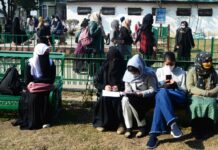
Amid the geopolitical standoff, Kashmiri students pursuing MBBS degrees in Iranian universities say they are trapped between academic obligations and growing security fears.
“My parents have asked me to come back, but due to my ongoing hospital rounds and exams I can’t afford to return. It will affect my overall academic accreditations,” said Nasir, a Kashmiri student studying at a medical university in Iran.
According to student groups, around 3,000 Indian students are currently studying in Iran, of whom nearly 2,000 are from Kashmir. Approximately 900 have returned home in recent months as tensions escalated, while others have stayed back to complete their coursework and clinical rotations.
Every year, an estimated 20,000 to 25,000 Indian students opt for medical education abroad due to limited government seats and the high cost of private medical colleges in India. For many middle-class Kashmiri families, Iran has been a relatively affordable option.
Students say their primary concern is safety, followed closely by uncertainty over their academic future.
“If the US were to attack Iran again, as a student my first concern would be safety. We would once again face evacuation and the uncertainty of whether we could ever return to complete our studies would weigh heavily on us,” said a Kashmiri student in Tehran. “The most important thing for me personally would be communication with my family back home. I call my parents at least twice a day. Being cut off during a crisis would make me feel isolated and anxious.”
Several students reported internet shutdowns and communication disruptions over the past year, especially during periods of unrest. “From not having internet for long periods to postponed exams and syllabus build-up because of shutdowns, it has taken a toll on us and our parents,” another student said.
One fourth-year medical student said the psychological impact has been severe. “Academically, an attack would completely disrupt my education. I have invested years into my studies. Losing that progress would be devastating, not only for my education but also my mental health and career plans.” The student added that he had recently sought medical help for insomnia triggered by anxiety over the deteriorating situation.
Students also pointed to Iran’s prolonged economic crisis, exacerbated by decades of US sanctions. Sanctions were first imposed in 1979 following the seizure of the U.S. Embassy in Tehran during the Islamic Revolution. Although some restrictions were eased after the 2015 nuclear deal, formally known as the Joint Comprehensive Plan of Action, many were reimposed after the United States withdrew from the agreement in 2018.
“The first time I came to Iran four years ago, I received 2,700 tomans for $100. Now the exchange rate has gone up to 16,000 tomans. Prices of essentials like milk, eggs and cooking oil have risen four to five times in just a few months,” said a student studying at Shahid Beheshti University of Medical Sciences in Tehran.
Students say rising inflation has made it increasingly difficult to manage living expenses, adding financial stress to security concerns.
Back home in Kashmir, parents say they are deeply worried.
“I sent my daughter to Iran three years ago due to my limited budget. I couldn’t afford to send her elsewhere. Now I regret my decision, with the threat of war hovering over them for the last two years,” said a parent in Srinagar.
Nasir Khuehami, National Convener of the Jammu and Kashmir Students Association, said parents have urged the Ministry of External Affairs to prepare for possible evacuation measures. “Due to ongoing communication disruptions in Iran, parents are anxious and scared and have not been able to contact students. They have asked the MEA to start the evacuation process at the earliest,” he said.
Some students say their upbringing in conflict-prone Kashmir has shaped their response to the crisis. “Every time we are asked how we feel in times of war in Iran, our answer usually is — we are Kashmiri. Conflicts are everywhere. Growing up in Kashmir has made us somewhat immune,” a student said, though he admitted that repeated exposure to instability has revived old trauma.
As regional tensions continue and diplomatic efforts remain inconclusive, Kashmiri students in Iran find themselves navigating academic commitments