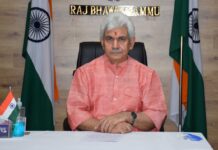
SRINAGAR: Lieutenant Governor Vinai Kumar Saxena on Wednesday flagged off six vehicles for Ladakh’s Snow Leopard Safari, launching what the administration described as India’s first high-altitude wildlife safari aimed at combining regulated tourism with wildlife conservation and livelihood opportunities for local communities.
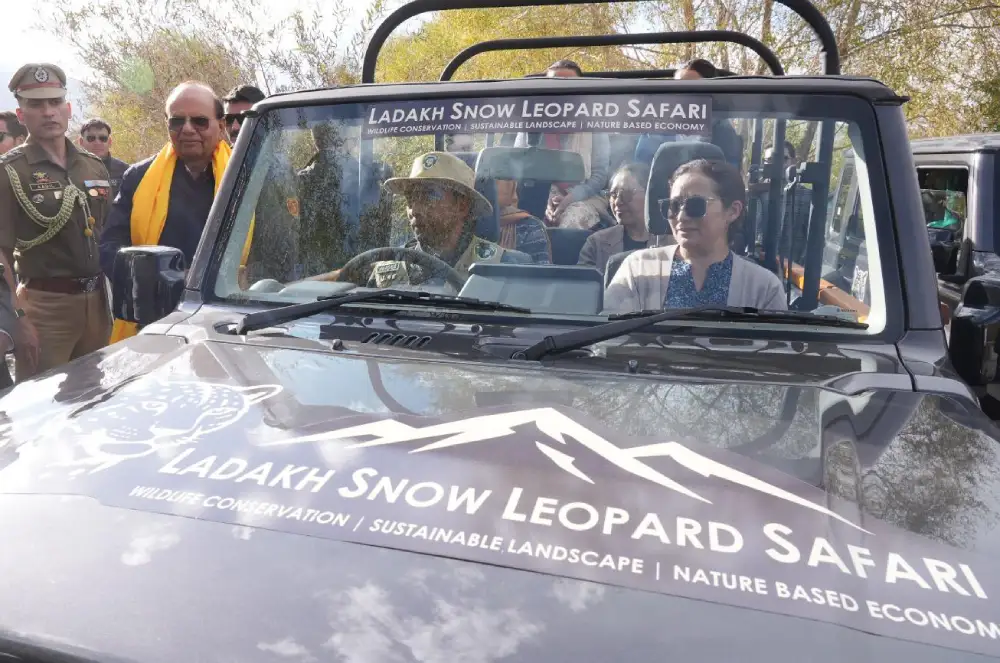
The initiative is being implemented by the Snow Leopard and High-Altitude Nature Conservation (SHAN) Society in collaboration with the Department of Forest, Ecology and Environment, UT Ladakh. The administration said the decision to introduce wildlife safaris was announced on August 5 and implemented within two months.
The safari will initially operate in Rumbak, Shang and Uley, areas known for frequent snow leopard sightings. Specially designed open-back vehicles, trained local drivers and wildlife guides will be used to take visitors along designated routes.
The administration said routes would subsequently be identified across Hemis National Park, Changthang Wildlife Sanctuary and Karakoram Wildlife Sanctuary, as well as Nubra, Zanskar, Sham, Kargil and Drass.
Officials said the guided safari model was intended to curb illegal off-roading and minimise disturbance to wildlife while promoting regulated and environmentally responsible tourism. The programme also seeks to involve local communities directly in conservation and create sustainable employment opportunities.
Saxena said the initiative was intended to ensure that tourism growth did not undermine Ladakh’s fragile ecosystem.
“Wildlife should not be protected at the cost of people, nor should development come at the cost of wildlife. We must create a model in which both can thrive together,” he said.
He said regulated visitor numbers, designated routes and trained local personnel would help reduce pressure on wildlife while generating income for local communities.
Ladakh has 477 snow leopards out of an estimated national population of around 718, according to figures cited by the administration. The Union Territory is also home to more than 38 mammal species, over 340 bird species and around 1,800 species of vascular plants.
Saxena said tourism development and environmental protection needed to progress together, adding that the administration would welcome visitors but take action against activities that harmed Ladakh’s ecology.
The vehicles were flagged off during Wildlife Week 2026 celebrations at Choglamsar Protected Forest in Leh. The event is being held under the theme, “Connecting Habitats, Thriving Wildlife.”
The administration also outlined several other conservation and livelihood initiatives during the programme. Twenty local youths are being trained in bird identification, birdwatching and wildlife spotting and will receive binoculars. Bird-watching hides are also planned at major hotspots, with the aim of creating opportunities for local people as wildlife and bird guides, nature interpreters and eco-tourism entrepreneurs.
A Wild Animal Felting Programme involving 50 women from Turtuk, Photoksar, Sangrah, Chushul and Shargole was also showcased. The programme seeks to link traditional skills and local wool with conservation-related enterprises.
Saxena called for greater attention to product design, branding, market access and e-commerce to strengthen women-led enterprises associated with conservation.
He also stressed the need for a shift towards high-value, low-impact and knowledge-based tourism, with carrying capacity, visitor numbers, wildlife disturbance, waste management and plastic pollution subject to strict regulation.
As part of the event, cheques were handed over to the Chief Education Officers of Leh and Kargil for distribution among 50 schools for conservation education through Eco Clubs supported by the SHAN Society. Certificates were also awarded to winners of competitions in poster painting, quizzes, wildlife and nature conservation reel-making and logo designing.
The Lieutenant Governor inaugurated an artificial intelligence-based human-wildlife conflict mitigation device developed by the Wildlife Division, Kargil, in technical collaboration with the University of Ladakh’s Kargil Campus.
A documentary on the Himalayan Brown Bear and a brochure outlining wildlife tourism packages offered by the SHAN Society were also released. The administration additionally announced the second edition of the Ladakh Black-necked Crane Festival.