SRINAGAR: The death toll from devastating flash floods in Nepal rose to 788 on Sunday, while 2,502 people remained missing as rescue teams continued searching flood-ravaged communities and hydropower projects amid renewed fears of more flooding.
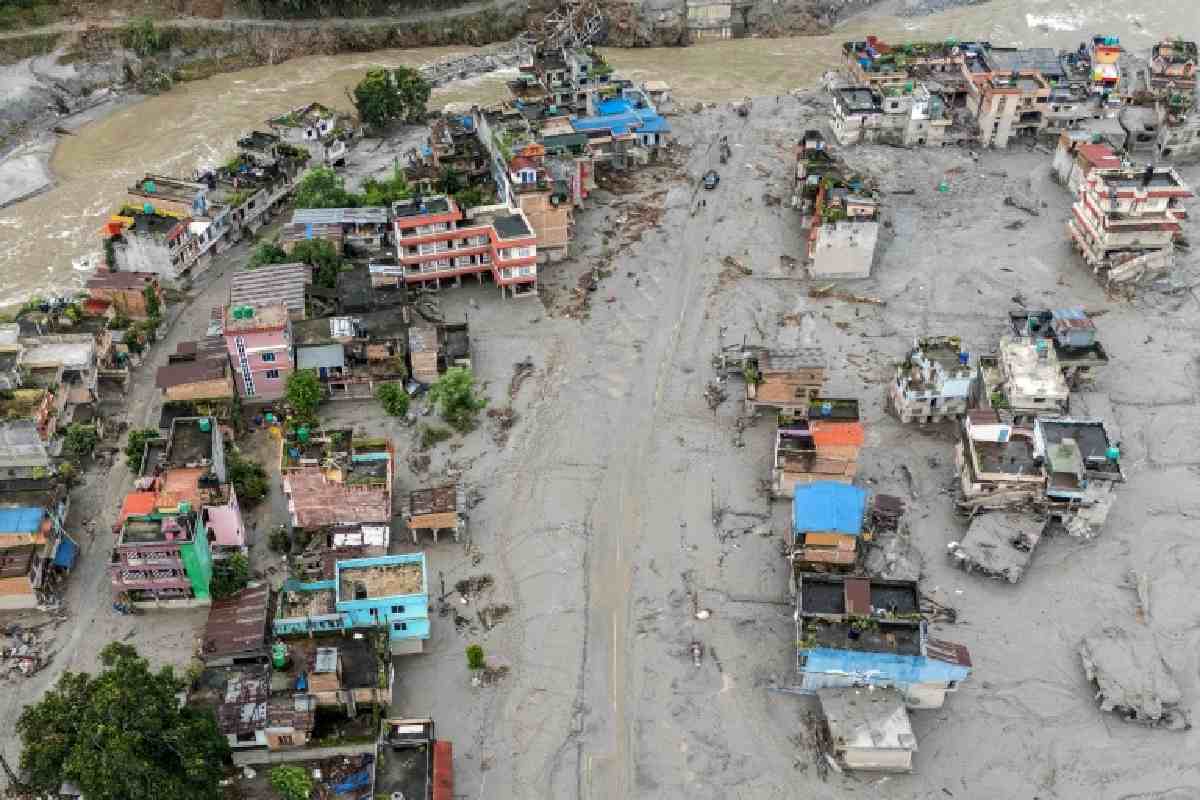
Authorities issued fresh warnings after water levels in the Bhotekoshi River rose, prompting residents in affected areas to move to safer locations. The warnings came as rescuers battled heavy debris, damaged roads and unstable weather while trying to reach people still stranded or missing after the disaster struck on August 26.
The floods were triggered by an ice-and-rock avalanche following a glacial collapse near the Nepal-China border, according to geological assessments cited by Reuters. The avalanche sent huge quantities of rock, mud and water into river systems, causing a destructive surge downstream through Nepal and into Tibet.
The disaster has affected more than 90,000 people, according to estimates cited by Reuters, while the combined death toll in Nepal and Tibet has approached 800. China has reported 16 deaths and 546 people missing on its side of the border.
The latest warning over the Bhotekoshi came as authorities monitored developments upstream in China. The Associated Press reported that a crater containing around 1.4 million cubic metres of water had emerged in the region, raising concerns about another surge downstream if the unstable landscape gives way.
Flood alerts were sent to residents’ mobile phones, while rescue crews worked to reopen roads connecting Kathmandu with some of the worst-hit districts. In Dhading, residents were seen moving to higher ground as the swollen Trishuli River flowed rapidly through the valley. Survivors have begun returning to damaged homes to search for belongings amid thick layers of mud and rubble.
The scale of destruction has also created severe difficulties in recovering and identifying bodies. Reuters reported that Nepal has begun burying unidentified victims because many bodies are badly decomposed after remaining submerged for days. DNA samples and detailed records are being collected before burial to enable families to identify victims later.
In Chitwan, authorities have had to temporarily bury large numbers of recovered bodies as morgues struggle to cope with the influx. The Associated Press reported that some families and public figures have raised concerns about the temporary burials, particularly because of traditional Hindu funeral practices, while officials have defended the measure as necessary because of health risks and limited storage capacity.
Nepali authorities have said only a small number of the recovered bodies have so far been identified. Many are in an advanced state of decomposition or have suffered severe injuries, making identification difficult.
The missing include hundreds of foreign nationals, hydropower workers, tourists and pilgrims. Chinese authorities said 261 foreign nationals from 23 countries were missing in Tibet, including 104 Nepalis, 49 Indians, 33 Latvians, 18 Americans and 15 Britons.
The hydropower sector has emerged as one of the worst-hit areas. Hundreds of workers remain unaccounted for at several projects in the affected districts, with particular concern over workers believed to be trapped inside tunnels at the Upper Trishuli-3A hydropower project.
Rescuers have managed to insert an air pipe into one of the tunnels, allowing air to reach people believed to be trapped inside, while excavation work is under way to create an opening. More than 100 workers could still be trapped in tunnels at hydropower facilities, according to international reports.
Indian technical teams have joined the rescue effort. An Indian tunnel-rescue team has been working alongside the Nepali Army at hydropower sites, while Indian forensic specialists are helping authorities with DNA analysis and identification of recovered bodies.
India has also sent relief supplies, including blankets, sleeping bags, tarpaulins, plastic sheets, hygiene kits and rescue equipment. Several Indian nationals stranded in the disaster zone have also been rescued.
The disaster has severely damaged Nepal’s transport network. Bridges, roads and sections of major highways were washed away, cutting off several communities. Rescue teams have relied heavily on helicopters to evacuate stranded people and deliver food, medicines and other essential supplies.
The Prithvi Highway, a key road linking Kathmandu with Pokhara and western Nepal, has been badly affected, with sections washed away by swollen rivers. Authorities have warned that restoring road links could take considerable time.
The disaster has also caused extensive damage to hydropower infrastructure. Several operational and under-construction projects have suffered damage, raising concerns over electricity generation and the economic impact on the country’s power sector.
The latest disaster has renewed concerns over the growing risks posed by glacial instability in the Himalayas. Reuters reported that scientists believe the collapse was linked to the instability of high-altitude terrain, while experts have warned that warming temperatures can contribute to changes in glaciers and increase the likelihood of cascading hazards.
Scientists have cautioned, however, that it is too early to attribute the specific disaster directly to climate change. They say the rapidly warming Himalayan region is nevertheless becoming increasingly vulnerable to glacier-related hazards. The Himalayan mountains are warming faster than many other parts of the world, increasing concerns over unstable glaciers, landslides and glacial lakes.
Nepal’s Foreign Minister Shisir Khanal has called for greater international action on climate change, arguing that the country contributes only a small share of global greenhouse gas emissions while facing severe consequences from a warming climate.
International assistance has begun to increase. The United States has pledged USD 3.6 million in humanitarian assistance, including emergency food support for up to 10,000 flood-affected households. Malaysia has pledged USD 1 million and said it would send a search-and-rescue team to Nepal.
China has also mobilised rescue personnel and financial assistance for the affected areas, while India has deployed specialised teams and relief material.
Despite the international assistance, rescue operations remain difficult because of damaged infrastructure, unstable slopes, rising rivers and intermittent rainfall.
For thousands of families, the operation has increasingly become a search for missing relatives rather than survivors. At hospitals and identification centres, relatives have been scanning photographs and lists of missing people, hoping for information about loved ones.
With thousands still unaccounted for and the threat of renewed flooding hanging over the affected valleys, Nepal’s rescue effort is entering a critical phase, with authorities simultaneously searching for survivors, recovering bodies and trying to prevent further loss of life.