As the Indus Water Treaty gave storage rights over three rivers to Pakistan, J&K could have somehow benefited from the Ravi. But an agreement that lured the state into partnering with Punjab over the Thein Dam, doomed the prospects of better irrigation and power generation in Kathua. Kashmir Life special correspondent reports
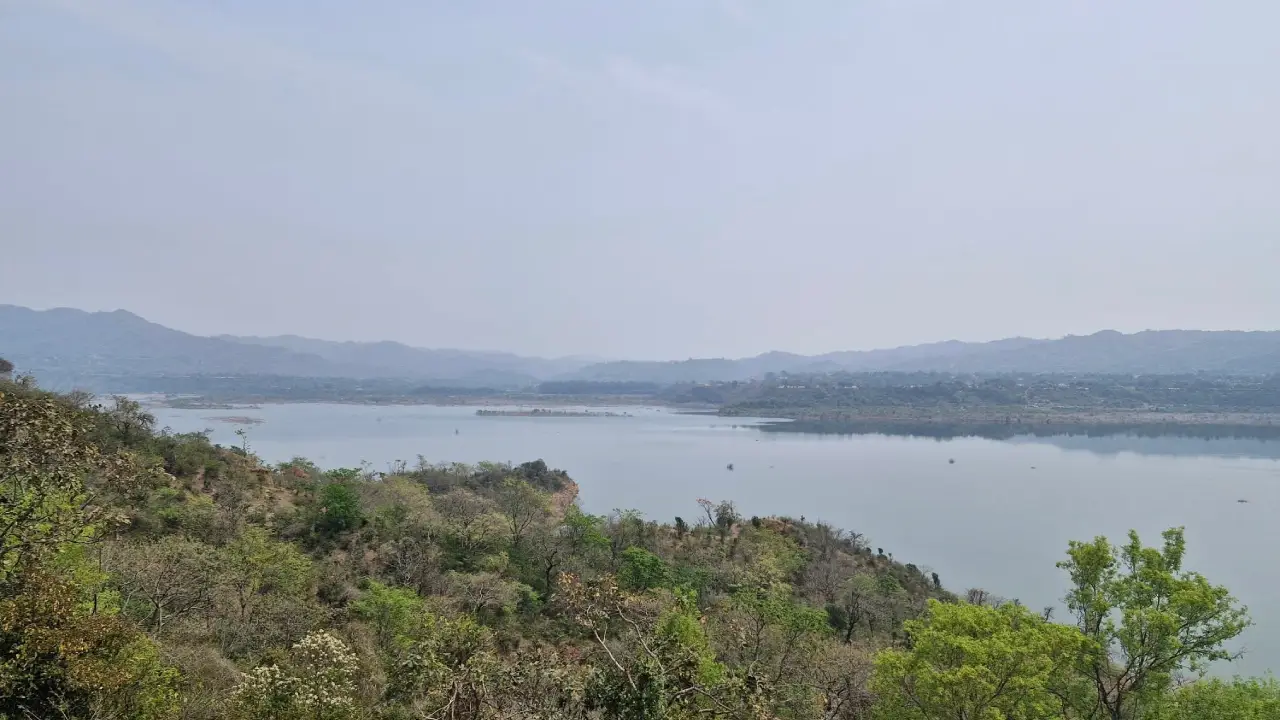
The losses are enormous. Last time when the state’s irrigation ministry evaluated, it said the state has lost Rs 8599 crore – agriculture losses at Rs 250 crore a year in the last 25 years (Rs 6250 crore) and share of power that J&K did not receive worth Rs 2349 crore. Unlike the Indus Water Treaty, however, J&K’s dispute with Punjab barely received any attention.
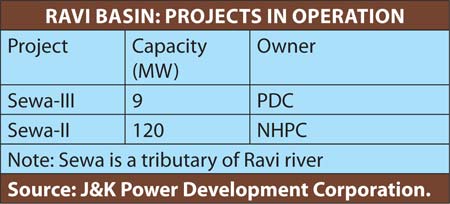
It is all about Ravi, a river originating from Chamba in Himachal Pradesh that borders part of J&K in Kathua district. It has many tributaries in the area, including Sewa, where NHPC and PDC own a project each, as the latter is working on a third micro project. A survey on the river within J&K suggests an identified potential of 500 MW of generation, of which 120 MW is harvested by NHPC and 9 MW by PDC. The rest remains untapped.
Ravi dispute predates even the Indus Water Treaty. An interstate conference presided over by Pandit Nehru on January 29, 1955, discussed the better use of the Beas and Ravi rivers. It gave J&K 0.65 million acre feet (MAF) over and above its pre-partition share of 0.04 MAF from the Ravi. Punjab started implementing the Thein (Ranjit Sagar) dam in 1957.
Almost six years after, J&K started drawing 0.215 MAF using the Kathua canal. The balance share of 0.475 MAF was to be supplied partly (0.285 MAF) from free flow supplies and partly (0.19 MAF) from storage of Ravi water. The storage availability was only possible after the construction of Thein Dam.
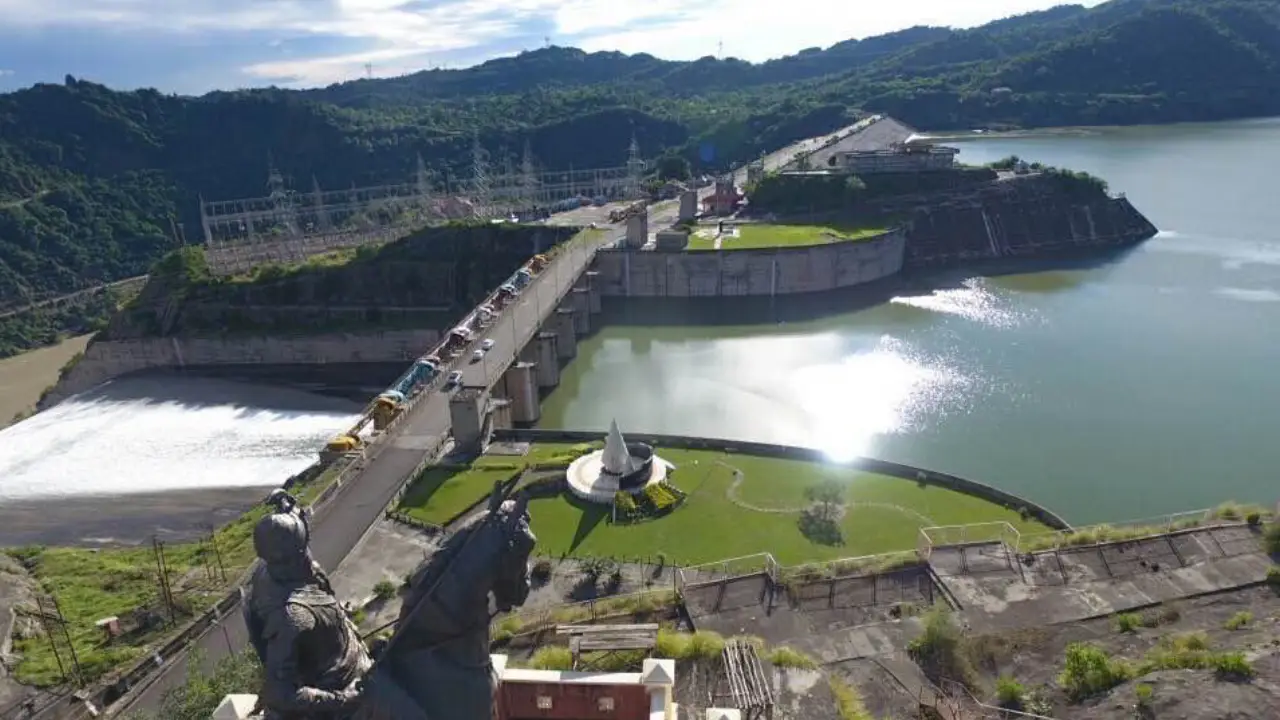
On its part, the J&K government in May 1972 formulated a plan to construct an 82 Km long Ravi Canal between the proposed dam and Chak Salarian village in Vijapur. Work started on this canal in 1975 after approval came from the Planning Commission. But Punjab faced a problem. It could not set up the project unless it was supported by Himachal and, more importantly, by J&K. The Dam site was home to 22 Kathua villages. It necessitated an agreement between Punjab and J&K on January 20, 1979. The agreement promised J&K a basketful of benefits. J&K was taken as a partner, and it was asked to invest in a 0.69 MAF canal network. It was given rights over 20 per cent of the generations at bus-bars and 15 per cent stakes over all kinds of jobs that the project would generate. The affected population was to be compensated and rehabilitated by Punjab, besides rebuilding the infrastructure that the dam would devour.
When the 87 sq km 160-meter high earth-core-cum-gravel shell dam was ready after an investment of Rs 5065 crore, it had devoured 111740 kanals of land, 950 houses and 262372 trees in Basholi’s 22 villages. But the multi-purpose dam has a capacity of generating 600-MW power and irrigating 350 thousand hectares of land in the two states. But it did not happen.
Only 272 families were compensated at the rate of Rs 208 per kanal. Of the 766 identified individuals, 336 are still waiting for job letters. The situation forced the state government to appoint 583 people from the affected population. Against Rs 83.67 crore of compensation, Punjab paid only Rs 68.86 crore.
The affected population waited till 2003 to get a ferry service as the dam converted a few-minute bus drive between Satwain to Basholi and Basholi to Patrian into a 50 and 100-km drive consuming hours. Since April 2001, Punjab is generating energy – 600 MWs at four units. Now, Punjab wants to have another barrage, the Shahpur Kandi barrage.
It is being said that this barrage is vital for J&K as it will only give the state the irrigation benefits it deserves. Punjab has asked J&K to pay its share of money for the barrage. But the barrage is yet to come up. Both states laid the power line, but CEA helped resolve the dispute by ruling that the two lines do not require a bridging station. Once everything was in place, J&K found the cost of energy so expensive that it refused to evacuate its share. It is unable to even sell it. And the crisis stays.
As the J&K government was considering joining as a partner in the Shahpur Kandi barrage, the Punjab assembly on July 12, 2004, passed the Punjab Termination of Agreements Bill, 2004, annulling the December 31, 1981, agreement between Punjab, Haryana and Rajasthan relating to the Ravi and Beas water. It eventually landed in the apex court, which arrayed J&K as a party.
Tired of not getting anything, the state’s Irrigation Minister Taj Mohi-ud-Din convinced the cabinet that the only option was to evacuate the state’s water share from the dam’s J&K banks near Satwain by a 9-km canal and connect it with the existing Ravi Canal at Basantpur. If the initial 5 km is tunnelled, it would help generate 21 MW of power as well. The project was given to the WAPCOS, which suggested a Multipurpose Hydro Irrigation Power Project near the village of Satwain, requiring Rs 410 crore, including Rs 275.00 crore for the civil component. The state cabinet has already approved the civil component and has released Rs 20 crore to kickstart the project. The Punjab government has already been informed about the decision.