SRINAGAR: Experts at a landmark medical education event in Srinagar on Saturday warned that Jammu and Kashmir is in the grip of an alarming mental health crisis, with suicide rates rising sharply over the past two decades and substance abuse emerging as a hidden but deadly threat.
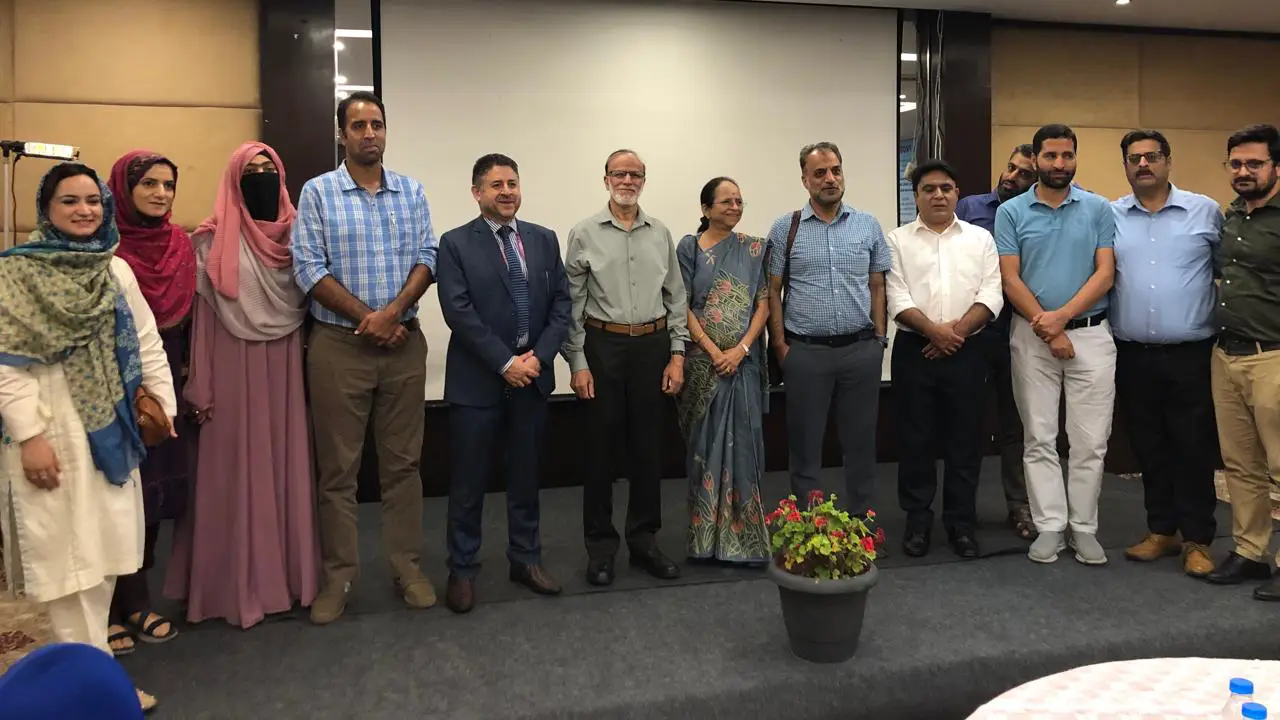
Speaking at a Continuing Medical Education (CME) programme organised by SAWAB (Supporting Always Wholeheartedly All Brokenhearted) in collaboration with the Voluntary Medicare Society, SKIMS Medical College, and IMHANS-K, psychiatrists and public health experts revealed disturbing data that underlined the scale of the problem.
Prof Abdul Majid, who moderated the sessions, said Kashmir is “gradually emerging into a serious mental health crisis.” Citing a 2013 Médecins Sans Frontières (MSF) study, he noted that nearly one in five Kashmiris suffered from psychiatric disorders. He highlighted how suicides in the region have soared—from 0.5 per lakh before the onset of militancy to 7 per lakh in 2007 and 13 per lakh in 2020. “In 2022, 600 suicides were officially reported—375 from Kashmir and 225 from Jammu—but underreporting remains routine, which means the real figures could be higher,” he said. Forced career choices among youth, he warned, were increasingly driving young people towards extreme decisions.
Globally renowned suicide prevention expert Prof Lakshmi Vijayakumar, founder of SNEHA and a key architect of India’s suicide prevention policy, provided a wider lens, pointing out that India has overtaken China as the world’s suicide capital, reporting 1.7 lakh cases in 2022. “The south of India records the highest rates, the north the lowest, and the rest falls in between,” she said, suggesting cultural differences in how societies process anger and distress. In a conversation with Kashmir Life, she added that invasions and conflict in northern India may have contributed to a cultural practice of expressing anger outwardly, unlike in the south, where distress is internalised.
Prof Vijayakumar explained that low-income groups are disproportionately vulnerable, women suffer higher levels of depression, but men commit more suicides, and substance abuse has no direct causal link to suicide. “There is no single factor—it changes with time and geography,” she said. She also emphasised the role of faith, noting that suicides were lower among Muslims, where it is religiously forbidden, while higher rates were seen among Hindus and Buddhists. Stressing the need for prevention, she remarked: “Suicide is not an instinct in the human race—it is a learned behaviour. But it can be unlearned if the signals are picked up in time.” She urged timely, evidence-based, trauma-sensitive interventions at both community and clinical levels.
Conflict and trauma were repeatedly identified as key drivers. Prof Zaid Ahmad Wani of IMHANS said nearly 90 per cent of Kashmir’s population carries anger linked to political instability. “Forty-five per cent of children have witnessed severe traumatic events. It is a generation gone astray,” he said, adding that mental health disorders that once surfaced after 18 years of age are now being diagnosed much earlier. “There has been a 180-degree shift between what psychiatry teaches and what the field now demands,” he remarked.
Substance abuse was highlighted as a crisis within the crisis. Consultant cardiologist Dr. Wasim Ahmad presented striking cases of patients whose hidden drug abuse led to severe and sometimes fatal cardiovascular complications. “Every practitioner in Jammu and Kashmir must physically examine patients thoroughly before prescriptions or diagnostics. High clinical suspicion is essential because drug abuse is being concealed, wasting both time and lives,” he cautioned.
The concluding keynote by Prof Mushtaq Ahmad Margoob, founder of SAWAB and Kashmir’s leading psychiatrist, tied together the threads of trauma, conflict, and resilience. He described how early traumatic experiences fuel disorders like PTSD, depression and delinquency, but also how some children show remarkable recovery. Using vivid case studies, he illustrated how culture, literature, and public attitudes shape trauma responses. He stressed the importance of evidence-based, trauma-sensitive interventions, noting that resilience is possible when support systems respond quickly and appropriately. His powerful presentation, enriched with visuals, left many participants visibly moved.
The CME, titled Handling Emerging Mental Health Challenges Among Adolescents and Youth Mental Health Crisis in the Community, brought together psychiatrists, cardiologists, psychologists, educationists, journalists, and civil society members. Participants described it as one of the most insightful sessions in recent years, combining research, lived experiences, and urgent calls for action.
As SAWAB, which has been at the forefront of community-based psychiatric care since the early 1990s, continues its work across clinical care, research and rehabilitation, the day’s discussions reinforced a sobering truth: Jammu and Kashmir is battling not only conflict and drugs but also a deepening crisis of the mind—one that demands urgent and collective response.