SRINAGAR: Escalating encounters between wild animals and civilians across Kashmir have claimed two lives and left six people injured over a 17 month period, even as the specialised wildlife wing tasked with responding to the crisis battles a fifty per cent staff shortage and massive land encroachments across regional wetlands.
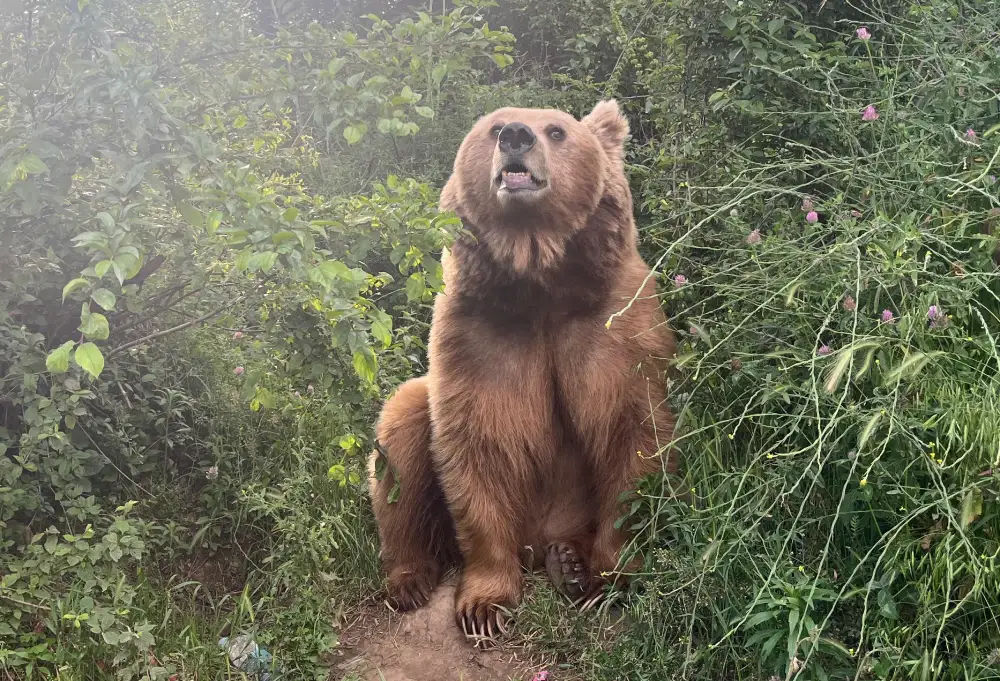
The figures, disclosed under the Right to Information Act by the Office of the Wildlife Warden, Wetlands Division Kashmir to M M Shuja, show that the unit handled 352 conflict incidents between April 2025 and August 2026 across its operational mandate in the Valley.
During the 2025–26 financial year, the division recorded 214 encounters that resulted in four injuries, prompting field teams to set up 123 cages, drive back 168 animals, and rescue 40 animals alive. The trend turned fatal in the current financial year, with 138 incidents recorded up to August 2026 alone. These recent encounters led to two deaths and two injuries, whilst staff captured or tranquilised 44 animals and installed 86 traps. Across the entire period, five animals were reported dead and one was killed during mitigation measures.
The wildlife response unfolds against severe logistical and infrastructural constraints. Out of a sanctioned strength of 89 personnel, the division has 43 vacancies and operates with only 46 employees. Front-line protection is particularly depleted, with 21 of the 40 sanctioned wildlife guard posts lying vacant alongside four vacancies among foresters. The supervisory cadre faces an equal crunch, with the post of Assistant Conservator of Forests unoccupied.
To carry out daily rescue and monitoring work, the division depends on six deputed hands borrowed from other wings, such as the State Forest Corporation and Territorial Forest units. It also confirmed that it possesses no specialised veterinary care facility to treat sick or injured wildlife in the Valley.
Habitat degradation continues to mount heavy pressure on regional ecosystems, with more than 390 hectares of protected land encroached across six of the eight reserves managed by the division. Hokersar remains the worst impacted, recording 191.41 hectares under encroachment out of its 1,354-hectare expanse. Hygam has lost 95.85 hectares to illegal occupations, while Mirgund reports 89.74 hectares encroached.
Smaller protected pockets have suffered similar incursions, including 5.14 hectares in Freshkhoori, 4.24 hectares in Chattalum, and 3.81 hectares in Shallabugh. Only the Kranchoo and Manibugh reserves show no recorded encroachment.
Authorities have issued 1,006 eviction notices so far, serving 515 in Hokersar, 229 in Chattalum, 93 in Hygam, 84 in Freshkhoori, 45 in Shallabugh, and 35 in Mirgund. Despite the land loss, migratory bird arrivals across the Valley have remained massive, though species-level patterns show noticeable shifts.
The Asian Water Bird Census documented 87 species in 2025, recording a cumulative count of 1,343,506 birds. The subsequent count in 2026 expanded coverage across 104 recorded species and variants, lifting the total census figure to 1,457,790 birds. However, several prominent waterfowl species saw substantial declines between the two consecutive counts.
Mallard numbers dropped from 226,023 in 2025 to 138,656 in 2026. Eurasian Teal counts fell from 292,039 birds to 238,211. Northern Pintail numbers contracted from 166,971 to 114,599, while Northern Shoveler dipped from 209,715 to 195,939. Eurasian Wigeon counts declined sharply from 72,378 to 26,656, and Gadwall dropped from 139,141 to 109,127. Several shorebirds, including Black-tailed Godwits and Lapwings, also registered negligible or diminished sightings across major water bodies.
To preserve these feeding grounds under its Integrated Management Action Plan, the department de-weeded nearly 12,497 square metres of wetland area, raised 1,628 cubic metres of protective bunds, excavated 120,000 cubic metres of silt, and cleared 4.5 kilometres of waterways for anti-poaching patrols. Sluice gates and floating trash guards were also positioned at core entry points to regulate water levels and stem the inflow of solid waste.
The department clarified that no wetland reserve under its charge has vanished from records since 1990, and stated that no reserve land has been handed over for government developmental works in recent times. It also confirmed that it has awarded no contracts, biodiversity projects, or payments to the Wildlife Trust of India, noting that broader administrative decisions regarding external organisations rest with higher authorities.