SRINAGAR: The Shri Mata Vaishno Devi Shrine Board (SMVDSB) received around 32 kg of gold and Rs 572 crore in cash donations over the past three years, even as an ongoing inquiry has raised questions over the purity of silver-like metal donated at the shrine.
The data pertains to the financial years 2024-25 and 2025-26 and the Q1 (three months) of 2026-27 from April to June.
According to data obtained under the Right to Information (RTI) Act by activist Raman Sharma, the shrine received 7,671.44 kg of “white metal” resembling silver between 2024-25 and June this year. The figures were reported by The Tribune.
The cumulative figures show that devotees donated 32.10 kg of gold and Rs 572.14 crore in cash during the period covered by the RTI response.
The Shrine Board received 18.11 kg of gold in 2024-25, followed by 10.82 kg in 2025-26. A further 3.17 kg was received between March and June this year, taking the three-year total to 32.10 kg.
Cash donations amounted to Rs 282.17 crore in 2024-25, Rs 217 crore in 2025-26, and another Rs 72.97 crore between March and June this year. Together, the three figures amount to Rs 572.14 crore.
The disclosure comes amid allegations of adulteration of silver donations at the shrine, with the controversy involving offerings reportedly worth around Rs 550 crore.
The Shrine Board received 4,080.66 kg of white metal, appearing like silver, in 2024-25, followed by 2,916.94 kg in 2025-26. Another 673.84 kg of silver was received between March and June this year, taking the cumulative quantity to 7,671.44 kg, or more than 7.67 tonnes.
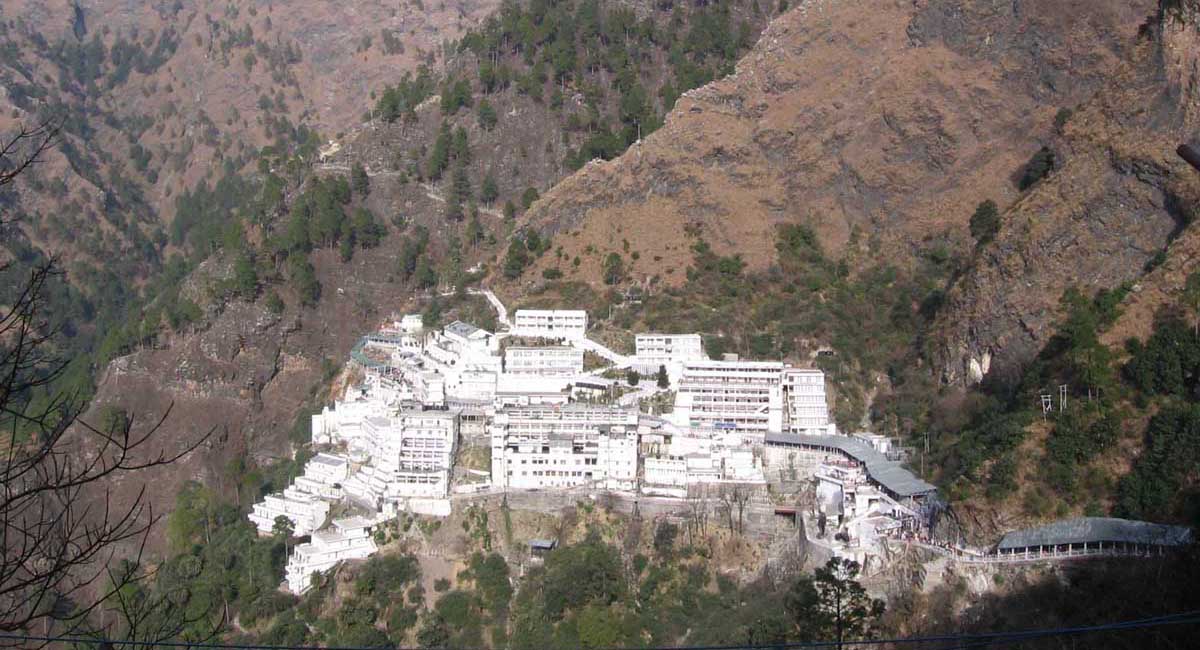
The Vaishno Devi shrine is visited by lakhs of pilgrims every year. In 2023, at least 95.22 lakh pilgrims visited the shrine, while the figure was almost unchanged at 94.84 lakh in 2024. Footfall declined to 69.79 lakh in 2025, reportedly because of road closures following landslides and flash floods.
The silver controversy intensified in April this year when tests at a government mint reportedly found that the “silver” accumulated through donations contained only around 5 to 6 per cent actual silver, with the remainder reportedly consisting of cheaper metals.
Following the reports, a Jammu-based advocate approached the court, raising concerns over alleged adulteration, substitution, pilferage and possible misappropriation of approximately 20 tonnes of silver offerings made by devotees at the shrine, reportedly valued at around Rs 550 crore.
The Court of the Chief Judicial Magistrate, Jammu, last week directed the Deputy Superintendent of Police (DSP), Katra, to submit a detailed inquiry report and take appropriate action on allegations made in an application seeking urgent preservation of evidence in the alleged fake silver donation case.
The RTI response also provided details of the system used for counting cash donations at the shrine.
According to the response, cash counting is carried out strictly in accordance with the guidelines prescribed under the Standard Operating Procedure. The concerned bank deploys Assistant Banking Associates (ABAs) or Banking Associates (BAs) for counting cash in the counting room at Bhawan.
Personnel engaged in cash counting wear pocketless clothes, while all persons entering and leaving the counting room are frisked by two agencies, the Shrine Board security personnel and the CRPF.
Cash counting continues even on Sundays and holidays, with staff at the cash counter availing their holidays on a rotational basis.
The counting room is equipped with CCTV cameras to capture the entire process of handling uncounted and counted cash from the beginning to the end of the operation.
Foreign currency notes and coins separated during the counting process are listed and handed over to Shrine Board officials deployed for the purpose. The amount is subsequently credited to the SMVDSB account in accordance with the bank’s mandate.
The RTI figures provide a cumulative picture of the scale of offerings at the shrine, with 32.10 kg of gold, Rs 572.14 crore in cash and more than 7.67 tonnes of silver-like “white metal” recorded during the three-year period.