SRINAGAR: The Government of India on Tuesday said a range of central renewable energy schemes are being implemented in Jammu and Kashmir, with over 26,000 households already benefitting under the flagship rooftop solar programme, even as hydropower continues to dominate the Union Territory’s energy mix.
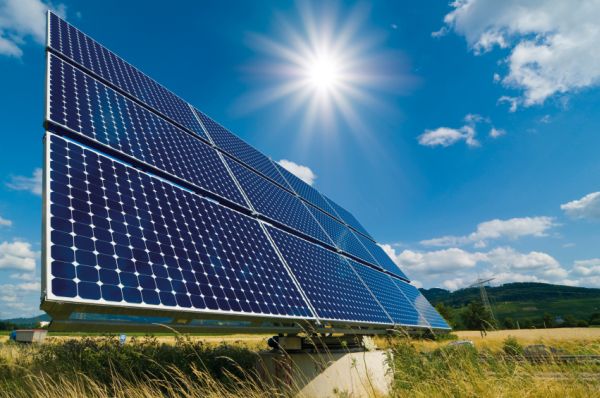
Replying to an unstarred question in the Rajya Sabha, Minister of State for New and Renewable Energy Shripad Yesso Naik said that all schemes currently being executed by the Ministry of New and Renewable Energy are central sector schemes, with funding released as per scheme-specific guidelines rather than state-wise allocations.
The Minister informed that Central Financial Assistance (CFA) has been extended under key programmes such as the PM Surya Ghar Muft Bijli Yojana and PM-KUSUM over the past three years.
In 2022–23, Rs 1.20 crore was released for rooftop solar initiatives and Rs 15.69 crore under PM-KUSUM. While no funds were recorded under these heads in 2023–24, allocations rose significantly in 2024–25, with Rs 59.85 crore disbursed for rooftop solar, including PM Surya Ghar, and Rs 12.90 crore under PM-KUSUM. The Ministry clarified that these releases are tied to project progress and adherence to scheme guidelines, rather than pre-determined state budgets.
Providing a snapshot of the Union Territory’s renewable energy profile, the government said Jammu and Kashmir has a total installed renewable capacity of 3,629.41 MW as of February 28, 2026. Large hydropower accounts for the overwhelming share at 3,360 MW, followed by 189.93 MW from small hydro projects and 79.48 MW from solar energy installations, underlining the continued reliance on river-based generation.
Under the PM Surya Ghar Muft Bijli Yojana, a total of 26,730 households across Jammu and Kashmir have benefitted so far, according to data available on the national portal as of March 18, 2026. Srinagar recorded the highest number of beneficiaries at 4,538 households, followed by Jammu with 3,881 and Kupwara with 2,494. Other districts with notable uptake include Anantnag (1,881), Kathua (1,571), Baramulla (1,506), Budgam (1,334) and Pulwama (1,311), while districts such as Kishtwar (374), Poonch (317) and Reasi (400) reported lower coverage.
The government said multiple policy and financial interventions are being deployed to accelerate renewable energy adoption, particularly in remote and border districts. These include higher rates of Central Financial Assistance for special category regions such as Jammu and Kashmir under schemes like PM Surya Ghar, PM-KUSUM, biogas and waste-to-energy programmes.
At the national level, policy measures include allowing 100 per cent foreign direct investment under the automatic route, renewable purchase and consumption obligations up to 2029–30, and the rollout of initiatives such as the National Green Hydrogen Mission, along with green energy open access rules. Infrastructure expansion through the Green Energy Corridor scheme and transmission planning up to 2030 are also part of the strategy.
The Ministry said these measures are aligned with India’s target of achieving 500 GW of non-fossil fuel energy capacity by 2030. The response came in reply to a question raised by Rajya Sabha member Gulam Ali, seeking details on scheme implementation, funding patterns, installed capacity and outreach in Jammu and Kashmir.