SRINAGAR: Fresh data tabled in the Jammu and Kashmir Assembly has revealed a sharp regional imbalance in the issuance of reservation certificates across the Union Territory, with Jammu accounting for an overwhelming majority of beneficiaries in most categories.
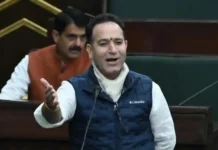
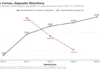
The figures, disclosed by the government in response to a cut motion moved by Peoples Conference president and MLA Sajad Gani Lone, show that out of nearly 11.81 lakh certificates issued across seven reserved categories, about 86 per cent were granted in the Jammu region, while only 14 per cent were issued in Kashmir.
The disparity is most pronounced in the Scheduled Tribe (ST) and Scheduled Caste (SC) categories.
According to the official reply, of the 7,49,970 ST certificates issued in Jammu and Kashmir, 6,93,781 — or 92.5 per cent — were granted in Jammu, while only 56,189, or 7.4 per cent, went to Kashmir.
In the Scheduled Caste category, the skew is even sharper. Out of 1,41,419 SC certificates issued, 1,39,664 — more than 98 per cent — were issued in Jammu, compared to just 1,755, or 1.24 per cent, in Kashmir. The government noted that the SC population is largely concentrated in the Jammu region and that all seven Assembly seats reserved for SCs are located there.
In the Reserved Backward Area (RBA) category, the distribution was more balanced. Of 1,00,848 certificates, 50,982 (50.5 per cent) were issued in Jammu and 49,866 (49.4 per cent) in Kashmir.
However, other categories again reflected Jammu’s dominance.
Under the Actual Line of Control (ALC) category, 6,732 of the 7,192 certificates — or 93.6 per cent — were issued in Jammu, compared to 460 (6.3 per cent) in Kashmir. All 6,732 International Border (IB) certificates were issued exclusively in the Jammu division.
In the Other Backward Classes (OBC) category, Jammu accounted for 78,324 certificates (59.8 per cent), while Kashmir received 52,652 (40.2 per cent) out of a total of 1,30,976.
Similarly, in the Economically Weaker Sections (EWS) category, of the 47,235 certificates issued across the Union Territory, 43,136 (91.3 per cent) were granted in Jammu and only 4,099 (8.6 per cent) in Kashmir.
The disclosure triggered debate in the House, with Lone describing the numbers as evidence of a deep regional imbalance in access to reservation benefits.
He said the official data confirmed long-standing concerns about unequal distribution of opportunities between the two regions.
“What was once dismissed as perception or rhetoric now stands established as verifiable and documented reality,” Lone said, calling for corrective policy measures and institutional mechanisms to address what he termed systemic disparities.
He urged the government to examine the composition and implementation of reservation policies, warning that without intervention, the current pattern could continue to skew employment and welfare benefits disproportionately toward one region.