Satyapal Malik (1946–2025)
Satyapal Malik, a veteran politician whose career spanned over five decades, passed away on August 5, 2025, at age 79 in New Delhi, coinciding symbolically with the sixth anniversary of Article 370’s abrogation in Jammu and Kashmir—a decision he oversaw as the state’s last governor. Contradictions defined Malik’s public life: he rose through the ranks as a BJP loyalist, only to become one of its most outspoken critics in later years.
Born in Baghpat (UP) in 1946, Malik began his political journey as a student leader with socialist leanings, winning his first Assembly seat in 1974 with Charan Singh’s Bharatiya Kranti Dal. Over the years, he shifted across parties, from Congress to Janata Dal, and finally BJP. He was elected twice to the Rajya Sabha and once to the Lok Sabha, later serving as Jr Minister for Parliamentary Affairs and Tourism in the VP Singh government.
Malik held four gubernatorial posts: Bihar, Goa, Meghalaya, and most significantly, Jammu and Kashmir (2018–19), where he presided over historic and controversial events. These included the Pulwama terror attack and the abrogation of Article 370. He also faced criticism for the infamous “broken fax machine” episode in 2018, which scuttled a possible PDP-NC-Congress alliance and led to the dissolution of the Assembly. He claimed he acted to prevent instability.
After retiring from public office in 2022, Malik transformed into a combative dissident, alleging the government had ignored security warnings before the Pulwama attack, and vocally supporting the farmers’ protest. His criticisms extended to corruption in J&K, where he claimed to have refused bribes to clear files. In 2024, the CBI filed a chargesheet against him over alleged corruption in the Rs 2,200 crore Kiru hydro project, which he dismissed from his hospital bed as a political vendetta.
Until his death, Malik was reportedly working on a tell-all memoir titled The Truth About Kashmir, in which he promised revelations about the abrogation, Pulwama, and political decisions during his governorship.
While many in Kashmir remember him with contempt for his role in Article 370’s revocation, others admired his late-life candour. Malik died a divisive but fearless voice, one who shaped the very institutions he later challenged.
Baba Ghulam Shah Badshah University in Rajouri is facing a major faculty crisis, with 60.4 per cent of teaching posts vacant, including all 22 professor positions.
Over the past three years, Ladakh has recorded over 4,050 livestock deaths due to wild animal attacks—mostly by snow leopards and wild yaks—but no human fatalities
KASHMIR

An RTI-based investigation by Newslaundry has revealed that the Jammu and Kashmir administration spent at least Rs 70 crore on print advertisements between April 2022 and October 2024, with five newspapers receiving 26 per cent of the total. The top beneficiaries included Rising Kashmir and Aftab Daily. However, major publications, such as Greater Kashmir, saw sharp declines, and others like Kashmir Life were cut off entirely. The data, analysed using DIPR’s base ad rates, highlights the administration’s significant influence over media through selective ad allocation, echoing past concerns that government advertising is used as a tool to control critical reportage in the region.
4.14 lakh pilgrims visited the Amarnath shrine in 2025
GUJARAT
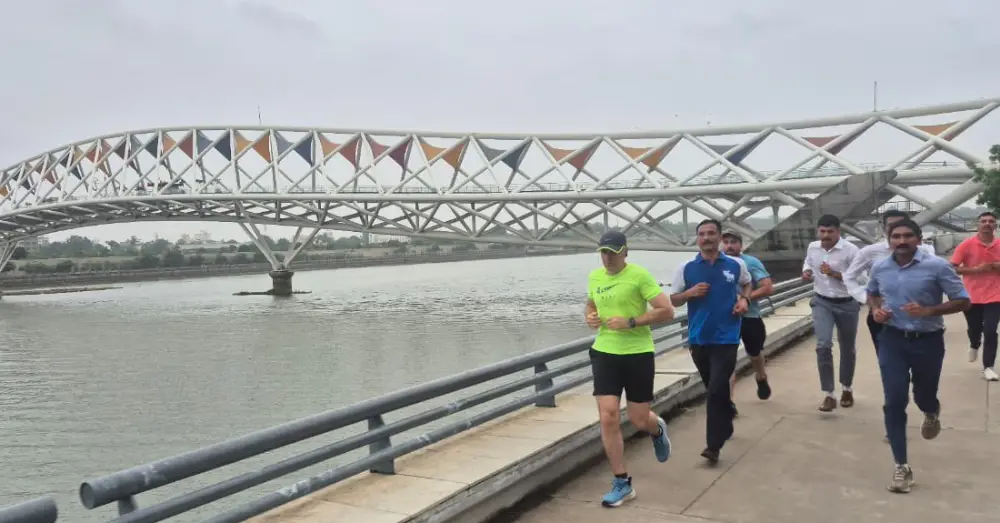
During his visit to Gujarat, Chief Minister Omar Abdullah paid tribute to Mahatma Gandhi at Sabarmati Ashram, calling his teachings timeless. He also visited the Statue of Unity and Sardar Sarovar Dam, as part of a tourism drive. Prime Minister Modi welcomed Abdullah’s visit, calling it inspiring.
Ten residents of Jammu and Kashmir are among the 1,703 Indians recently deported from the United States.
DELHI
In a breakthrough, Counter-Intelligence Kashmir (CIK) said it dismantled a cross-border terror funding syndicate linked to the banned Lashkar-e-Toiba. Swift raids were conducted at a business unit in Lajpat Nagar, New Delhi, as part of an investigation under UAPA and IPC. Mohammad Ayoub Bhat of Budgam and Mohammad Rafiq Shah of Bemina, operating under the guise of legitimate business, were key conduits. The syndicate involved Pakistani handlers and Gulf-based collaborators, using hawala networks and couriers. Some digital and documentary evidence was seized, revealing encrypted chats and suspicious remittances. Interrogations and forensic analyses are underway to uncover the full extent of the terror network.
KULGAM
A man and his daughter died, and two others were injured when a tree and boulders, dislodged by gusty winds and rain, struck their tent in Kulgam’s Waltango Kund. The Bakerwal family was sheltering in Kanzalpathri when the incident occurred. The injured are hospitalised and reported to be stable.
LADAKH

In Hanle, a remote Ladakh village near the China border, young locals are transforming stargazing into a profession under India’s first Dark Sky Reserve, designated in 2022. Trained as astro-ambassadors, they guide tourists using telescopes and celestial knowledge, thanks to a collaborative initiative by the Indian Institute of Astrophysics, UT Ladakh, and LAHDC. The Indian Astronomical Observatory in Hanle, housing one of the world’s highest optical telescopes, enhances the village’s appeal. With 70 per cent of women among the trained guides, locals now earn through astronomy tourism and homestays. To preserve the dark skies, a Light Management Plan is in place, supported by community efforts to ensure tourism grows sustainably while protecting Hanle’s unique nightscape.
JAMMU KASHMIR
On the sixth anniversary of the abrogation of Article 370, major political parties in Jammu and Kashmir, excluding the BJP, renewed their demand for the restoration of statehood and democracy. The National Conference, PDP, and Congress held protests in Srinagar and Jammu, criticising the Centre’s alleged suppression of democratic rights and delaying statehood. The BJP, however, celebrated the day, highlighting the post-abrogation developmental gains and claiming constitutional equality. Lt Governor Manoj Sinha said a “new Jammu and Kashmir” had emerged, free of terrorism and discrimination. At an event, 158 kin of militant victims received job letters, and the L-G vowed justice and dignity for affected families. While opposition parties termed August 5 a “black day” and condemned the 2019 move as unconstitutional, the BJP and administration maintained that the decision had dismantled the terror ecosystem and created opportunities. The Congress cited Supreme Court directives to press for the early restoration of statehood.
KULGAM
An 11-year-old US citizen allegedly abducted by his Jalandhar-based caretakers was recovered from Kulgam. The caretakers, a couple hired by the boy’s Poland-based father, had gone missing on May 12. Arrested with police help, their motive remains unclear. The US embassy has been informed, and a kidnapping case has been registered.
SRINAGAR
On July 26, Lt Colonel Ritesh Kumar Singh allegedly assaulted four SpiceJet employees at Srinagar Airport over an excess baggage dispute, seriously injuring one with a spinal fracture. The officer, carrying 16 kg of cabin luggage against the 7 kg limit, became violent when asked to pay charges. CCTV footage shows him attacking staff with punches and a queue stand. Two FIRs have been registered—one by the airline for assault and another by Singh alleging provocation. The Indian Army, while stating its commitment to discipline, is cooperating with the investigation. SpiceJet has called the act a “murderous assault,” written to the Civil Aviation Ministry, and is seeking to place Singh on the no-fly list. The incident has drawn condemnation from political leaders, with demands for strict action. Victim Mudasir Ahmad Khan, now bedridden, recounted being repeatedly punched and denied help. Despite the violence, the Delhi-bound flight departed on time. The investigation remains ongoing.
CHANDIGARH

The Punjab and Haryana High Court has quashed a 35-year-old criminal case against former CRPF officer Ajay Kumar Pandey, calling the prosecution sanction arbitrary, delayed, and unsupported by evidence. The 1990 FIR from Baramulla alleged wrongful confinement and enforced disappearance during anti-militancy operations. However, the court noted a 1992 CRPF inquiry had cleared Pandey, whose unit was not deployed in the area. The Jammu and Kashmir government sought prosecution sanction only in 2007, with the Centre approving it in 2010, decades after the alleged incident and without new evidence. Justice Vinod S Bhardwaj ruled that such a delay undermined the integrity of the prosecution process and ignored established safeguards against baseless charges. Citing past Supreme Court rulings, the court said that relying solely on a full trial would make the sanction process redundant and expose officials to harassment. The court concluded that Pandey had been wrongfully implicated and dismissed the case.
BIJBEHARA
Asif Ali Bhat, an M.Tech electrical engineer, left his job in Qatar to pursue farming in Kashmir. Inspired by Qatar’s vegetable scarcity, he launched a 500 sq ft high-tech vegetable farm in Bijbehara, supported by the J&K Government’s HADP scheme offering a 95 per cent subsidy. His small farm produced two tonnes of tomatoes, 1.5 tonnes of bell peppers, and 2.5 lakh cucumber seedlings. Selling two lakh seedlings in just two days, Asif now plans to scale up across 15 kanals of land. With government guidance, he aims to cultivate exotic vegetables year-round, especially for the hotel industry’s growing demand.
DRASS
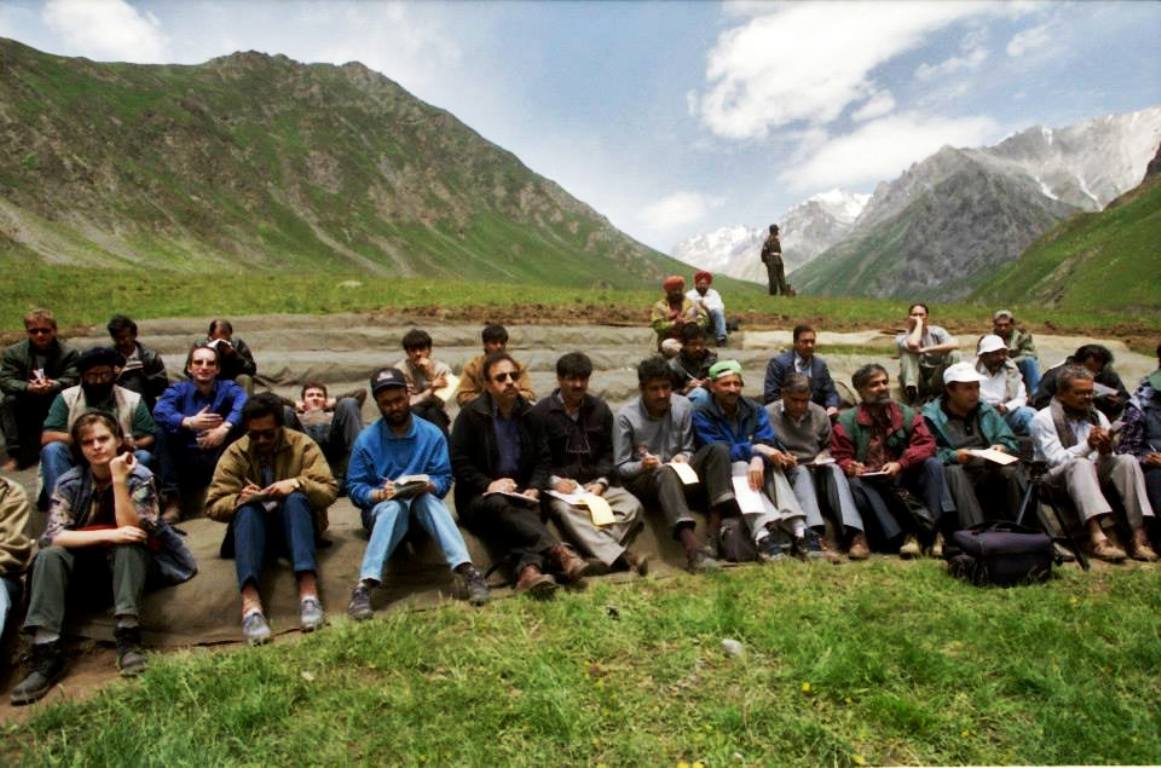
Over 200 porters who risked their lives during the 1999 Kargil War are still struggling for justice 26 years later, despite repeated promises of Army recruitment. Initially engaged with assurances of regularisation and preference in future recruitment drives, most were left out, even as a few were hired during selective drives. Despite receiving certificates of commendation and attending annual Vijay Diwas celebrations, these porters, some now disabled, continue to live in hardship, demanding jobs, pensions, or compensation. Multiple pleas to top government authorities have yielded only assurances, leaving these former wartime allies feeling neglected and betrayed by the system they once served.