JAMMU KASHMIR
In Jammu and Kashmir, over 17 per cent of primary and 12 per cent of senior secondary students drop out, raising concerns about the education system. Official data shows a retention rate of 82.7 per cent at the primary level and 88.42 per cent at the senior secondary level. Despite these dropout rates, about 46,000 out-of-school children have been mainstreamed. Dropouts are particularly high in tribal and remote areas. The government has seen a shift from private to public schools and increased student enrolment by 17.87 per cent in 2022-23. Additionally, vocational education expanded to 1,067 schools, and 2,562 infrastructure projects were completed in 2022-23 to improve facilities.
A study by GMC Srinagar reveals that 23 per cent of students smoke, with 29 per cent in Srinagar alone, often influenced by public smokers or film stars, despite a ban on selling tobacco to minors near schools.
KASHMIR
So far, this winter, 16 deaths have been reported across Kashmir due to asphyxiation and fires linked to improper heating methods. At least nine of these fatalities occurred in 2025, with several others still in critical condition. The tragic incidents primarily involve the use of heating devices like gas and coal heaters, electric blankets, and blowers, which emit carbon monoxide when not used properly. On January 5, five members of a family in Srinagar’s Pandrathan area died from suffocation caused by an electric heating blower. Similarly, other deaths have occurred in Kulgam, Bhaderwah, and Kathua districts.
A study by GMC Srinagar reveals that 23 per cent of students smoke, with 29 per cent in Srinagar alone, often influenced by public smokers or film stars, despite a ban on selling tobacco to minors near schools.
SRINAGAR
The Cancer Treatment and Management Fund for the Poor (CTMFFP) was halted in July 2024, worsening the plight of cancer patients in Jammu Kashmir, where cancer cases rise by 10–12 per cent annually. Over 51000 cancer cases were reported between 2019 and 2022, and over 5,200 cases in 2024 alone. Despite some support from government schemes like the Prime Minister’s Fund and Ayushman Bharat, many patients, especially from underprivileged backgrounds, struggle with the high costs of treatment, forcing them to abandon care. The CTMFFP, which had provided financial aid to many, was significantly reduced in recent years, with no aid in 2022–23. While 88 patients received Rs 430.10 lakh in 2019-20, only three patients were assisted with Rs 31 lakh in 2021-22, with no support recorded in 2022-23
Nine hundred government employees in Jammu Kashmir are facing legal action for corruption and malpractices.
KATRA
Katra is becoming the new Jammu if mot Banihal. With the train service to Kashmir soon to be inaugurated, all trains to and from Srinagar will mandatorily stop at Shri Mata Vaishno Devi (SMVD) station in Katra, Jammu, due to security reasons. Passengers will need to deboard, undergo luggage scanning, and board a separate train for their onward journey. Northern Railways’ timetable mentions three daily trains—Vande Bharat and two Mail Express services—operating between Katra and Srinagar, but no direct connectivity between Srinagar and Delhi is planned. The same train will not continue beyond Katra, requiring passengers to transfer to other services. This development adds a layer of complexity to the eagerly awaited railway link, with the inauguration expected on January 13. The train service holds historical significance, as previous efforts to connect Jammu and Kashmir by rail date back to 1890, culminating in modern expansions like the Udhampur and Katra links.
Tawi Barrage envisages creating a pondage of 1.35 million cubic meters (MCM) capacity with a pondage level of 297.8 meters.
JAMMU
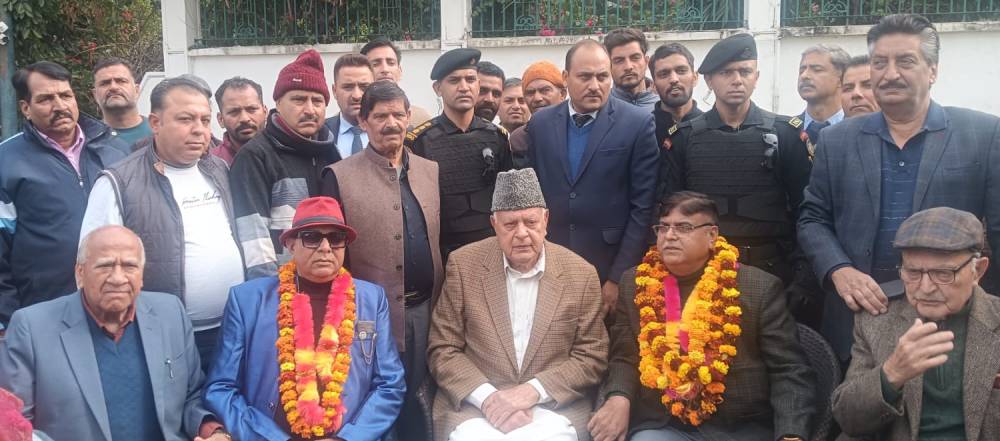
Former Border Security Force Commandant Karnail Singh, accused in the Jammu and Kashmir Sub-Inspector Recruitment scam, recently joined the ruling National Conference (NC), sparking widespread criticism. Singh allegedly leaked examination papers for key posts, including police sub-inspectors and finance account assistants, and was arrested by the CBI in 2022. Political and student organisations have condemned the NC’s decision, calling it a betrayal of voters and a mockery of merit and justice. NC president Farooq Abdullah later claimed he was unaware of Singh’s alleged involvement and stated that Singh’s party membership was contingent on his acquittal. However, the controversy has drawn significant backlash on social media.
MUMBAI
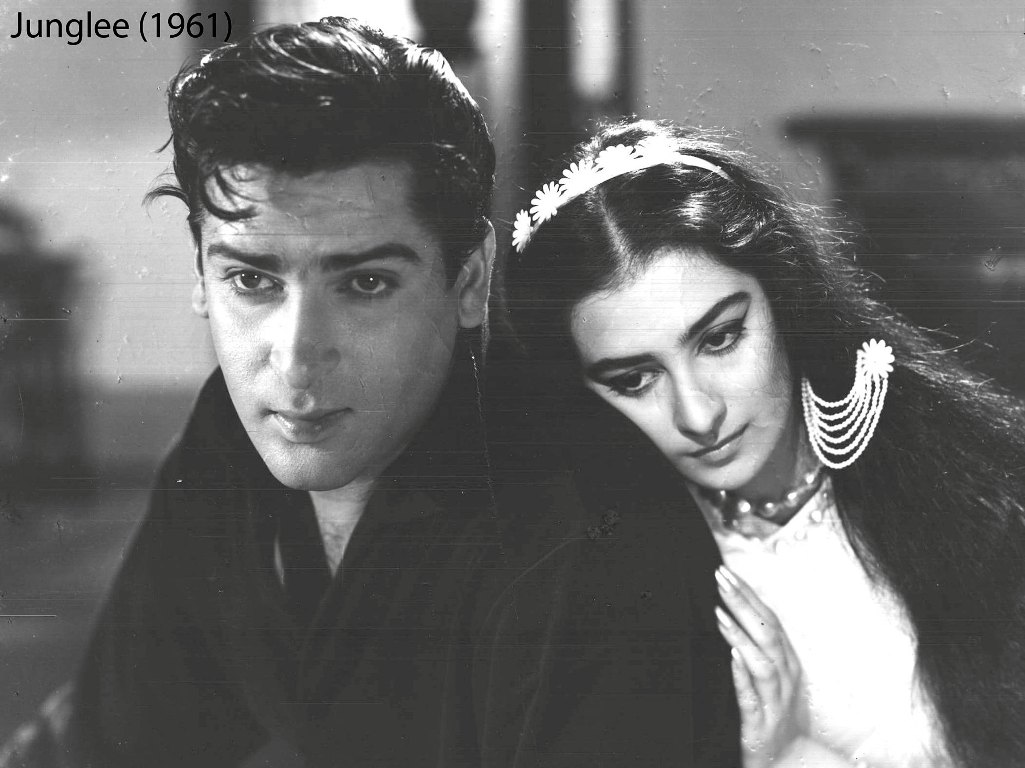
Shammi Kapoor had a deep connection with Kashmir, where many of his iconic films, including Kashmir Ki Kali, were shot. His frequent visits made him a beloved figure among the locals. Director Rahul Rawail recently shared memories of Shammi’s generosity, recounting how he would distribute fistfuls of cash to hotel staff in Srinagar. Recalling the filming of Betaab in Kashmir, he said the locals were accustomed to Shammi’s presence and often inquired about him when film crews arrived. Known for his royal demeanour, Shammi would stay at the Oberoi Lake Palace Hotel and bid farewell to the staff with grand gestures of kindness. His generosity extended beyond Kashmir, reflecting his regal and affable personality.
JAMMU
The Jammu Kashmir government is making progress in tackling the drug menace, with significant actions taken by law enforcement. In 2024, assets worth Rs 12.04 crore were attached, and 274 drug kingpins were booked under PIT NDPS. Disciplinary actions were taken against 15 civil employees, 69 police officers, and 9 army personnel involved in drug-related cases. Public awareness efforts saw 25,546 programmes and 2,737 officers were trained to improve conviction rates, which increased from 23 per cent in 2022 to 54 per cent in 2024. However, the High Court expressed concern over the casual and non-scientific investigations in NDPS cases, leading to frequent acquittals. The court highlighted the increasing drug addiction problem and the incompetence of investigating officers. It stressed the importance of professional and mandatory adherence to NDPS provisions, recommending the involvement of experienced officers from various departments. The court also emphasized that, while the prosecution bears the burden of proof, casual investigations undermine public trust in the justice system.
POONCH
On January 4, 2025, 27-year-old Army jawan Krishna Kumar Yadav took his life in Poonch, Jammu and Kashmir, accusing a woman and her accomplices of harassment and blackmail. In his suicide note, Yadav revealed he was drugged and filmed in a compromising situation during a visit to Rajasthan two years ago, with the perpetrators extorting over Rs 15 lakh. Military obligations prevented him from filing a complaint. His family has refused to perform his last rites, demanding the arrest of those responsible. A case has been registered, and investigations are underway to ensure justice for Yadav.
ANJI
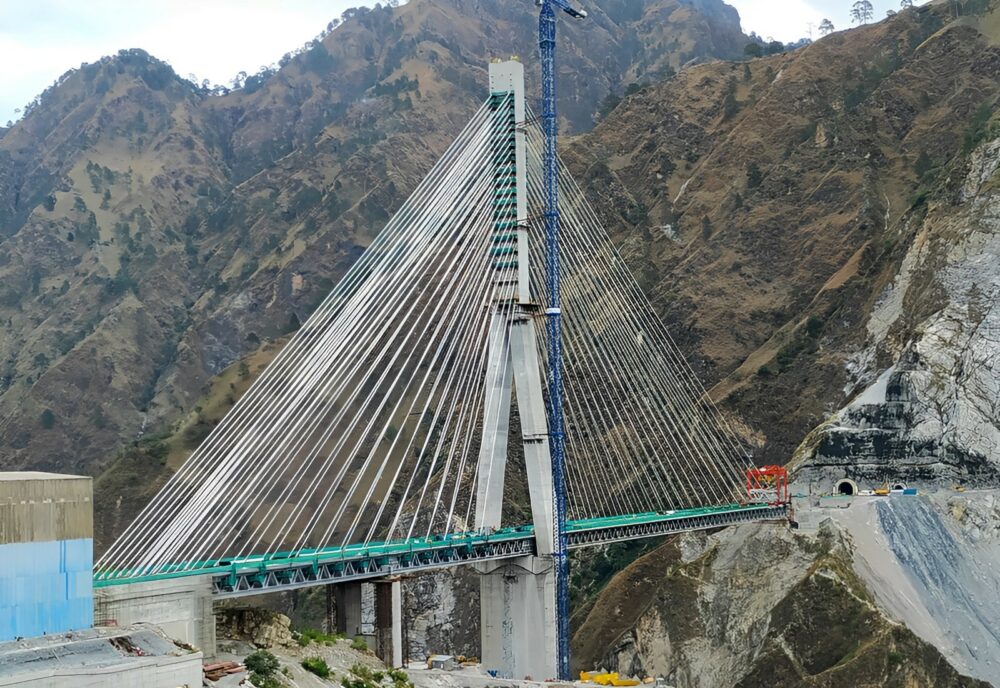
The Anji Khad Bridge, India’s first cable-stayed rail bridge, is a significant engineering achievement under the Udampur-Srinagar-Baramulla-Rail Link (USBRL) project in the Reasi district. The bridge spans 725.5 meters, with a 193-meter-high main pylon standing 331 meters above the riverbed. Its construction overcame geological and seismic challenges, particularly the fragile terrain and space constraints at the Katra end, requiring a special hybrid foundation. The bridge features a 473.25-meter cable-stayed section, with 96 cables ranging from 82 to 295 meters in length. It also includes a 120-meter ancillary viaduct on the Reasi side and a 38-meter approach bridge at Katra. The bridge is designed to handle high winds, with a design wind speed of 213 km/h and a train operation speed limit of 100 km/h. It supports a single railway line, a 3.75-meter service road, and 1.5-meter footpaths on both sides. A hybrid well foundation and 40-meter-deep micro piles were used for the main pylon’s construction. The bridge has an integrated monitoring system with sensors to monitor its structural health. IIT Roorkee conducted site-specific earthquake parameter studies for its seismic safety.
LADAKH
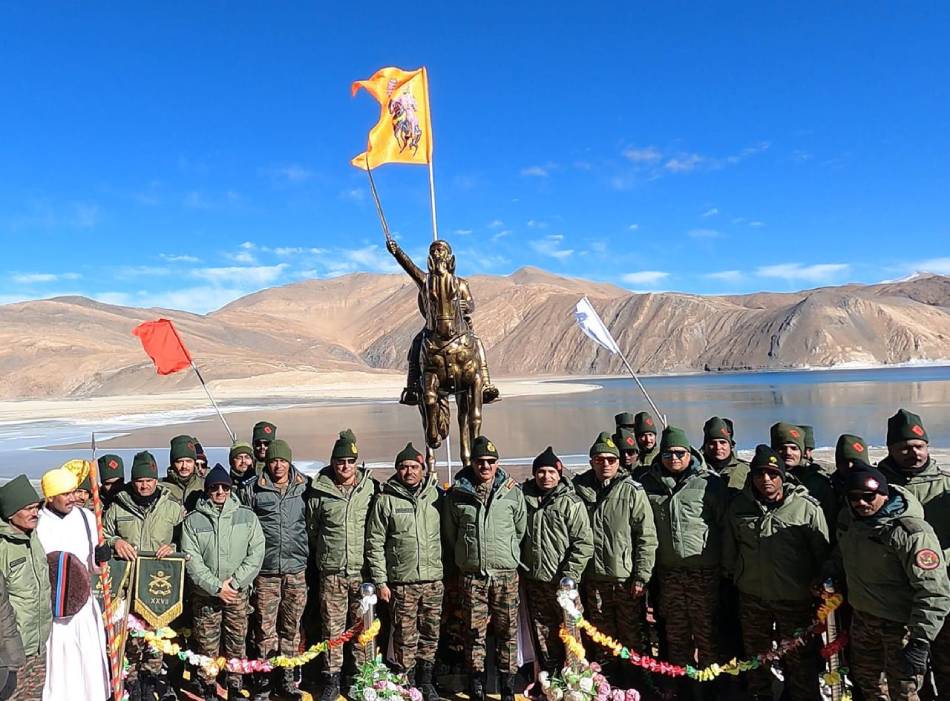
India-China relations, which had seen improvement following the resolution of border tensions in Ladakh, have recently encountered new challenges. India has strongly objected to China’s establishment of two new counties, He’an and Hekang, in Xinjiang’s Hotan Prefecture, claiming that they include territory in Ladakh. India has lodged a formal protest, reaffirming its position on sovereignty over the disputed areas. These developments come shortly after both countries resumed border talks, marking a positive shift in relations after disengagement at friction points in Ladakh. China’s administrative changes in Xinjiang’s Hotan Prefecture, including the creation of new counties covering the Aksai Chin plateau, have raised alarms, as the region has long been a point of contention. This shift in Chinese strategy, along with large-scale infrastructure investments and mining, suggests a broader attempt to solidify control over disputed territories. The move also coincides with India’s creation of new administrative districts in Ladakh, which may be perceived as a response from Beijing. These developments signal a potential escalation in territorial disputes, with both nations likely to navigate heightened tensions in the region.
DELHI
The fourth season of Shark Tank India featured Kashmir-based startup Curve Electric, founded by entrepreneurs Zubair and Yameen, who pitched their sustainable e-bike service to the panel of judges. Despite impressive pitches and customer-friendly innovations, including no need for app downloads or security deposits, the sharks were concerned about the scalability of the business. The entrepreneurs sought Rs 50 lakh for 5 per cent equity and highlighted their plans to expand to other mountain towns and college campuses across India. While the judges admired their customer-focused approach and the company’s impressive performance in Kashmir, they voiced concerns about the small market and reliance on local support for expansion. Vineeta Singh emphasised that the startup’s success would depend heavily on government support. Although the sharks chose not to invest, they praised the founders for their perseverance and vision. Piyush Bansal even compared the entrepreneurs to himself a decade ago, admiring their customer obsession. Despite not securing a deal, the duo walked away with invaluable feedback and increased visibility for their eco-conscious venture, leaving them hopeful about the future.
BUDGAM
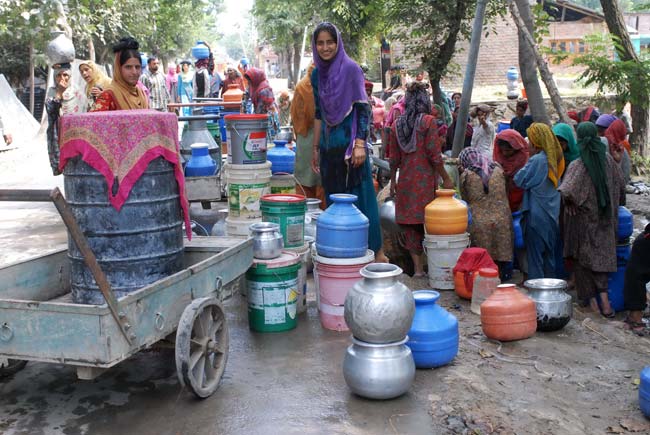
Several areas in Budgam district, including Nagabul, Charar Sharif, and Pakharpora, are grappling with a severe water crisis, prompting protests by residents demanding the restoration of potable water. The issue arises from alleged vandalism at water supply headworks by residents of Pulwama district, who claim ownership of the water source. Efforts by the Public Health Engineering Department to restore supply have been thwarted by local resistance. Pulwama residents argue the water source is vital to their district. The escalating dispute has left thousands in Budgam without clean water, with protesters urging swift intervention from authorities to resolve the conflict.