BARAMULLA
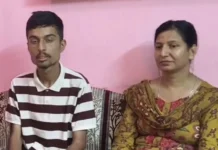
 In a poignant ceremony in Baramulla, Lt Governor Manoj Sinha handed over government appointment letters to 40 survivors from families of militancy victims, some waiting for justice for over two decades. The event brought to light harrowing stories of loss and neglect. Suhail Yousuf Shah of Kupwara lost his mother and uncle in 2002, but said no government had acknowledged their pain until now. Raja Begum, now elderly, broke down as she recalled how four members of her family were murdered in 1999 for refusing shelter. Asha Begum from Handwara, widowed in 1994, said she was left alone with four daughters and forgotten for 30 years. Similar stories were shared by Fayaz Sheikh of Baramulla and Irshad Ahmad of Vilgam, who lost close family members to violence. The L-G reaffirmed that justice, once denied, will now be delivered. He condemned “conflict entrepreneurs” and vowed to remove from government service those who once supported terrorism. Sinha announced district-level helplines and assured investigations into forgotten atrocities, including those against Kashmiri Pandits. The administration, he said, will now actively seek out and support all surviving families, ending decades of silence and abandonment.
Jammu and Kashmir has achieved 100 per cent registration of its public health facilities under the Ayushman Bharat Digital Mission, generating over 94.49 lakh ABHA IDs, linking 20.58 lakh health records, and issuing over 71 lakh OPD tokens via Scan & Share in 102 hospitals.
LEH
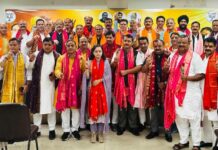
Kavinder Gupta, a BJP leader from Jammu and former Deputy Chief Minister and Assembly Speaker, was sworn in as the new Lt Governor (LG) of Ladakh in Leh. Gupta’s appointment marks a significant political shift as, for the first time, all top positions in Ladakh, the LG, Chief Secretary Pawan Kotwal, and DGP SD Singh Jamwal, are held by officers from Jammu. Gupta promised inclusive governance and outreach across political and religious lines. He plans consultations on demands for Statehood and Sixth Schedule inclusion, stressing his non-partisan role. He highlighted Chinese incursions along the LAC as a pressing issue and pledged unity and development, citing his role in launching the Zojila Tunnel. Unlike previous LGs who came from bureaucracy or the military, Gupta is the first political appointee, signalling a shift in New Delhi’s strategy. Acknowledging Ladakh’s regional divides, he emphasised consensus-building and reaffirmed that governance must touch every citizen’s life. Chief Minister Omar Abdullah welcomed Gupta’s appointment but cautioned that governing Ladakh’s high-altitude, sensitive terrain would be no easy task.
The MHA has given in-principle approval for the CRPF to raise 20 new battalions (over 20,000 personnel) for deployment in Jammu and Kashmir, following the April 22 Pahalgam militant attack and Operation Sindoor.
JAMMU KASHMIR

Nine glacial lakes in Jammu and Kashmir and Ladakh are expanding in size, raising serious concerns about Glacial Lake Outburst Floods (GLOFs). The Central Water Commission (CWC) submitted this data to the National Green Tribunal (NGT), revealing that five lakes in Jammu and Kashmir and four in Ladakh show an increasing trend. Ten dams lie in the flow path of these lakes. The CWC has also finalised a risk indexing system, placing eight Jammu and Kashmir lakes and two Ladakh lakes under Moderate Risk. The NGT has now impleaded the National Institute of Hydrology for expert suggestions, with the next hearing on October 16, 2025.
JKB Financial Services Limited (JKBFSL), a wholly owned subsidiary of JK Bank, has crossed Rs 400 crore in Mutual Fund Assets under Management (AUM), marking a major growth milestone celebrated today at its corporate office.
WASHINGTON
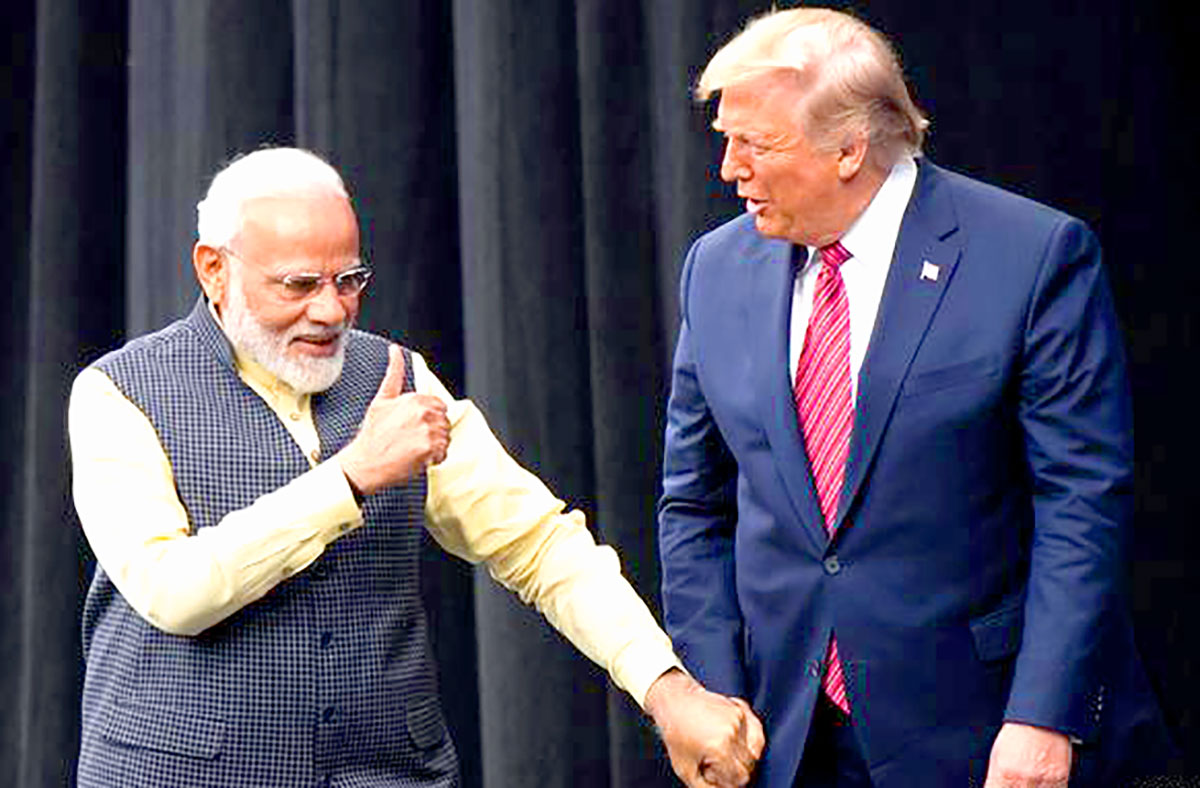
The United States has officially designated The Resistance Front (TRF), which initially claimed responsibility for the April 22 massacre in Kashmir’s Pahalgam, as a foreign terrorist organisation, identifying it as a proxy of the Pakistan-based Lashkar-e-Taiba (LeT). US Secretary of State Marco Rubio said the move reflects the Trump administration’s commitment to counter-terrorism and justice for the victims of the attack, which left 26 civilians, mostly Hindus, dead. The massacre is considered the deadliest on civilians in India since the 2008 Mumbai attacks, which were also blamed on LeT. In New Delhi, the decision is viewed as a diplomatic victory and a strong endorsement of India’s efforts to expose and isolate terrorist networks operating in Kashmir under the guise of new identities.
SRINAGAR
Bajaj, the Indian Army’s first assault dog in Kashmir, passed away on July 15 after a prolonged illness, leaving behind a legacy of bravery and innovation in combat. Fitted with a K9 Surveillance Camera System, Bajaj led high-risk counter-terrorism operations, entering militant hideouts ahead of troops to provide critical visuals, often saving soldiers’ lives. His role marked a breakthrough where even drones proved ineffective. Honoured with multiple commendations, including the Chief of Army Staff Commendation Card, Bajaj was celebrated as a symbol of loyalty, courage, and strength, a true warrior who served the nation fearlessly until his last breath.
SRINAGAR
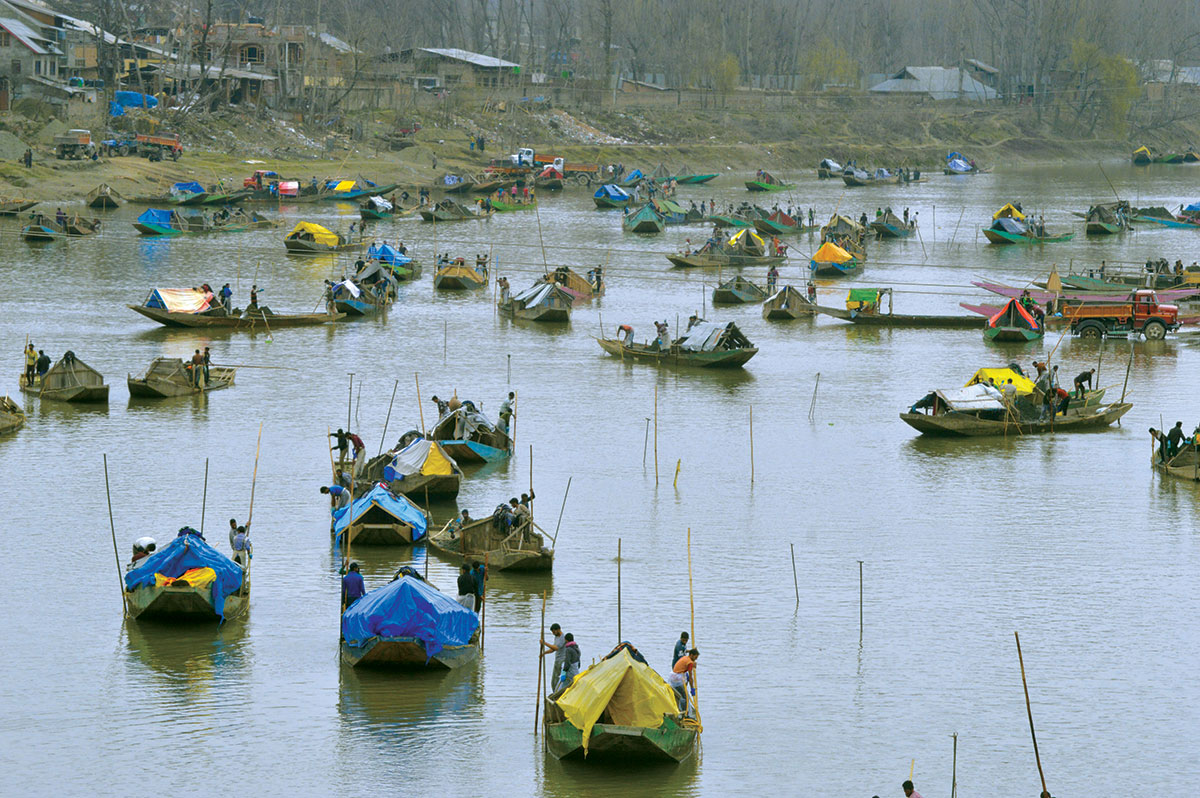
The River Jhelum, vital to Kashmir’s flood management, has not undergone dredging since March 2020, the Irrigation and Flood Control Department revealed in an RTI reply. Despite Phase I of the 2015 flood mitigation plan being 80 per cent complete and Rs 114.29 crore fully utilised, no fresh dredging contracts have been issued. While the river’s discharge capacity has improved since 2014, major encroachments persist across key districts, weakening flood preparedness.
AWANTIPORA
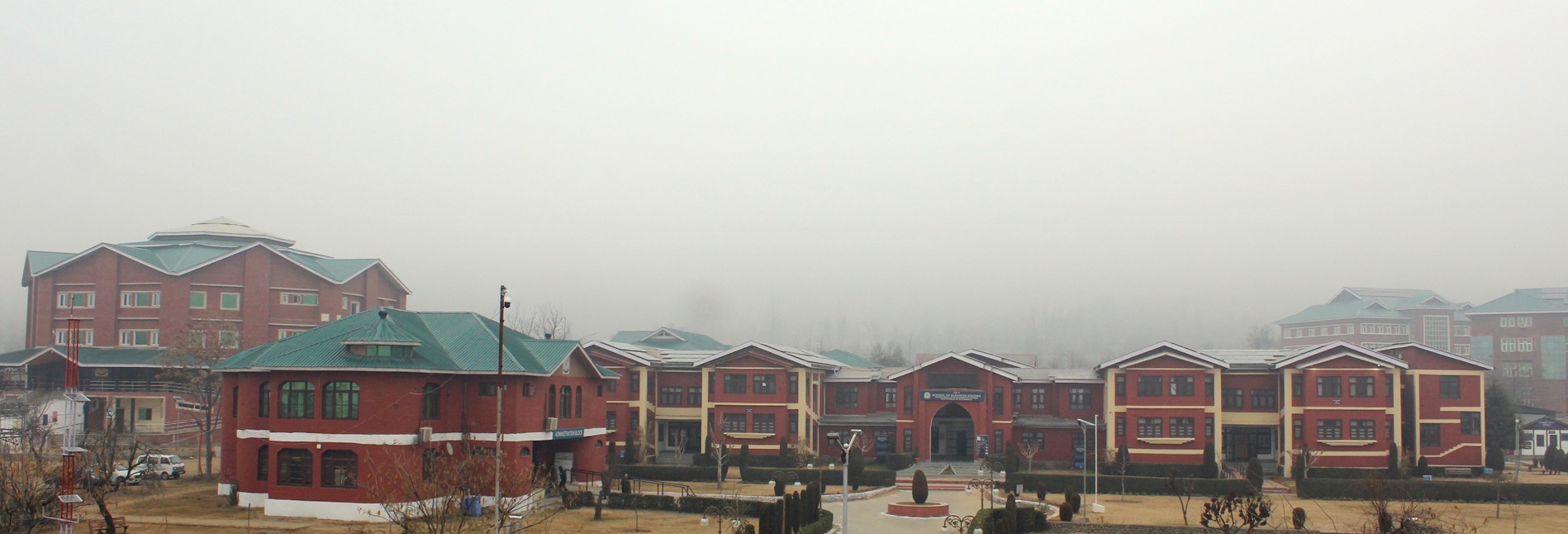
In two decades, the Islamic University of Science and Technology (IUST), Awantipora, has emerged as one of India’s top universities, earning a four-star ranking from the Institution Innovation Council for three consecutive years. The university has shifted from a teaching-focused institution to one emphasising research, innovation, and entrepreneurship. Its Centre for Innovation and Entrepreneurship Development (CIED) has supported 20 start-up ideas from 120 submissions and seen funding rise from Rs 2 crore to Rs 16 crore. The university offers 78 academic programmes, boasts 77 patents, over 2,391 publications, and has awarded 260 PhDs in the last four years. Admissions rose by 50 percent in 2025, with 1,679 new students.
DELHI
Congress leaders Rahul Gandhi and Mallikarjun Kharge have urged Prime Minister Narendra Modi to introduce legislation in the upcoming Monsoon Session of Parliament to restore full statehood to Jammu and Kashmir and grant Ladakh constitutional protections under the Sixth Schedule. In a joint letter, they emphasised that the downgrading of Jammu and Kashmir from a full-fledged state to a Union Territory in 2019 was unprecedented in independent India. The leaders highlighted Modi’s repeated assurances, both in public speeches and before the Supreme Court, about restoring statehood “at the earliest.” They stressed that the people of Jammu and Kashmir have consistently and legitimately demanded this restoration for the past five years. The letter also called for separate legislation to extend constitutional safeguards to Ladakh, ensuring protection of land, culture, and identity. Chief Minister Omar Abdullah welcomed the move, stating that the demand was long overdue and had been repeatedly promised by the central government. He urged the Centre to act promptly. The letter signals that the INDIA bloc may press the issue in Parliament, as political voices across Jammu and Kashmir continue to demand democratic accountability and governance through the restoration of statehood.
KATRA

The Ministry of Railways has sanctioned a Final Location Survey (FLS) for a new 77.96 km rail line between Jammu and Katra to ease pilgrimage to the Mata Vaishno Devi shrine and improve connectivity. The existing single-line route, constrained by 30 tunnels and sharp curves, is overburdened and cannot be doubled. The new line aims to allow faster trains and potentially extend services from Delhi to Srinagar, fulfilling long-standing demands. Northern Railway will conduct the FLS at an estimated cost of over Rs 12 crore. The survey is expected to conclude within 8–10 months, paving the way for further development.
URI
Punjab Police’s State Special Operation Cell has arrested Indian Army soldier Devinder Singh in Uri, for allegedly leaking classified military information to Pakistan’s ISI. The arrest followed disclosures by ex-Army man Gurpreet Singh, already in custody in an espionage case. Both men reportedly met during Army training in 2017 and served together later. Preliminary probes suggest they shared sensitive documents with external operatives. Singh was remanded to police custody for six days. Authorities are continuing investigations and have not ruled out further arrests as part of the widening probe into the espionage network compromising national security.
LADAKH
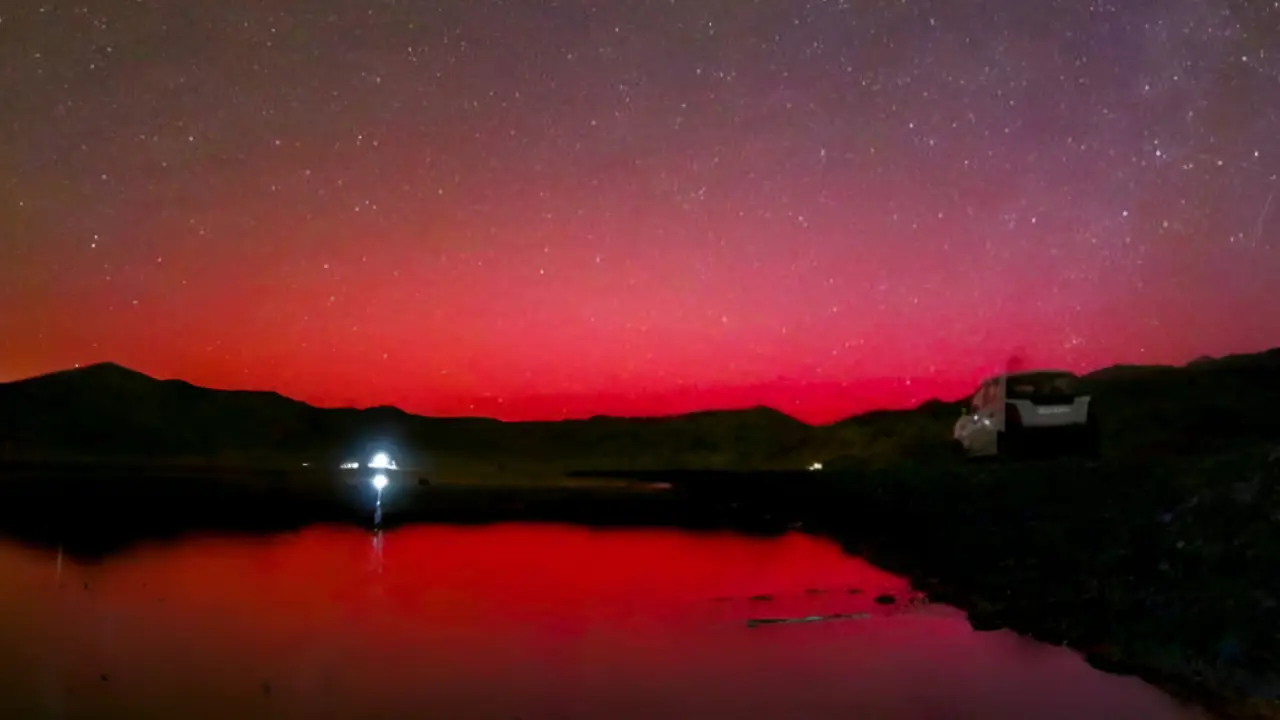
In May 2024, rare red and green auroras lit up Ladakh’s skies, caused by one of the most intense solar storms in over two decades. Scientists from the Indian Institute of Astrophysics (IIA) traced the phenomenon to a historic sequence of six interacting Coronal Mass Ejections (CMEs) from a hyperactive region on the Sun. Using NASA and ESA data, the team applied the Flux Rope Internal State (FRIS) model to map the CMEs’ thermodynamic evolution, revealing surprising heating and cooling patterns. A double flux rope structure was detected as the storm reached Earth, offering fresh insight into space plasma dynamics. The findings, published in Astronomy and Astrophysics, mark a breakthrough in heliophysics and space weather forecasting. The spectacle reoccurred in October 2024, marking the fourth auroral sighting in Ladakh during Solar Cycle 25. These auroras were accurately predicted using machine learning by CESSI at IISER Kolkata. Scientists warn that severe solar storms could damage satellites, power grids, and communication networks. As the solar cycle nears its peak, India’s Aditya-L1 mission is expected to further strengthen forecasting capabilities.
JAMMU KASHMIR
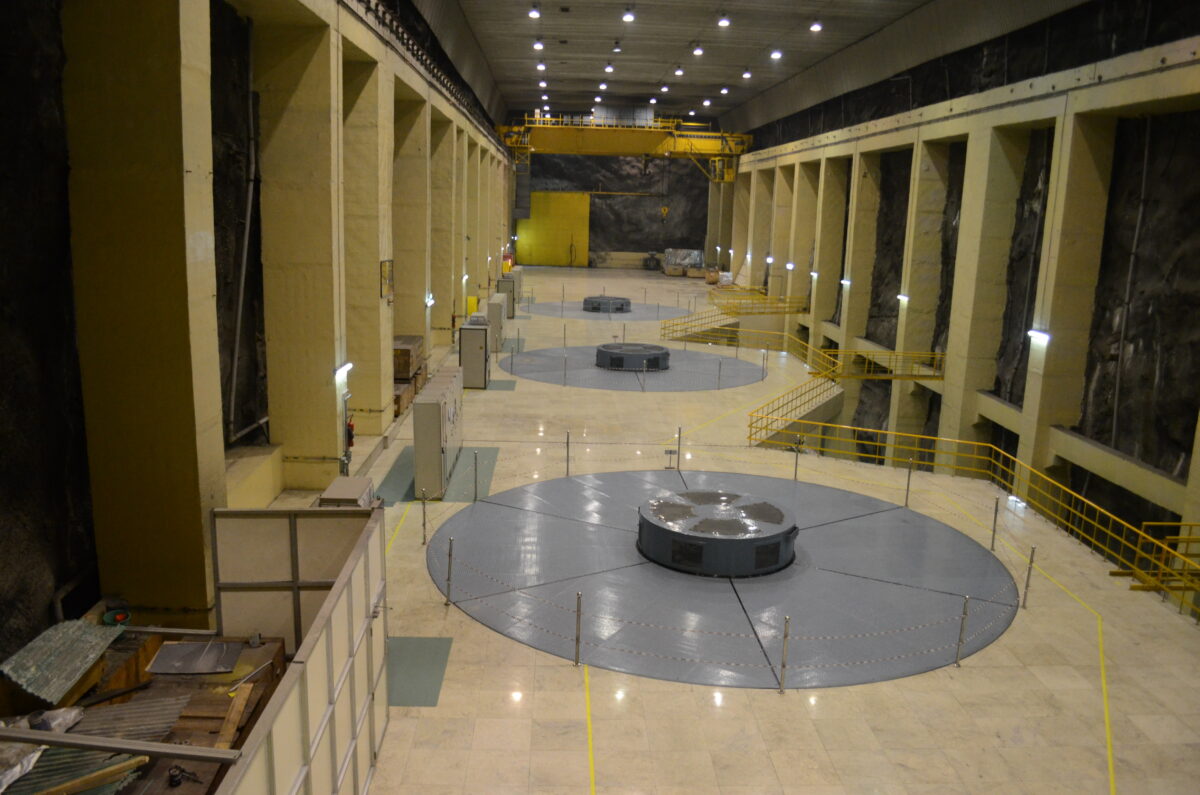
India has initiated a major upkeep of its hydropower infrastructure in Jammu and Kashmir following its suspension of the Indus Waters Treaty with Pakistan after the April 22 Pahalgam massacre. For the first time since their commissioning, sediment flushing has been completed in the Salal (690 MW), Baglihar (900 MW), and Dulhasti (390 MW) dams on the Chenab River, enhancing their efficiency. Previously restricted under treaty terms, such flushing was limited to once a year. Now, NHPC Ltd has invited bids for desiltation, hydrographic surveys, and structural repairs across key projects, including Uri-II and Sewa II. The Salal dam is undergoing its first hydrographic survey since 1987, and officials say desilting will significantly improve power generation. Pakistan, which has accused India of “weaponising water”, has demanded talks, but India is pushing ahead with long-pending maintenance and new infrastructure proposals. The treaty, though never paused in decades, has now been sidelined amid rising strategic and water concerns.
SRINAGAR

The Jammu and Kashmir government is set to launch a major e-commerce push through a partnership with the Open Network for Digital Commerce (ONDC) under Mission YUVA. Over the next six to nine months, over 1,000 sellers and 500 gig workers will be onboarded, beginning with Jammu and Srinagar. The initiative will digitise services, support artisans and retailers, and promote local products like Pashmina and saffron. Inspired by Andhra Pradesh’s model, the strategy includes logistics hubs, paperless loans, and QR-code catalogues. Tourism services, such as Shikara rides and homestays, will also be brought online, aiming to transform Jammu and Kashmir into a digital-first economy.