DALGATE
Abdul Rahman Kumar has stood quietly among departing pilgrims in Srinagar for over four decades, not to see off family, but to feel close to a journey he could never afford. Dressed in his pheran, hands raised in prayer, the 70-something-year-old has become a familiar figure at the Hajj House in Bemina, his presence part of the ritual.
“I have no one to send,” he often said. “I come because it brings peace to my heart.”
Abdul Rahman has never performed Hajj. The cost kept him away. But each year, he came anyway, watching others leave, asking them to remember him in Makkah. Over time, people began to notice. They waved, smiled, and spoke to him. His quiet devotion touched many.
This week, his story reached social media. Within hours, strangers came together to fund his pilgrimage. Donations poured in. His ticket is now fully sponsored.
He will not go this year, the formalities take time, but next year, if health and fate permit, he will finally board the plane he’s watched for decades. “I was never on the list,” he once said. “But my heart was already there.” Now, so is his name.
KERALA
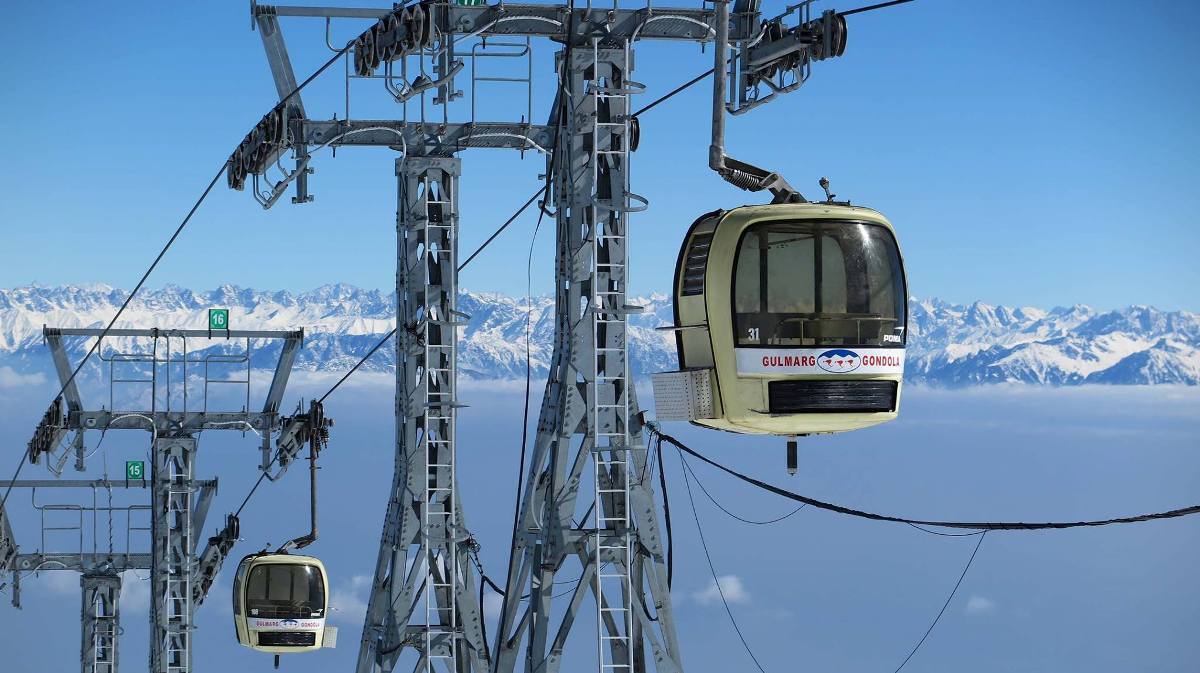
Muhammed Shanib, a 26-year-old from Palakkad district in Kerala, has been found dead in a dense forest near Gulmarg in north Kashmir, days after going missing. His family, unaware of any travel plans to Kashmir, was informed by local police that his body bore injuries resembling a wild animal attack.
Shanib had been working in Bengaluru as an accountant and returned home briefly on April 5. He left again on April 13, but his family last heard from him via brief text messages. There were no indications he intended to travel to Kashmir.
He had struggled with mental health issues in the past, particularly after an unsuccessful attempt to enter medical school. Officials say his phone showed last activity in Delhi, with no calls or messages thereafter.
The family has sought help from the Kerala Chief Minister’s office to bring his body home. Investigations continue.
KASHMIR

As wedding season unfolds across Kashmir, many find themselves torn between celebration and uncertainty. On one hand, families are preparing for long-awaited unions; on the other, war clouds loom after missile strikes between India and Pakistan. Amid the tension, economic jitters have gripped the markets, none more so than the soaring price of gold. In Delhi, gold surged past Rs 1 lakh per 10 grams on Wednesday last, hitting Rs 1,00,750. The surge reflects both panic and prudence, as people rush to hedge their savings in bullion. But for families planning weddings, the rise has turned tradition into hardship.
JAMMU KASHMIR
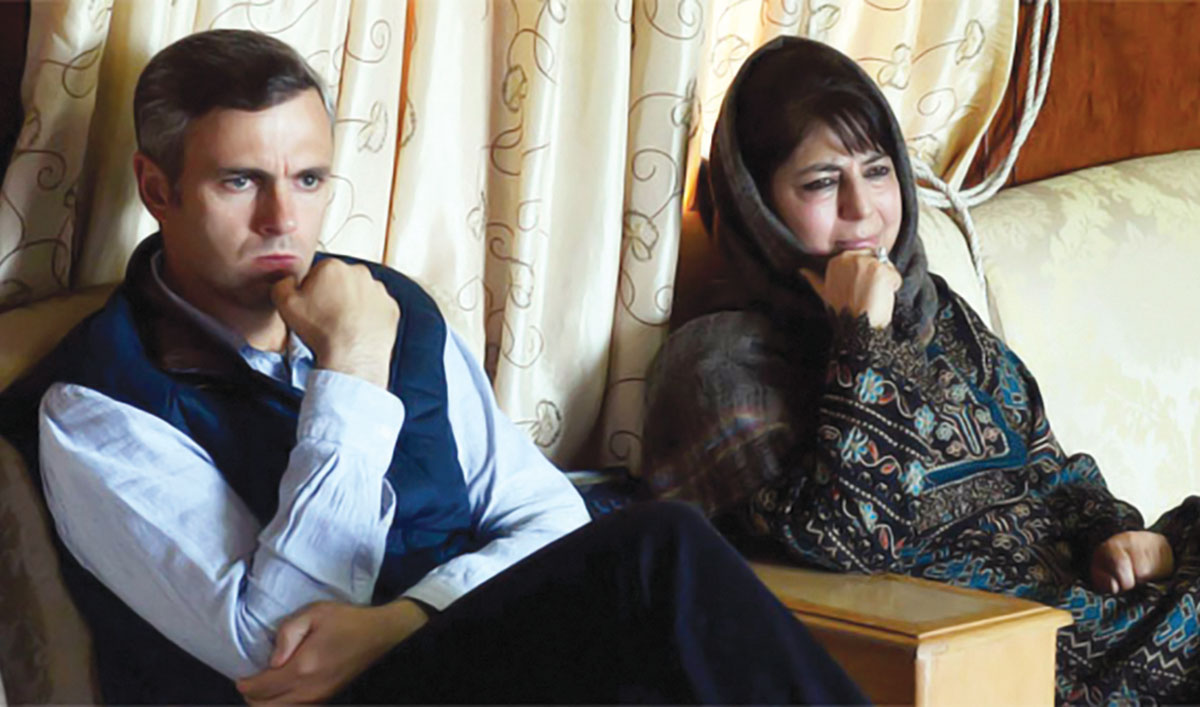
In the wake of the Pahalgam massacre and subsequent confrontation on the borders, Jammu and Kashmir’s leadership has issued strong appeals to safeguard innocent civilians during the intensified crackdown on militancy. Chief Minister Omar Abdullah emphasised that the fight against terrorism must not result in collective punishment. While affirming the need to act decisively against the perpetrators, he warned that indiscriminate detentions and aggressive tactics risk alienating the very people who have publicly rejected violence. The death of 22-year-old Imtiyaz Ahmad Magray from Kulgam, allegedly in security custody, has heightened these concerns, especially as conflicting accounts surround the incident. Abdullah admitted the death “should not have happened” and called for caution in further operations. Other prominent voices, including PDP president Mehbooba Mufti and People’s Conference leader Sajad Lone echoed similar sentiments, highlighting widespread arrests and alleged demolitions of civilian homes.
CHENAB

In a dramatic development following the April 22 Pahalgam massacre, authorities temporarily halted the Chenab River’s flow at Baglihar and Salal dams for over 30 hours, causing an unprecedented drop in water levels. The riverbed at Akhnoor, Reasi, Ramban, and surrounding areas was nearly dry, with the water depth falling to barely a foot. This rare sight attracted hundreds of locals, including women and children, who waded across the river, shot videos, and gathered at ghats as if attending a fair. People searched the exposed riverbed for valuables, even recovering gold and silver ornaments. Police were deployed to warn residents against crossing the river, anticipating a sudden surge in water due to rain in the catchment areas. Authorities later began reopening dam gates, slowly restoring river flow. Locals expressed shock, saying they had never witnessed the Chenab run so dry. A mighty river, it has been said for generations that anything that falls in the Chenab can never be reclaimed. Even choppers fell and were never seen but now the tensions between India and Pakistan led the river to show its riverbed for the first time in history.
JAMMU KASHMIR
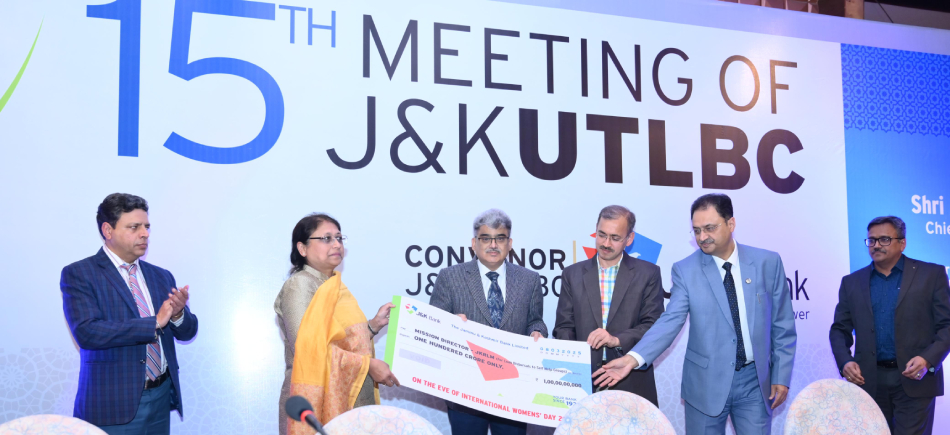
Jammu and Kashmir’s banking sector has registered significant progress in financial inclusion, credit delivery, and social welfare implementation during 2024-25. Banks disbursed Rs 36,575 crore under the Annual Credit Plan, achieving 92 per cent of the set target. JK Bank led the performance, surpassing physical and financial targets by over 130 per cent and disbursing Rs 5,537 crore to nearly 3 lakh MSME accounts. The MSME sector received Rs 22,688 crore—62 per cent of total priority sector lending—while agriculture credit touched Rs 6,430 crore against an Rs 11,056 crore target. Social security schemes also expanded impressively: 6.04 lakh new enrolments were recorded under PMSBY and 2.47 lakh under PMJJBY, with total claim disbursements exceeding Rs 19 crore.
Atal Pension Yojana added 24,230 new subscribers, with plans to include Self Help Groups and construction workers under full premium coverage. The Union Territory now boasts 2,197 bank branches, 5,135 Banking Correspondents, and 2,661 ATMs—ensuring one banking point per 1,227 people. Efforts are ongoing to cover remaining unbanked rural centres and launch IT-backed initiatives like RuPay cards, smart KCC cards, and a grievance portal. The progress reflects rising public confidence in J&K’s banking infrastructure.
SRINAGAR
Jammu and Kashmir Bank has reported its highest-ever annual net profit of Rs 2,083 crore for FY25, marking an 18 per cent year-on-year growth, driven by strong other income and improved asset quality. Despite a dip in Q4 profit to Rs 585 crore due to increased provisioning, the bank’s operational metrics remained solid, with pre-provision operating profit rising over 20 per cent to Rs 800 crore. Annual net interest income grew 11 per cent to Rs 5,794 crore, and other income surged 38 per cent to Rs 1,137 crore, cushioning margin and provisioning pressures. Gross NPAs improved to 3.37 per cent, net NPAs to 0.79 per cent, and the provision coverage ratio remained above 90 per cent. Deposits rose to Rs 1.49 lakh crore and net advances to Rs 1.04 lakh crore, with a CASA ratio of 47 per cent. The board recommended a dividend of Rs 2.15 per share for FY25. The bank plans a 12 per cent AUM growth in FY26, led by agriculture and corporate lending. With two-thirds of its business in Jammu and Kashmir, JK Bank is expanding its national footprint. Tourism exposure remains minimal, ensuring stability amid regional disruptions. Its market capitalisation stands at Rs 10,616 crore.
JAMMU KASHMIR
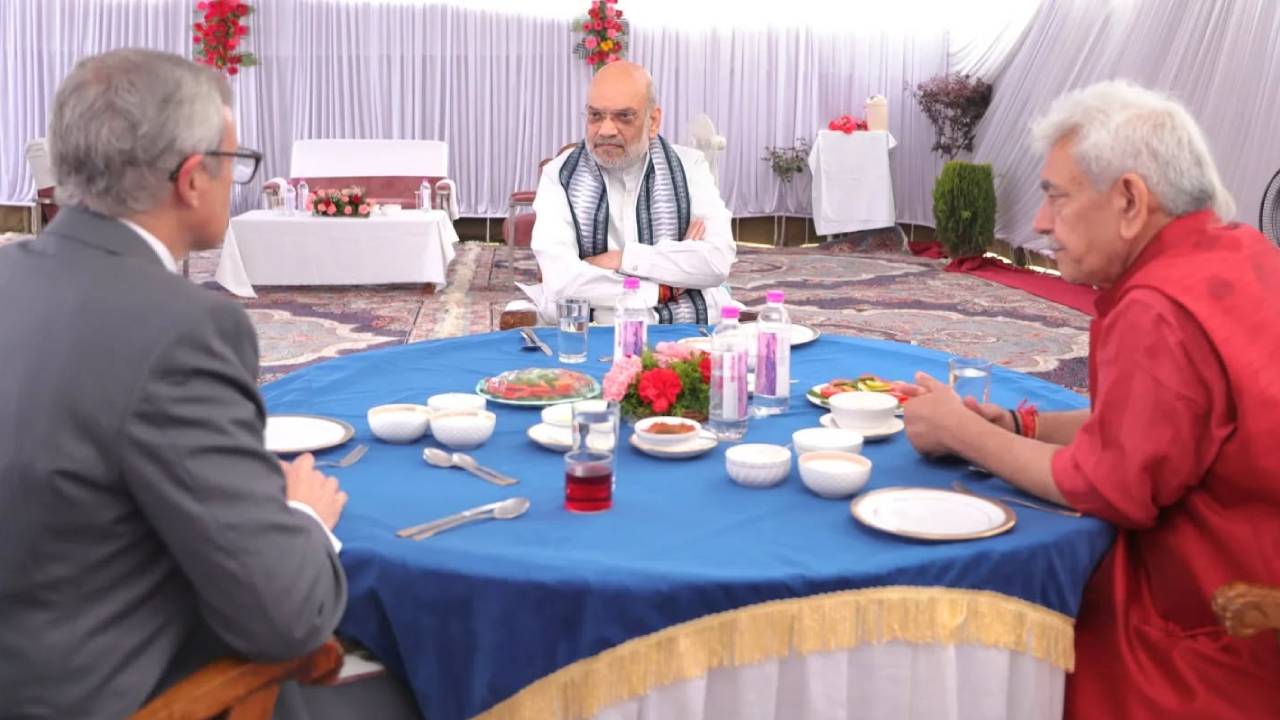
More than six months into its tenure, the Omar Abdullah-led Jammu and Kashmir government remains locked in a standoff with Raj Bhawan over the Transaction of Business Rules (TBR), which are meant to define the functioning of the secretariat and government offices in the Union Territory. In early March, the elected government sent the TBR to Lt Governor Manoj Sinha for approval, but the LG recently returned the file, citing concerns over procedural compliance and suggesting that parts of the rules contravene the Jammu and Kashmir Reorganisation Act. At the heart of the dispute is a clause requiring all postings and transfers, including those of IAS officers, to be approved by the Cabinet. The LG’s office maintains that this undermines Section 53 of the Reorganisation Act, which gives the LG discretionary authority over All India Services and other specified matters. Despite this, the Cabinet resubmitted the TBR unchanged, asserting that all procedural norms had been met and the LG’s objections were unfounded. The disagreement reflects a broader power tussle between the elected administration and the LG, particularly over bureaucratic control. The Abdullah government has also objected to IAS officers occupying posts traditionally held by JKAS officers, further straining the coordination between the two branches.
NISHAT
In a horrific case that has sparked widespread outrage, Jammu and Kashmir Police have arrested four men for allegedly sexually assaulting and killing a nomadic woman in her early 40s near Water Works Road in Nishat, on the outskirts of Srinagar. The woman, originally from Reasi and currently living in the area with her livestock, was attacked while herding cattle on Sunday. Police said the accused, all local men under the influence of alcohol, inflicted grievous injuries on the victim, who later succumbed at the hospital. Following swift action, all four suspects — Suhail Bashir Bhat (Asham, Sumbal), Adil Ali Bhat and Firdous Ahmad Rather (both from Zeethyar, Nishat), and Suhail Afzal Bhat (Pahloo, Brein) — were apprehended and produced before the Chief Judicial Magistrate (CJM) Srinagar on Monday. The court granted six days of police custody to enable further investigation. An FIR (No. 35/2025) has been registered under relevant sections, and the investigation remains ongoing. The brutal crime has shocked the public and prompted civil society groups to call for the harshest possible punishment for the accused. Police say further evidence is being collected as part of an intensified probe into the case.
SRINAGAR

With the BJP-led administration having informally ended the century-old Durbar Move, where the Jammu and Kashmir government alternated between Srinagar and Jammu every six months, Chief Minister Omar Abdullah resumed office at the Civil Secretariat in Srinagar on May 5, marking the summer phase of governance. Though the traditional ceremonial march past was missing, government functioning resumed much like in previous years. In his message, Abdullah called for a focus on “action, accountability, and development,” urging officials to make the most of the six-month Srinagar tenure. Chairing a high-level meeting on the reopening of offices, he stressed the importance of grassroots governance and the timely execution of budget priorities. He asked departments to deliver measurable results so that meaningful progress can be shown when offices return to Jammu. Despite the Durbar Move’s quiet dissolution under the BJP, the government continues to follow its seasonal rhythm for now, with Abdullah reaffirming his commitment to effective governance.
SRINAGAR

On a thought-provoking visit to Kashmir, physicist and educationist Professor Harish Chandra Verma urged students to reclaim education as a pursuit of curiosity, not just a gateway to jobs. Engaging with institutions like NIT Srinagar and Islamia College, he questioned the overwhelming focus on medical careers, asking if the country truly needed so many doctors. Expressing concern over the decline in interest in core sciences, he said subjects like physics and mathematics demand innovation, yet are increasingly sidelined for more marketable disciplines.
In lectures and interactions, Verma advocated for a shift from rote learning to inquiry-driven education. At NIT Srinagar, he told students that real science begins where textbooks end and called for exploration beyond JEE and NEET. He underscored the role of critical thinking, especially in addressing challenges like environmental sustainability, urging responsible resource use to become part of academic and daily life. Drawing on his initiative Shiksha Sopan, he promoted the idea that education must remain a service, free from commercial motives. He expressed optimism about government schools if given proper support and teacher training. For him, true education lies in asking “why,” not just “what,” and in choosing dignity and purpose over mere degrees.