JAMMU KASHMIR
The controversy over Jammu and Kashmir Bank’s new recruitment policy has largely centred on demands for raising the upper age limit, but the bigger question of the bank’s first-time adoption of the Union Territory’s reservation framework has received less attention. The bank, historically treated as a private-sector commercial institution, was not previously covered by the government’s reservation policy for recruitment.
The amended framework, introduced during the tenure of former chairman RK Chhibber in 2021-22, has now been applied to 1,356 vacancies, including 323 Probationary Officers and 1,033 Banking Associates. It earmarks 60 per cent of posts for reserved categories and 40 per cent for Open Merit, while reducing the Open Merit age ceiling from 32 to 30 years and allowing relaxations for reserved categories.
The move has triggered opposition from political parties, student organisations and religious groups, with several demanding that the upper age limit be raised to 40. However, the simultaneous opposition to reservation and demand for wider age relaxation has exposed a contradiction in the political response.
The central issue, however, goes beyond the distribution of vacancies. The JK Bank is classified by the Reserve Bank of India as an old-generation private-sector bank, despite government shareholding, and has historically recruited on commercial criteria rather than under the government’s reservation framework. The Jammu and Kashmir High Court, in a 2006 Full Bench judgment in Firdous Ahmad Tanki and Others v. J&K Bank Ltd., had also held that the bank did not qualify as ‘State’ or an instrumentality of the State under Article 12 of the Constitution. The first-time application of the 60 per cent reservation matrix, therefore, raises questions about the legal and institutional basis for extending government reservation rules to a commercial banking institution. Critics argue that the debate should first establish why the bank, which was not previously covered by the policy, has now chosen to adopt it, rather than remain confined to demands for age relaxation and a larger share of vacancies.
Over 300 female postgraduate students at the University of Kashmir are reportedly being denied hostel accommodation.
NAGPUR
Kashmir’s saffron economy continues to face a crisis as poorly managed fields, erratic weather and declining soil moisture constrain production, threatening the livelihoods of thousands of growers. Although this year’s harvest has improved by over 15 per cent compared with last season, the long-term challenges remain. At the same time, saffron corms being smuggled out of Kashmir are helping fuel a new indoor-farming enterprise elsewhere in the country.
Technology is changing how the expensive spice is cultivated. Using aeroponic systems, growers are recreating saffron’s growing conditions inside air-conditioned rooms, controlling temperature, humidity and lighting to produce flowers without conventional fields. A Nagpur couple, Divya Lohakare Holey and Akshay Holey, began experimenting in 2020 with 100 saffron corms sourced from Kashmir. They converted an 80-square-foot room into a growing unit, installing an air conditioner and humidifier. More than 80 corms flowered in their first experiment. Their venture, Shaya Enterprises, has since expanded production, marketing and training. It reported Rs 30 lakh in revenue in FY25, while the couple has trained around 150 aspiring growers, some of whom have established their own units.
The contrast is striking: while Kashmir struggles to revive traditional saffron fields, technology is enabling people across India to grow the crop indoors—even at home.
JAMMU KASHMIR
A week after a senior police officer said Kashmir had been reduced to just one surviving local militant, along with a few non-locals; two incidents have put the security establishment on alert. In Kulgam, militants opened fire on a CRPF checkpoint on November 11, injuring three personnel. Preliminary investigations suggested the involvement of at least three attackers, two believed to be foreigners. A day later, two Special Police Officers, Babi Chand and Rashpal Kumar, were found shot dead in Kishtwar’s Dachhan area, with their service weapons missing. While the circumstances of the killings remain under investigation, both incidents have triggered intensified security measures across the erstwhile state.
JAMMU

A madrasa in Jammu has collected over 50 pints of blood at a donation camp organised last week following an urgent appeal from SMGS Hospital over a shortage of blood. The camp, held at Jamia Markaz-ul-Ma’arif in Bathindi, saw participation from faculty, staff and students. Erstwhile MLC Firdous Tak coordinated the initiative and also donated blood. The seminary has previously organised similar humanitarian assistance, including shelter for people displaced during Operation Sindoor last year and a blood donation drive that collected around 60 units.
KASHMIR
Kashmir’s traditional chefs have finally moved to confront a wedding culture increasingly marked by extravagance, ostentation and punishingly late-night feasts. The Kashmir Waza Association has unanimously decided that its members will not serve Wazwan at weddings or other functions beyond 10 pm. Association president Ghulam Nabi Baba said chefs and their assistants were routinely made to work from morning until after Fajr prayers, often without basic facilities for rest. The decision also exposes a wider social malaise: weddings have become expensive spectacles where guests routinely arrive hours after the scheduled time, keeping hosts and workers waiting. Restrictions that could have come from religious leadership, community elders or the administration are now being initiated by the people bearing the brunt. The chefs are demanding not privilege, but dignity and reasonable working hours.
LADAKH
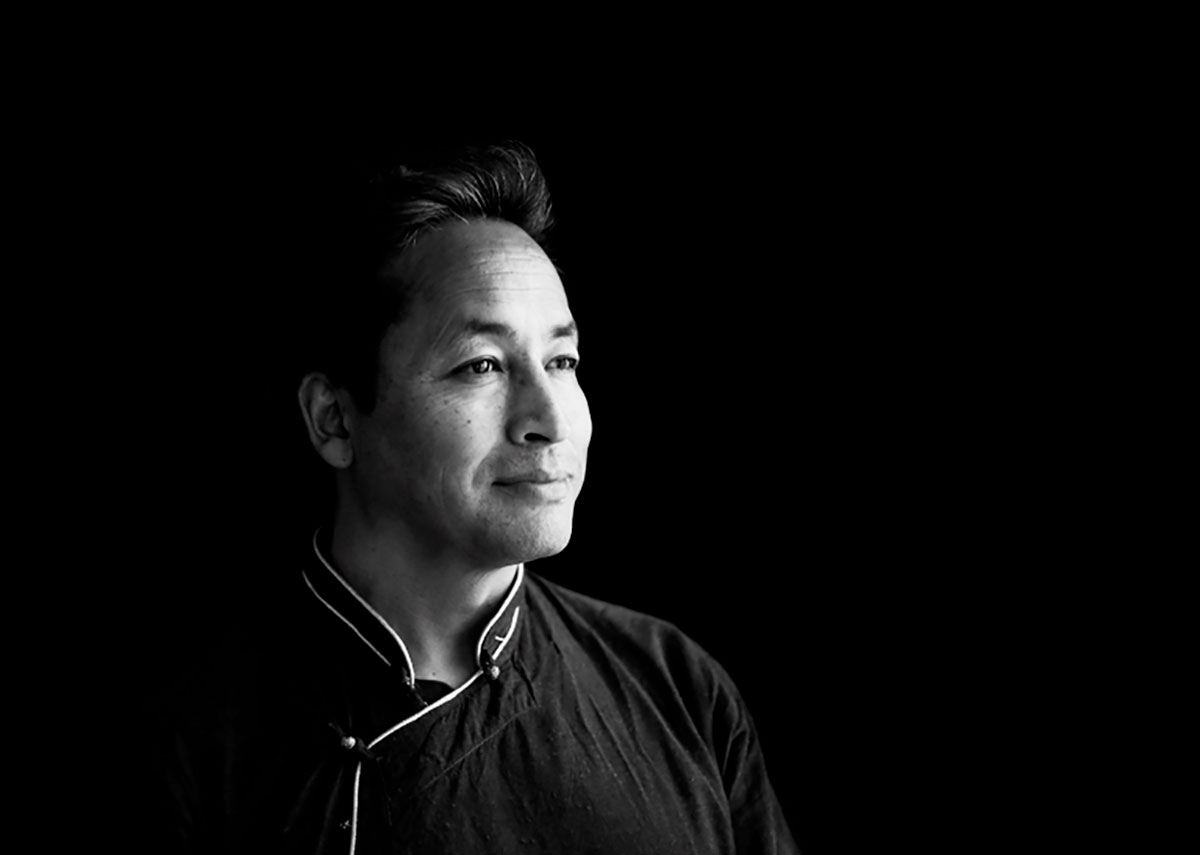
Ladakh’s confrontation with the Centre has intensified, with the Leh Apex Body (LAB) resuming protests and climate activist Sonam Wangchuk placed under 60-day movement restrictions. Wangchuk has described the action as house arrest, alleging that cops have surrounded his residence and curtailed his freedom of movement and speech. The administration maintains that the restrictions, imposed under Section 163 of the Bharatiya Nagarik Suraksha Sanhita, are intended to protect public order and the ongoing electoral process. The immediate flashpoint is the December 4 Ladakh Autonomous Hill Development Council elections, whose timing local leaders oppose because of harsh winter conditions and seasonal migration. But the discontent runs deeper: stalled talks on constitutional safeguards, the delayed judicial inquiry report into the September 24, 2025 violence in Leh, and demands for accountability. With promised October 22 talks failing to materialise, Ladakh’s political deadlock is returning to the streets
GUPKAR
The National Conference has begun setting up informal advisory groups of legislators attached to each minister, in a bid to contain internal dissent following last month’s Cabinet expansion. Party president Farooq Abdullah has written to MLAs seeking their preferences for ministers they wish to be associated with. Each legislator can join up to two groups and must nominate three ministers in order of preference. The groups are expected to serve as a bridge between the party and government, with ministers required to hold regular meetings and brief members on departmental initiatives. The move follows protests by at least 18 legislators who felt sidelined after four new ministers were inducted. While the leadership has promised phased redressal, the advisory groups appear to be an attempt to give disgruntled legislators a stake in governance without expanding the Cabinet.
DELHI

Kashmir occupies a deeply personal place in Sonia Gandhi’s memoir, moving from family ancestry and happy holidays to insurgency, violence and the loss of statehood in 2019. She recalls how her mother-in-law, Indira Gandhi, preserved the Nehru family’s Kashmiri Pandit traditions through food, festivals and wedding rituals. Sonia and Rajiv spent their honeymoon on a houseboat on Nagin Lake, visited Srinagar’s Mughal gardens and travelled to Pahalgam, where Rajiv revisited childhood memories. She also recounts Indira’s final visit to Kashmir on October 26, 1984, five days before her assassination. Indira visited the Sharika Devi temple and Makhdoom Sahib shrine and regretted that the Chinar leaves had not yet turned golden. The memoir’s tone changes when Sonia recalls the insurgency, the 2003 Nadimarg massacre of 24 Kashmiri Pandits, the Kargil conflict and the 2019 Pulwama attack. Reflecting on Kashmir’s political trajectory, she asks: “How many mistakes, some of them in good faith, had been made for this beloved state to come to this pass?” Her account culminates in a reference to Kashmir losing statehood in 2019.
BARAMUMULA
A six-year-old boy was mauled to death by a leopard in Kalantra village of Kreeri, exposing once again the failure of the local administrative and municipal machinery to address the growing human-wildlife conflict. The victim, identified as Kifayat Bhat, son of Mohammad Ramzan Bhat, was critically injured in the attack and later succumbed at a hospital. The incident has renewed concerns over the absence of effective preventive measures, particularly in vulnerable settlements where wildlife movement poses a recurring threat. Authorities have taken cognisance and initiated an investigation, but accountability and preventive action remain essential.
SOPORE
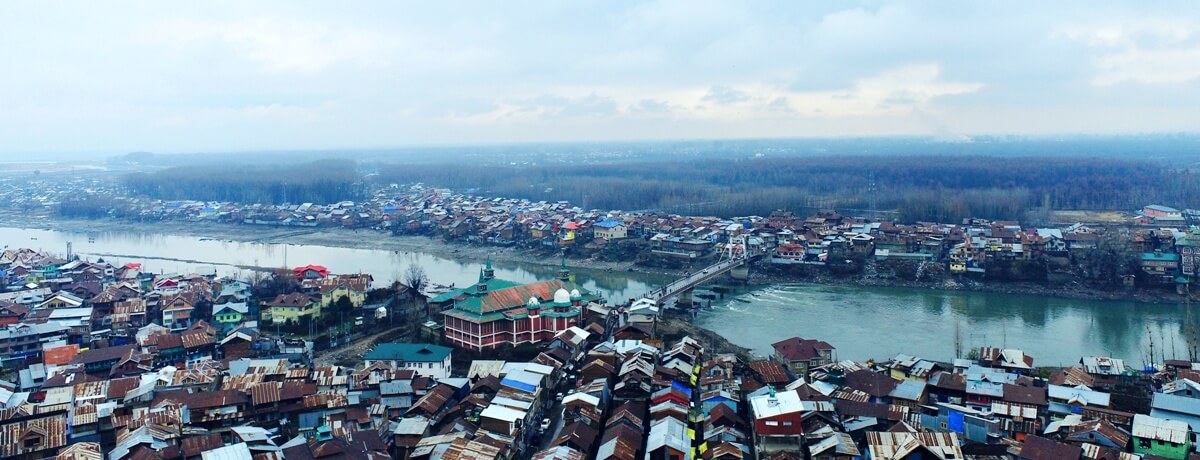
A special court in Sopore has ordered the release of two north Kashmir youths after six years in detention in a case registered under the Unlawful Activities (Prevention) Act (UAPA) and Arms Act, holding that “suspicion, however grave, cannot substitute proof”.
Special Judge Feroz Ahmad Khan acquitted Huzaif Firdous Bhat of Choora, Sopore, and Ajaz Ahmad Khan of Najibhat, Kreeri, observing that the prosecution had failed to establish the charges beyond reasonable doubt. Police had alleged that the duo were transporting two grenades, 100 AK-47 rounds and documents bearing the name of proscribed Lashkar-e-Taiba in 2020.
The court said mere association with a terrorist organisation, without reliable evidence of intentional assistance, was insufficient for conviction and directed their immediate release.
Kashmir chief cleric Mirwaiz Umar Farooq expressed concern over the six years lost in detention, questioning whether authorities would fix accountability for prolonged incarceration on evidence ultimately found unreliable.
JAMMU

Jammu is set to emerge as the country’s first centre for developing cannabis-based painkillers, Union Minister Jitendra Singh said, describing the CSIR-Indian Institute of Integrative Medicine (IIIM) project as a breakthrough in medicinal research. Developed in collaboration with a French company, the drug candidates are being explored for pain management, cancer-related pain and neuropathies, among other applications. The project is moving towards pre-clinical trials in collaboration with Tata Memorial Centre, Mumbai. Cannabis, traditionally associated with drug addiction, could offer therapeutic relief if scientifically processed and used under regulatory safeguards. The initiative also aims to develop export-quality medicines.