SRINAGAR: In a significant expansion of its mandate in Jammu and Kashmir, the Central Industrial Security Force (CISF) has formally taken over security responsibilities at the Union Territory’s two most sensitive prison facilities — Central Jail Srinagar and Kot Bhalwal Central Jail in Jammu. This development, which CISF confirmed via an official post on X, marks a major shift in the management of jail security and comes amid mounting concerns over prison overcrowding and radicalisation threats.
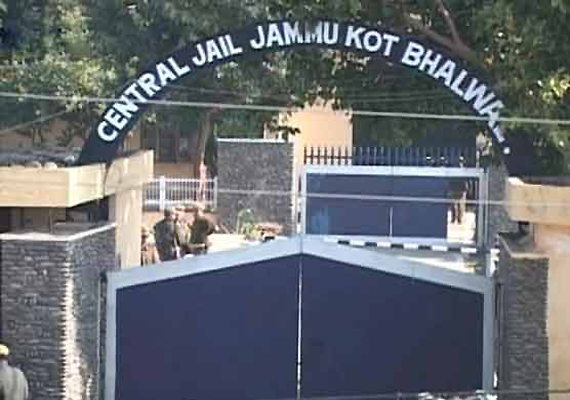
The Srinagar Central Jail, located in the heart of the city, and Kot Bhalwal in Jammu have long been regarded as high-security correctional institutions, housing high-profile inmates, including convicted terrorists, undertrial militants, and political prisoners. With this transfer, the CISF will now oversee the inner-ring security operations of both facilities, while the Central Reserve Police Force (CRPF) continues to maintain control over the outer perimeter.
A CISF spokesperson said, “We also secure you where we don’t want you to be. Our personnel are trained to the highest standards of professionalism and vigilance, and we are now committed to ensuring that these critical institutions remain secure from both internal and external threats.”
Following the formal takeover, the CISF has deployed specialised units across key control points, including entry and exit gates, watchtowers, and surveillance hubs. The agency is integrating its advanced layered-security architecture into the jails, which includes full-body scanners, sniffer dog squads, biometric verification systems, and 24/7 closed-circuit television (CCTV) monitoring.
This takeover is also part of a broader correctional restructuring in Jammu and Kashmir, following the adoption of the Prison Manual, 2022, by the Union Territory government. The new manual brings J&K’s jail operations in line with the Model Prison Manual of India, emphasising not only security but also inmate reform, rights protection, and rehabilitation programming.
The security overhaul comes at a time when the jail system in Jammu and Kashmir is under increasing strain. As of April 30, 2025, the UT’s 15 functional prison facilities, including the two central jails, ten district jails, a special jail, a sub-jail, and a holding centre, were operating at 137.2 per cent of their intended capacity. Against a sanctioned capacity of 3,860 inmates, these jails are accommodating over 5,295 prisoners.
Kot Bhalwal Jail, the largest correctional facility in the region, was designed to hold 902 inmates, while the smallest, Sub Jail Reasi, was meant for just 26. These numbers underscore a deeply stressed system vulnerable to unrest, security breaches, and the risk of ideological radicalisation within the prison population.
While the initial takeover includes only the Srinagar and Kot Bhalwal jails, CISF officials confirmed that deliberations are underway to extend the force’s presence across other correctional facilities in Jammu and Kashmir.
CISF’s foray into the prison security domain builds on its earlier deployments in Jammu and Kashmir, starting with its assumption of airport security duties in Srinagar and Jammu in February 2020. With decades of experience guarding India’s most sensitive assets, from nuclear installations and space facilities to airports and metro systems, the CISF is now adapting its robust operational discipline to the demands of correctional facility security.
Despite the CISF’s growing role, the Jammu and Kashmir Prisons Department continues to retain custodial, administrative, and reform-related responsibilities. The department also manages the Institute of Correctional Services at Mishriwala, which provides basic and in-service training to prison staff, and operates a holding centre under its jurisdiction.