SRINAGAR: Full restoration of Statehood, repeal of the Jammu and Kashmir Reorganisation Act, 2019, and revival of the region’s disbanded human rights commissions have emerged as the principal recommendations of the Forum for Human Rights in Jammu and Kashmir in its seventh annual report, released on the eve of the seventh anniversary of the abrogation of Article 370. The Forum has former interlocutor Prof Radha Kumar and former Home Secretary A K Pillai as is members.
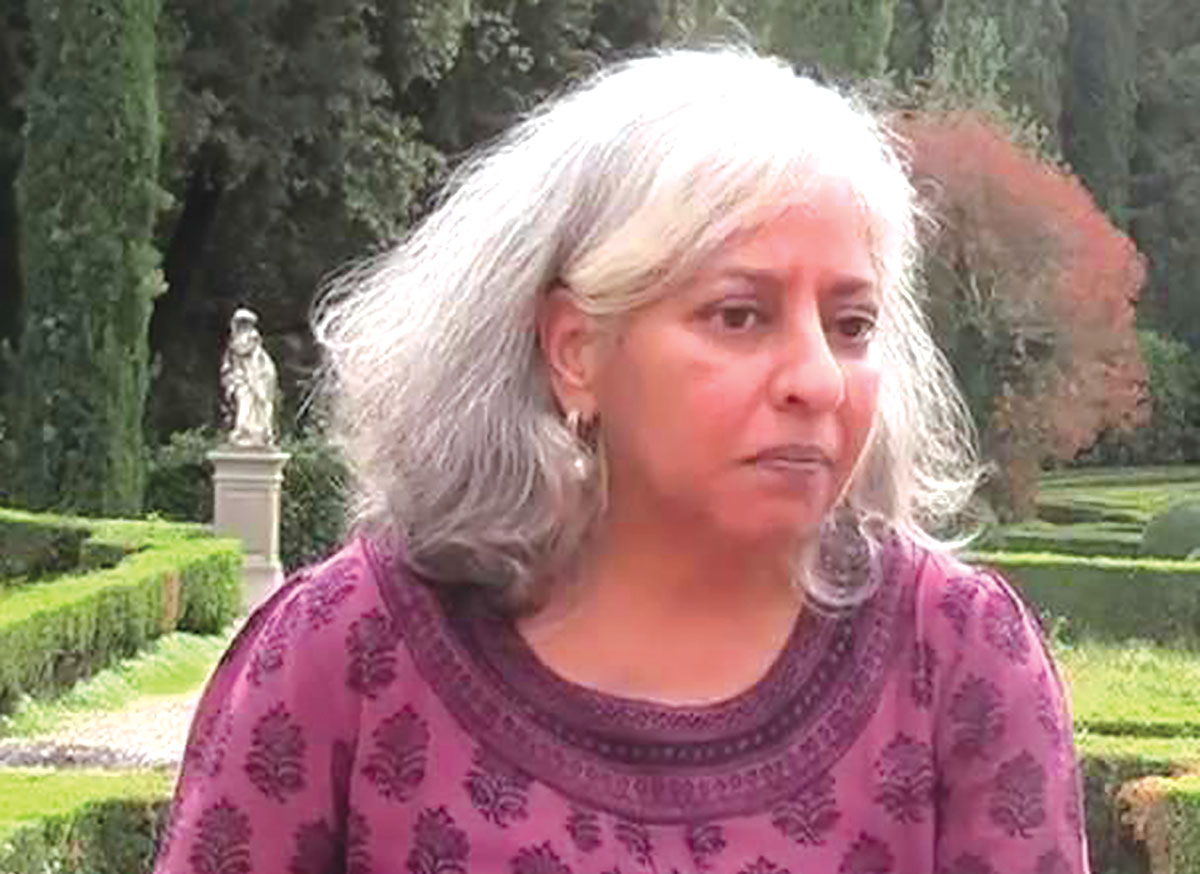
The Forum, which describes itself as “an informal group of concerned citizens”, has argued that seven years after the constitutional changes of August 2019, Jammu and Kashmir continues to face a fundamental imbalance in governance, with an elected government carrying political responsibility while substantial powers remain concentrated with the Lieutenant-Governor.
The report calls for full Statehood to be restored without further delay, along with the repeal of the 2019 Reorganisation Act and reinstatement of the institutions created to safeguard human rights.
The Forum says the demand is not merely political but constitutional, pointing to the Supreme Court’s observation during its Article 370 proceedings that Statehood would be restored at an “appropriate time”. Seven years on, it argues, that assurance remains unfulfilled.
The Forum also flags the continued use of emergency and security powers, prolonged detentions, economic distress, restrictions on civil liberties and what it describes as the growing concentration of administrative authority.
The report’s central political concern is the relationship between the elected government and the Lieutenant-Governor’s administration.
In May 2026, Delhi granted Lieutenant-Governor Manoj Sinha emergency powers to suspend telecommunications and intercept communications. The Forum sees this as another indication of the widening gap between political accountability and actual governing authority.
The elected administration, it argues, is “accountable to the people but [with] little to no powers of governance”.
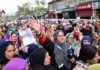
The National Conference government’s campaign for restoration of Statehood has therefore assumed particular importance. The party has held rallies in Srinagar and Jammu and later organised a protest in Delhi as Parliament reconvened in July.
The Forum backs the demand, arguing that the 2019 reorganisation undermined the federal structure and that the restoration of Statehood should no longer be deferred.
The report also records what it considers a significant judicial counterweight to the expansion of executive power.
The Jammu and Kashmir High Court has repeatedly quashed detentions under the Public Safety Act and cases under the Unlawful Activities (Prevention) Act, at times using unusually strong language in its criticism of the authorities.
The Supreme Court, meanwhile, extended its 2021 Najeeb precedent on prolonged incarceration and stringent bail conditions to UAPA cases, granting bail to rights defender Khurram Parvez and journalist Irfan Mehraj after more than four years in custody.
For the Forum, however, judicial relief coming after years of incarceration remains inadequate. It argues that repeated judicial strictures have yet to produce corresponding institutional reform.
The report also refers to Chief Minister Omar Abdullah’s assertion that around 400 juveniles were being held under the PSA, despite juvenile justice safeguards.
The Forum’s assessment of the year is also shaped by the November 10, 2025, car bombing near Delhi’s Red Fort, in which 13 people were killed.
The driver, Pulwama-based doctor Umar Un Nabi, died in the blast and his family home was demolished three days later. The report says investigators traced the plot to a network of doctors and clerics linked to a revived Ghazwat-ul-Hind and allegedly radicalised online by Pakistani handlers through VPNs and encrypted applications.
The Forum criticises what it describes as inadequate coordination among the Delhi, Haryana and Jammu and Kashmir police, saying that Union Home Minister, despite his public response to the attack, accepted no responsibility for the security lapse.
It is equally critical of what followed the bombing.
The report describes a wave of discrimination, evictions and harassment of Kashmiri Muslims across India. It cites the Gurugram police demand for landlords to provide tenant details specifically concerning residents of Jammu and Kashmir, contrasting it with a 2010 Home Ministry advisory aimed at protecting Kashmiri students following a similar backlash.
In Kashmir, the Forum says around 500 people were questioned following the Red Fort attack. After the July 2026 killing of head constable Ashiq Hussain Qureshi in Anantnag, more than 2,000 people were detained as suspected “overground workers”.
The administration also began profiling mosques and madrassas, seeking details including Aadhaar numbers, bank information, IMEI numbers and social media handles of imams and teachers. The Muttahida Majlis-e-Ulema criticised the exercise as a breach of privacy extending “far beyond any routine administrative requirement”.
The report links the political uncertainty with a difficult economic environment.
Unemployment in Jammu and Kashmir stood at 6.7 per cent in 2025, nearly twice the national rate, according to the report.
The apple economy, which the Forum says supports an estimated 3.5 million livelihoods, suffered a 70 per cent collapse following a bumper crop in Himachal Pradesh and cheaper Iranian imports. The report says the government had no intervention scheme in place to cushion growers from the downturn.
The Forum also highlights the displacement of tribal Gujjar and Bakerwal families in forest-clearance operations, which it argues have disregarded safeguards contained in the Forest Rights Act.
The report devotes a separate section to Ladakh, where the political consequences of the 2019 reorganisation have produced a different form of discontent.
A September 24, 2025 protest demanding Sixth Schedule status and Statehood turned violent, with police firing killing four people, including a Kargil war veteran.
Climate activist Sonam Wangchuk was subsequently detained under the National Security Act. The Forum describes the grounds for his detention as “absurd”, particularly the reliance on a speech he had delivered at a Pakistani environmental conference.
Wangchuk was released in March 2026 after the Supreme Court indicated that the state may have been reading “too much” into his remarks.
Talks involving the Apex Body Leh, the Kargil Democratic Alliance and the Union Home Ministry have since moved towards what the Forum describes as an “in principle” proposal for a legislature under Article 371.
The proposed creation of seven new hill councils, however, has generated accusations that the move could divide the negotiating bloc.
For the first time, the Forum has devoted a full section to developments in Pakistan-administered Kashmir.
The report traces the protests led by the Joint Awami Action Committee over electricity tariffs, subsidised flour and reserved assembly seats for refugees, which developed into sustained unrest through 2026.
Islamabad’s decision in June to proscribe the JAAC as a terrorist organisation, followed by a communications blackout and mass detentions, drew condemnation from the UN Human Rights Commissioner and Amnesty International, according to the report.
By the end of July, the Forum says a rights-monitoring group had recorded 44 deaths since June, with another 31 deaths reported around the disputed July 27–28 election period.
The Forum’s recommendations were issued without the public launch it had planned in Srinagar. On the eve of August 5, the seventh anniversary of the abrogation of Article 370, the Forum was denied permission to release its annual report publicly in the city. It subsequently released the report online.
Seven years after the constitutional changes, the Forum says its central demands remain the same: restore full Statehood, repeal the Jammu and Kashmir Reorganisation Act, revive the region’s disbanded human rights institutions and restore meaningful governing powers to elected representatives.
The Forum was constituted after the Centre’s 2019 decision to end Jammu and Kashmir’s special status. It is co-chaired by former Union Home Secretary Gopal Pillai and former member of the Group of Interlocutors for Jammu and Kashmir Radha Kumar.
Its members include former Supreme Court judge Justice Ruma Pal; former Chief Justices of the Madras and Delhi High Courts Justice A.P. Shah and Justice Bilal Nazki; former J&K High Court judge Justice Hasnain Masoodi; former Patna High Court judge Justice Anjana Prakash; and retired military officers Major-General Ashok Mehta, Air Vice-Marshal Kapil Kak, Lieutenant-General H.S. Panag and Colonel Yoginder Kandhari.
The Forum has now produced seven annual reports examining human rights and governance in Jammu and Kashmir and Ladakh.
Seven years after August 5, its latest report argues that the restoration of Statehood, and the powers that come with it, remains the central unfinished question.