SRINAGAR: Jammu and Kashmir Bank on Thursday reported a 10.6 per cent year-on-year increase in net profit to Rs 546.36 crore for the quarter ended September 30, 2026, aided by higher earnings and an improvement in asset quality. The bank had posted a net profit of Rs 494.11 crore in the corresponding quarter of the previous financial year.
The profit was up 28.8 per cent from Rs 424.18 crore in the April-June quarter of the current financial year, reflecting an improvement in the bank’s quarterly earnings performance.
The bank announced its results after the Board of Directors approved the quarterly and half-yearly financial statements at a meeting held at its corporate headquarters on October 22.
The bank’s net interest income (NII), the difference between interest earned and interest paid, rose 5 per cent year-on-year to Rs 1,502 crore during the quarter. Other income more than doubled to Rs 314.90 crore from Rs 153.76 crore a year earlier, registering a 47 per cent increase over the preceding quarter.
Operating profit for the first half of the financial year rose more than 15 per cent year-on-year to Rs 1,492 crore, while operating expenditure increased just 1.5 per cent over the six-month period. The cost-to-income ratio improved to 56.57 per cent in the September quarter from 60.79 per cent in the corresponding quarter last year.
The bank’s return on assets improved by 20 basis points sequentially to 1.07 per cent.
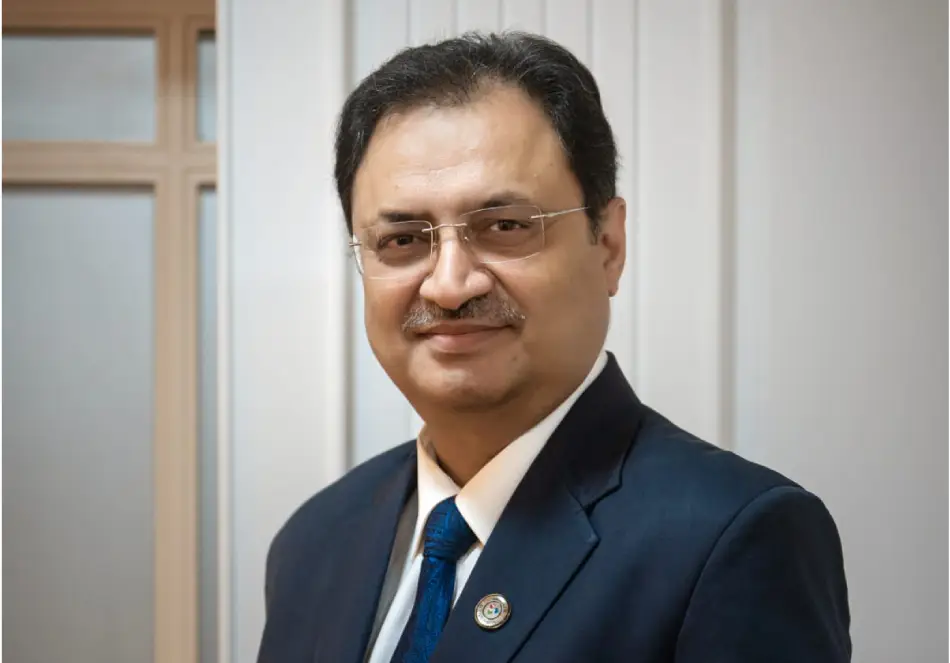
“The growth in net interest income, doubling of other income and over 26 per cent year-on-year increase in operating profit for this quarter mark an encouraging strengthening of our earnings performance,” Managing Director and Chief Executive Officer Amitava Chatterjee said, according to a bank communiqué.
He said the recovery in return on assets to above 1 per cent also reflected an improvement over the June quarter. The bank would focus on sustaining core income growth, strengthening recurring revenue streams, improving recoveries and managing funding costs through deeper deposit relationships during the second half of the financial year, he added.
The bank reported a substantial improvement in asset quality, with its gross non-performing assets (GNPA) ratio declining to 2.23 per cent as of September 30, down 109 basis points from 3.32 per cent a year earlier. The ratio also improved by 14 basis points from the preceding quarter.
The net NPA ratio fell to 0.51 per cent from 0.76 per cent a year earlier, while the provision coverage ratio improved to 91.76 per cent at the end of September from 90.53 per cent at the end of June. The bank said the GNPA, net NPA and provision coverage metrics represented their best levels in a decade.
The annualised gross slippage ratio for the first half stood at 0.4 per cent, indicating a low rate of fresh additions to bad loans relative to the bank’s advances.
Chatterjee attributed the improvement to disciplined underwriting and proactive credit monitoring, saying the bank remained focused on maintaining the trend while expanding its loan book.
The bank’s total business grew 19.38 per cent year-on-year to Rs 3,10,347 crore as of September 30, 2026, supported by growth in both advances and deposits.
Gross advances increased 23.72 per cent to Rs 1,33,551 crore from Rs 1,07,943 crore a year earlier. Total deposits rose 16.30 per cent to Rs 1,76,796 crore.
Retail, agriculture and micro, small and medium enterprises (MSMEs), collectively referred to as the RAM segment, accounted for more than 60 per cent of the net incremental credit on a year-to-date basis, according to the bank.
Current account and savings account (CASA) deposits grew 1.73 per cent sequentially, helping the bank maintain its CASA ratio at 41.97 per cent at the end of September.
“With nearly 20 per cent year-on-year growth taking our total business to Rs 3.10 lakh crore, we continue to build towards our Vision 2030 business aspiration of Rs 5 lakh crore,” Chatterjee said.
He said strengthening the deposit base, deepening relationships in Jammu and Kashmir and Ladakh, and selectively expanding operations elsewhere in the country would remain central to the bank’s growth strategy.
The bank’s capital adequacy ratio (CRAR) improved to 16.57 per cent as of September 30, 2026, from 15.27 per cent a year earlier, providing a higher capital cushion to support lending and absorb potential risks.
Chatterjee said the bank was entering the second half of the financial year with confidence, with the focus on sustaining profitability, improving asset quality and meeting its annual commitments while progressing towards its Vision 2030 business target.