SRINAGAR: The Jammu and Kashmir Government has proposed a household-level survey to identify vulnerable families and assess their deprivation across health, education and living standards to improve the targeting of welfare schemes.
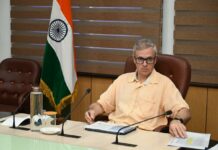
The proposal was discussed at a review meeting chaired by Nasir Aslam Wani, Advisor to the Chief Minister, where officials examined the decline in multidimensional poverty and the need for more targeted interventions for disadvantaged households.
According to the figures presented at the meeting, Jammu and Kashmir’s multidimensional poverty headcount ratio fell from 12.56 per cent in 2015–16 to 4.80 per cent in 2019–21. The region’s Multidimensional Poverty Index (MPI) score also declined from 0.055 to 0.020 during the period.
At the national level, the poverty headcount ratio decreased from 24.8 per cent to 14.96 per cent over the same period.
The proposed enumeration will initially cover households under the Antyodaya Anna Yojana (AAY) and beneficiaries of old-age pensions under the National Social Assistance Programme (NSAP) and the Integrated Social Security Scheme (ISSS). Other households will not be included in this phase.
The exercise is intended to identify household-specific deprivations, assess access to existing welfare schemes and essential services, and pinpoint gaps requiring government intervention.
Apart from the three core dimensions of the MPI — health, education and living standards — the proposed survey will collect information on nutrition, healthcare, drinking water, electricity and connectivity.
Officials will finalise the survey methodology, beneficiary lists, manpower requirements, digital data collection arrangements and financial estimates before the exercise begins. Its implementation will be subject to the necessary approvals and availability of resources.
The government expects the exercise to support evidence-based planning, strengthen coordination among departments and improve the delivery of welfare benefits to vulnerable families.
The meeting was attended by the Chief Secretary, Commissioner Secretaries of the Food, Civil Supplies and Consumer Affairs, Housing and Urban Development, Health and Medical Education, and School Education departments, along with Secretaries of the Planning, Development and Monitoring Department, Information Technology and Social Welfare departments.