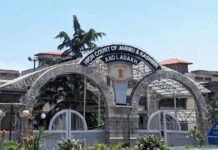
SRINAGAR: The Jammu Kashmir and Ladakh High Court has quashed the preventive detention of a Samba man booked under the Prevention of Illicit Traffic in Narcotic Drugs and Psychotropic Substances (PIT NDPS) Act, holding that the authorities had used preventive detention to circumvent bail granted to him by criminal courts.
Allowing a habeas corpus petition filed by Masoom Ali alias Kala through his wife, Bibi Begum, Justice Rahul Bharti set aside the detention order issued by the Divisional Commissioner, Jammu, on December 17, 2025, as well as the Government’s confirmation order dated January 23, 2026. The court directed the Superintendent of District Jail, Udhampur, to release him from preventive detention with immediate effect.
In his judgment pronounced on November 6, the court observed that the detention appeared to be a counter-action to the criminal courts granting bail to the petitioner. It said the police had sought to overreach those orders instead of approaching the courts concerned for cancellation of bail.
The petitioner, a resident of Rakh Barotian in Vijaypur tehsil of Samba district, had been detained at District Jail, Udhampur, since January 10, 2026. His detention for one year, until January 9, 2027, had been confirmed by the Government following an opinion of the Advisory Board.
The case for his preventive detention was initiated by the Senior Superintendent of Police, Samba, who submitted a dossier to the Divisional Commissioner on December 11, 2025, alleging that Ali was continuously involved in drug-peddling activities. The dossier referred to his criminal antecedents and cases registered against him under the Narcotic Drugs and Psychotropic Substances Act.
The grounds of detention referred to three FIRs. The first, FIR No. 46/2023, was registered at Police Station Samba under Sections 8 and 21 of the NDPS Act. The petitioner was facing trial in the case and had been granted bail.
The second case, FIR No. 60/2023, was also registered at Police Station Samba under Sections 8, 21 and 29 of the Act. The judgment recorded that the petitioner had been challaned in absentia.
The third case, FIR No. 173/2025, was registered at Police Station Bari Brahmana under Sections 8, 21, 25 and 29 of the NDPS Act. The petitioner had been challaned in the case and granted bail. The police subsequently challenged the bail order, but their attempt to secure its cancellation failed through a court order dated December 4, 2025.
The High Court found that, despite the failure to secure cancellation of bail in the third case, the police proceeded to seek the petitioner’s preventive detention.
“The placement of the petitioner under preventive detention custody is a counter action to the indulgence of ordinary criminal court of land in granting bail in favour of the petitioner,” Justice Bharti observed.
The court further questioned why the police had not pursued cancellation of bail before the criminal courts if they believed the petitioner should not remain at liberty.
“If the District Police of Samba did not have a conviction to consider and claim cancellation of bail granted in favour of the petitioner from the ordinary criminal court of law seized of trial of the petitioner,” the judgment observed, “then on what factual basis the petitioner came to be reckoned as a person deserving of suffering preventive detention custody is something which leave this Court puzzled.”
The court also identified what it described as a serious factual omission concerning FIR No. 60/2023. It noted that the detention grounds did not clarify whether the petitioner had been arrested in that case, had evaded arrest or had been declared an absconder.
The judgment pointed out that when the police submitted the detention dossier in December 2025 and the Divisional Commissioner passed the detention order on December 17, the authorities had no clear information about the petitioner’s status in the 2023 case.
Describing the omission as an “alarming factual fallacy” in the detention proceedings, the court said it made the entire exercise seriously suspect. It also questioned how the petitioner could be treated as absent in one case when he had been granted bail in another.
The petitioner had challenged the detention as illegal, arbitrary and unconstitutional, alleging that the authorities had acted mechanically and without independently examining the material placed before them. He contended that the detention had been ordered to circumvent the bail granted by criminal courts and effectively punish him in advance.
His counsel also argued that the authorities had failed to properly inform him about the procedure for submitting a representation against the detention, including the authority before whom it was to be made and the time limit for doing so. The petition stated that his wife had sent a representation by registered post on May 13, 2026, but received no response.
The petitioner further alleged that the Divisional Commissioner had acted without application of mind and merely followed the recommendations of the sponsoring police agency.
The respondents, represented by Senior Additional Advocate General Monika Kohli, assisted by counsel Nazia Fazal, filed a counter-affidavit on July 25, 2026, relying on the grounds of detention formulated by the Divisional Commissioner.
Advocates Qadri Towkeer Nazir and Amjed Khan appeared for the petitioner.
After examining the detention dossier and the grounds of detention, the court held that the omissions concerning the criminal cases and the failure to pursue cancellation of bail raised serious questions about the exercise of preventive detention powers under the PIT NDPS Act, 1988.
Holding the detention illegal, the court quashed the order dated December 17, 2025, and the subsequent Government confirmation order dated January 23, 2026, and directed the petitioner’s immediate release from District Jail, Udhampur.
The judgment was reserved on August 31, 2026, and pronounced by Justice Rahul Bharti at the High Court of Jammu and Kashmir and Ladakh at Jammu, through virtual mode from Srinagar.