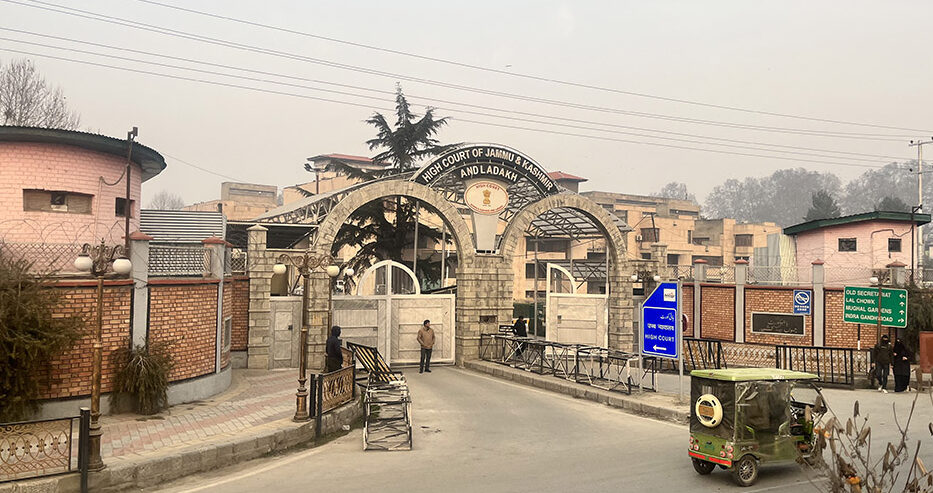
SRINAGAR: The Jammu & Kashmir High Court has affirmed the government’s decision to annul the entire selection process for Class IV/MTS (Multi-Tasking Staff) positions in District Budgam, citing a series of grave irregularities that rendered the procedure “neither fair nor transparent”. The ruling, delivered by a bench of Justices Sanjay Parihar and Sanjeev Kumar on 7th July 2025, effectively overturned a prior judgment by the Central Administrative Tribunal, which had intervened with the government’s cancellation order.
The High Court underscored that the selection process was fundamentally flawed and could not be redeemed by attempting to segregate “tainted” from “untainted” candidates. “Any selection process made based on such selection criteria is stillborn and cannot sustain in law,” the Court observed.
A pivotal issue highlighted by the Court was the arbitrary alteration of the selection criteria midway through the process by the selection committee. The weightage given to the viva voce (interview) was unilaterally increased from 20% to 40%, a significant departure from the initially advertised criteria. This amendment, the Court stated, went “to the root of the selection process” and rendered it unsustainable.
Further irregularities identified by the Court included an “irrational” shortlisting ratio of 1:20, which was deemed to aim at bringing “within the zone of consideration candidates with inferior merit”. This led to the selection committee being burdened with interviewing thousands of candidates, thereby compromising the effectiveness of the viva voce process. Moreover, the selection committee itself was found to be improperly constituted as per applicable government orders, and notably, not all members participated in the selection process. The Court also noted that the increased weightage for the interview (40 points) resulted in candidates with lower academic scores being selected due to excessively high marks in the viva voce, effectively converting “merit into de-merit”. Doubts were also raised due to the non-availability of application forms, making it difficult to ascertain if candidates had applied within the prescribed period.
The High Court asserted that it would not delve into the “sufficiency or legal tenability” of the enquiry committee’s observations, considering it adequate that the government’s action was undertaken “bona fide and to ensure fairness and transparency in the selection process”. The Court reaffirmed the legal position that mere inclusion in a select list does not confer a vested right to appointment, particularly as the list had yet to be acted upon.
In response to arguments suggesting that similar selection processes in other districts were not cancelled, the Court unequivocally stated, “two wrongs cannot make one right”.
The High Court allowed the petition, thereby reinstating the government’s decision to cancel the selection. It also authorised the initiation of a fresh selection process for Class IV/MTS vacancies, clarifying that previously participating candidates who were within the age limit at the time will not be treated as over-aged for the new selection process