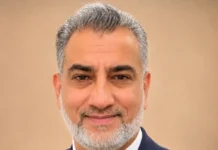
SRINAGAR: Jammu and Kashmir has projected a power supply deficit of 600 MW to 1,300 MW against an anticipated restricted demand of 3,450 MW during winter 2026–27, with Power Minister Ali Mohammad Sagar seeking additional electricity allocation and a dedicated financial package from the Centre.
Sagar raised the issue at the State Ministers’ Conference on Power, chaired by Union Power Minister Manohar Lal in New Delhi on Friday, and submitted a memorandum seeking financial assistance for upgrading power infrastructure, reducing distribution losses, expanding transmission capacity and accelerating hydropower development.
According to the figures presented by the Minister, Jammu and Kashmir recorded a peak electricity demand of approximately 3,362 MW during the previous winter, comprising 1,906 MW in Kashmir and 1,456 MW in Jammu.
He sought additional unallocated Central power, predictable electricity allocations and continuation or enhancement of the additional 329 MW allocation for December 2026 to February 2027. He also called for affordable long-term power procurement and banking arrangements with neighbouring states, including Punjab and Uttar Pradesh.
Presenting the financial performance of the two distribution companies, Jammu Power Distribution Corporation Limited (JPDCL) and Kashmir Power Distribution Corporation Limited (KPDCL), Sagar said their combined revenue realisation had increased from approximately Rs 3,060 crore in 2021–22 to Rs 5,290 crore in 2025–26, an increase of nearly 73 per cent.
AT&C losses in JPDCL declined from 49.82 per cent to 27.13 per cent, while those in KPDCL fell from 65.61 per cent to 33 per cent.
Under the Revamped Distribution Sector Scheme (RDSS), 14.07 lakh smart meters have been sanctioned, of which nearly 12.25 lakh had been installed by November 19, 2026. Distribution strengthening and loss-reduction works worth Rs 4,708.52 crore have also been sanctioned.
The Minister sought further Central assistance for replacing ageing and overloaded transformers, upgrading 33/11 kV infrastructure, installing additional substations and strengthening distribution networks. He also called for underground and insulated cabling in vulnerable areas and dedicated enforcement wings to curb power theft.
On hydropower development, Sagar said Jammu and Kashmir had an estimated potential of 14,635 MW, of which approximately 3,540 MW had been harnessed.
The ongoing Pakal Dul, Kiru, Kwar and Ratle projects have a combined capacity of around 3,563.5 MW. The government aims to increase installed hydropower capacity to approximately 10,975.65 MW by 2035.
He sought grants, concessional financing and viability gap funding to accelerate hydropower projects, undertake geological investigations and prepare detailed project reports. He also highlighted the proposed Jammu and Kashmir Hydro Power Policy 2026 and the need to encourage private investment.
The memorandum also proposed developing Battery Energy Storage Systems with an initial capacity of 250 MW/1,000 MWh over three years, to be expanded to 1,000 MW/4,000 MWh by 2031.
On transmission infrastructure, Sagar said the Jammu and Kashmir Power Transmission Corporation Limited (JKPTCL) had a transformation capacity of approximately 12,875 MVA, with another 3,766 MVA in the pipeline. He sought support for additional transmission lines, grid substations, transformer augmentation and digital substations.
For disaster preparedness, he proposed a dedicated Himalayan Power Infrastructure Resilience Programme. Seven Emergency Restoration System units have already been procured for Jammu, while 15 additional units are required for Jammu and 10 for Kashmir.
Sagar also proposed establishing two dedicated power training colleges, one each in the Jammu and Kashmir divisions, and called for investment in smart-grid technologies, cybersecurity and specialised training for power-sector personnel.
Seeking a dedicated Jammu and Kashmir Power Sector Development and Modernisation Package comprising grants, concessional loans, viability gap funding and project-based assistance, he proposed a joint working group of Central and Jammu and Kashmir government representatives to examine the demands and facilitate their time-bound implementation.
He said reliable and affordable electricity was essential for supporting industrial development, tourism, horticulture, healthcare, cold-chain infrastructure and electric mobility in Jammu and Kashmir.