SRINAGAR: Jammu and Kashmir is targeting RS 1,000–1,200 crore in Central funding under the Khelo India programme during 2026–31, with the government planning to use the funds to expand sports infrastructure, identify talent and strengthen the sporting ecosystem across the Union Territory.
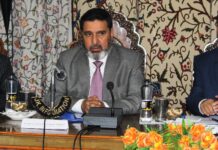
The roadmap was discussed at the first meeting of the UT Level Coordination Committee (UTLCC) on Khelo India, chaired by Chief Secretary Atal Dulloo here on Monday.
Dulloo directed Deputy Commissioners to adopt a district-driven approach and prepare comprehensive sports development plans to maximise the benefits available under the rechristened Khelo India 2026–31 programme.
He directed all districts to submit their plans by September 15, 2026, while stressing the need for optimal utilisation of existing sports infrastructure and creation of new facilities wherever required.
The Chief Secretary said Jammu and Kashmir has consistently produced sporting talent and stressed the need to provide young athletes with proper platforms, facilities, coaching and exposure to compete at the highest levels.
He also called upon departments and districts to aim for the maximum admissible funding under the programme, particularly for establishing Centres of Excellence and strengthening sports infrastructure from the grassroots to the elite level.
Commissioner Secretary, Youth Services and Sports Department, Dr Shahid Iqbal Choudhary, presented the roadmap and outlined J&K’s strategy to tap different funding windows under Khelo India over the next five years.
He said the plan seeks to address sporting requirements ranging from grassroots participation in schools to the preparation of elite athletes capable of competing at national and international levels.
According to the roadmap, the national Khelo India programme has a total financial outlay of RS 28,489 crore for 2026–31, including administrative expenses. Its annual allocation is projected to rise from RS 3,173 crore in 2026–27 to RS 9,198 crore in 2030–31.
The largest component is Khelo India Training Facilities, with an allocation of RS 10,586 crore, followed by Strengthening Strategic Sports Assets at RS 4,963 crore and Sports Infrastructure for Medal Strategy at RS 4,866 crore.
Talent Identification and Development has been allocated RS 2,407 crore, while RS 2,358 crore has been earmarked for Sports Competitions and Leagues.
Other components include RS 1,400 crore for the Central share under the State Action Plan for Sports Infrastructure Development, RS 748 crore for Coach and Support Staff Development, RS 302 crore for Sports Technology and RS 300 crore for the Fit India Movement. Another RS 559 crore has been allocated for administrative expenses.
A major focus of J&K’s roadmap is grassroots talent identification, with the UT aiming to increase the number of supported athletes ten-fold.
The plan proposes using Khel SETU as an integrated platform to map and identify sporting talent across schools and universities. It also seeks to address the shortage of Physical Education Teachers in government schools through training and capacity-building programmes.
A common four-level coaching framework has also been proposed, along with systematic training of local trainers, community coaches and PETs through E-Khel Paathshala. Special focus has been proposed on developing women coaches at local, national and international levels.
Under the Khelo India Training Facilities framework, the roadmap envisages Olympic Training Centres for elite athletes, upgrading existing facilities into National Centres of Excellence and greater participation of accredited private academies through the public-private partnership mode.
The plan also proposes expanding Khelo India Centres, introducing Khelo India Utkarsha Vidyalayas and feeder schools, and strengthening specialised training facilities to establish a structured pathway from grassroots participation to elite performance.
Technology is another key component of the roadmap. Three major interventions have been proposed in collaboration with premier technical institutions in J&K.
These include an AI-based Sports Talent Identification and Athlete Performance Analytics Platform and an AI-enabled Sports Infrastructure and Youth Services Delivery Management System through NIT Srinagar. A Digital Youth Health Screening and Preventive Care System is also proposed through IIT Jammu.
The government said the roadmap aims to combine existing infrastructure with new investments, grassroots talent identification, professional coaching, sports science and technology to create a sustainable pipeline of athletes capable of representing Jammu and Kashmir and India at national and international sporting events.
The meeting was attended by senior officers from the PWD, Youth Services and Sports, Social Welfare, Education, Planning, Rural Development and other concerned departments. Deputy Commissioners participated through video conferencing.