SRINAGAR: Lawyers of the Jammu chapter of the Jammu Kashmir High Court Bar Association on Friday held protests and abstained from work in opposition to the government’s decision to designate the Revenue Department as the nodal authority for regulating and implementing the newly notified Jammu Kashmir Tenancy Act, 2025.
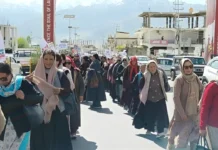
The lawyers gathered in the High Court complex in Jammu and raised slogans against what they described as an attempt to dilute judicial authority. They said the move shifts key functions traditionally handled by courts into the hands of the executive.
Association president advocate K Nirmal Kotwal said the Bar “strongly condemns” the new Tenancy Act, calling it “a clear attempt to undermine judicial powers”. He said the decision amounted to an “encroachment” on the judiciary’s domain. According to him, the distinction between judicial and executive powers was “being eroded deliberately” by the government and the Lieutenant Governor’s administration in favour of the Revenue Department.
Kotwal said the Bar viewed the move as a systemic effort to sideline the courts. “If the government wants to work in this way, then courts are not required anymore. The government should give everything to the Revenue Department,” he said. He also issued a ten-day ultimatum to the administration to roll back the decision and restore powers to the judiciary. “Else there shall be serious consequences,” he warned.
The association said the government’s decision amounted to direct interference in the judicial system.
The Jammu Kashmir Tenancy Act, 2025, recently notified by the government, establishes a Rent Authority for regulating the renting of premises and protecting the interests of landlords and tenants. The new law replaces the Jammu Kashmir Residential and Commercial Tenancy Act, 2012.
In a separate statement, general secretary advocate Pardeep Majotra said the association expressed deep resentment over several provisions of the new law, arguing that they ran “contrary to the welfare and interests of advocates”.