SRINAGAR: Kalhana’s 12th-century historical chronicle Rajatarangini, one of the earliest systematic accounts of a region’s political history in the Indian subcontinent, has received international recognition with its inscription on UNESCO’s Memory of the World Asia-Pacific Regional Register, reports appearing in the media said.
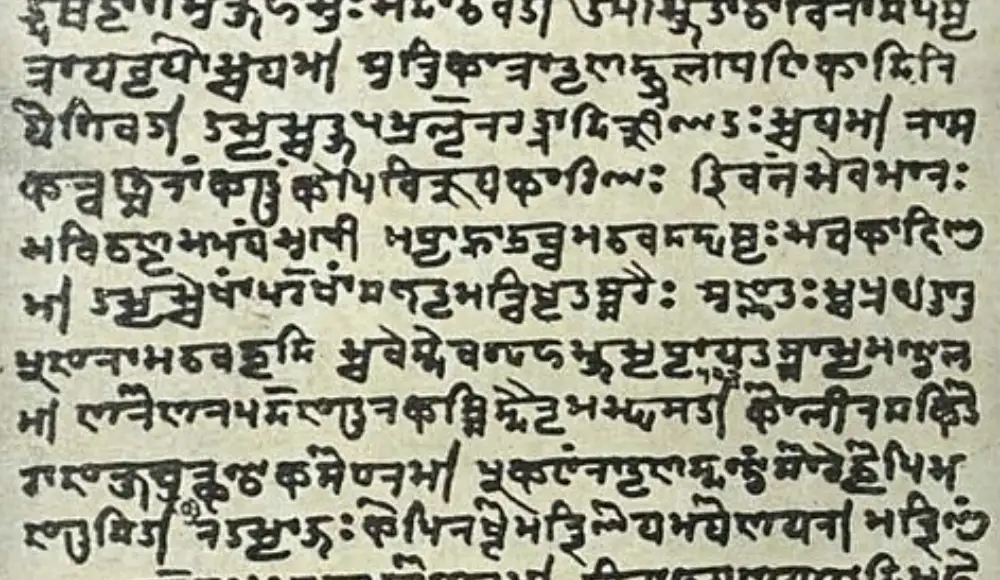
The manuscript, preserved at the Oriental Research Library in the Sri Pratap Singh Library Complex, Srinagar, has been inscribed alongside two other major Indian works, the Mahabharata and Kautilya’s Arthashastra, marking a significant recognition of India’s documentary and intellectual heritage.
The announcement was made by the Union Ministry of Culture through the Press Information Bureau on Thursday. The decision was taken at the 11th Session of UNESCO’s Memory of the World Asia-Pacific Regional Register, held in Jakarta, Indonesia.
The inscription is particularly significant for Kashmir, whose history is documented in remarkable chronological detail in Rajatarangini. Written by Kalhana in Sanskrit during the 12th century, the chronicle traces the history of Kashmir’s rulers, political transitions, dynastic struggles and social conditions across several centuries. It remains among the most important historical sources for understanding Kashmir’s past.
Unlike conventional royal genealogies and court chronicles, Kalhana’s work is distinguished by its attempt to examine historical events through evidence, earlier accounts and critical assessment of sources. His narrative, extending from legendary beginnings to the reign of King Jayasimha in the 12th century, provides an unusually sustained account of Kashmir’s political and cultural evolution.
The UNESCO certificate identifies the Srinagar manuscript as The Manuscript of Rajatarangini by Kalhana: A Twelfth-century Chronicle of Kashmir. Its preservation at the Oriental Research Library places Kashmir’s own archival institution at the centre of this international recognition.
The other two inscriptions are The Birch-bark (burjapatra) Manuscript of Mahabharata, A Perennial Epic of South Asia, housed at the Bhandarkar Oriental Research Institute, Pune, and Kautilya’s Arthashastra, Ancient Palm-leaf Manuscript on Governance and Statecraft, preserved at the Oriental Research Institute, Mysuru.
The Indira Gandhi National Centre for the Arts (IGNCA) played an important role in preparing the nomination dossiers for all three works, officials said.
Union Culture Minister Gajendra Singh Shekhawat described the inscriptions as a landmark recognition of India’s documentary and civilisational heritage, saying the works embody traditions of historical inquiry, philosophical thought and statecraft whose wisdom continues to inspire humanity.
With the latest additions, India’s total number of inscriptions on the UNESCO Asia-Pacific Regional Register has risen to six.
The other three entries, recognised in 2024, include illustrated manuscripts of Tulsidas’s Ramcharitmanas, a rare 15th-century manuscript of animal fables and moral stories from the Panchatantra, and the manuscript of Sahrdayaloka-Locana, a major work on Indian poetics.
The latest recognition places Rajatarangini alongside some of the subcontinent’s most influential literary and intellectual works, while bringing renewed international attention to Kashmir’s distinctive tradition of historical writing and manuscript preservation.