SRINAGAR: The Kashmir Chamber of Commerce and Industry (KCCI) on Wednesday held an interactive meeting with senior officials from the Income Tax Department to address critical tax-related issues impacting the business community in Kashmir. The meeting, chaired by Chief Commissioner of Income Tax (CCIT) Amritsar Shri Lal Chand and Principal Commissioner of Income Tax Srinagar Shri Vikram Sahay, saw active participation from KCCI representatives, chartered accountants, tax consultants, and business leaders.
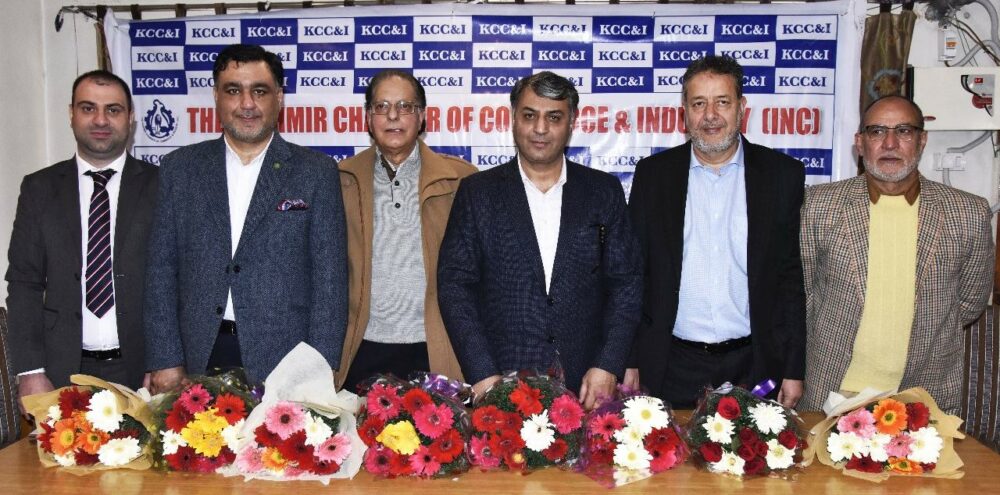
KCCI’s delegation was led by Senior Vice President Ashiq Hussain Shangloo, along with Junior Vice President Fayaz Ahmad Punjabi, Secretary General Faiz Bakshi, Past President Mushtaq Ahmad Wani, and Executive Committee members Tauseef Ahmad Bhat, Altaf Ahmad Tramboo, and Muhammad Ashraf Mir. The discussions took place in a cordial atmosphere, focusing on resolving tax concerns and ensuring a more business-friendly environment.
Welcoming the officials, Ashiq Hussain Shangloo emphasised the need for constructive dialogue to address the tax-related difficulties faced by traders and entrepreneurs in Kashmir. “This initiative reflects our collective commitment to addressing concerns and fostering a cooperative environment for business growth and compliance,” he stated.
A major issue raised by KCCI was the freezing of bank accounts, which has significantly disrupted businesses and the general public. Many traders have seen their deposits classified as unexplained credits, resulting in excessive tax demands beyond their financial capacities. KCCI urged tax authorities to adopt a more lenient approach and consider granting stays at a lower deposit rate than the standard 20 per cent, in line with previous judicial rulings.
The chamber also highlighted concerns over the delayed processing of appeal effects, which has led to large outstanding tax demands remaining unresolved. KCCI called for expedited processing to alleviate financial stress on taxpayers. Another pressing issue discussed was the backlog of rectification applications under Section 154, which has caused inconvenience for many businesses. The delegation urged tax officials to clear these applications swiftly to ensure timely resolution.
KCCI further pointed out problems arising from misreporting by government deductors, who often deduct TDS on amounts that include GST. This miscalculation has resulted in mismatches in taxable turnover and discrepancies in Form 26AS, blocking working capital and leading to prolonged litigations with the State Taxes Department. The chamber suggested organising awareness programmes involving senior officials from the Income Tax Department, Tax Departments, and GST deductee officers to collaboratively resolve these reporting challenges.
To strengthen tax-related assistance in the region, KCCI proposed setting up a camp office in Srinagar, led by the Commissioner of Income Tax (Exemptions) and Commissioner of Income Tax (International Taxation). This office would provide crucial support to businesses and raise awareness regarding taxation procedures. The delegation also emphasised the need for the timely disposal of pending appeals before the Commissioner of Income Tax (Appeals), which would streamline the tax resolution process and benefit taxpayers.
Responding to the concerns raised, the CCIT and Principal Commissioner assured full cooperation in resolving the issues. They also acknowledged the demand for increasing tax wards in Kashmir and assured that they would take up the matter with higher authorities. KCCI expressed gratitude to the Income Tax Department for organising the meeting and facilitating a platform for meaningful discussion on key tax challenges affecting Kashmir’s business community.