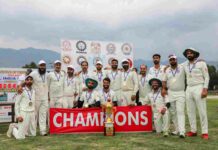
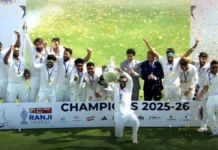
From marginal contenders to Ranji finalists, Jammu and Kashmir’s cricket team scripts a historic rise shaped by resilience, mentorship, and belief across decades of struggle, reports Asrar Syeed
Cricket thrives on memory. On scorecards preserved in fading ink, on rivalries retold across generations, on afternoons when improbable victories reshape destinies. In the winter of 2025, Jammu and Kashmir’s Ranji team carved its own chapter into that long and exacting chronicle. What began as a peripheral campaign in the domestic circuit culminated in a historic surge to the Ranji Trophy final, a tournament that has, for nearly nine decades, defined the architecture of Indian first-class cricket.
To understand the magnitude of the achievement, one must step back from the present crescendo and trace the longer arc of the game itself, especially in Kashmir.
Having been born in southern England in the late 16th century and evolving into a national sport over the following 200 years, the British carried the sport across the seas, and in India, it first took root through sailors and officials of the East India Company. In 1848, the Parsis of Bombay established the Oriental Cricket Club, one of the earliest native clubs in the subcontinent. By the close of the 19th century, cricket had spread through Calcutta, Madras and Bombay, embedding itself in colonial urban culture. Independent India would later define its cricketing sovereignty, and in 1932, the national team played its inaugural Test at Lord’s Cricket Ground.
Kashmir Cricket
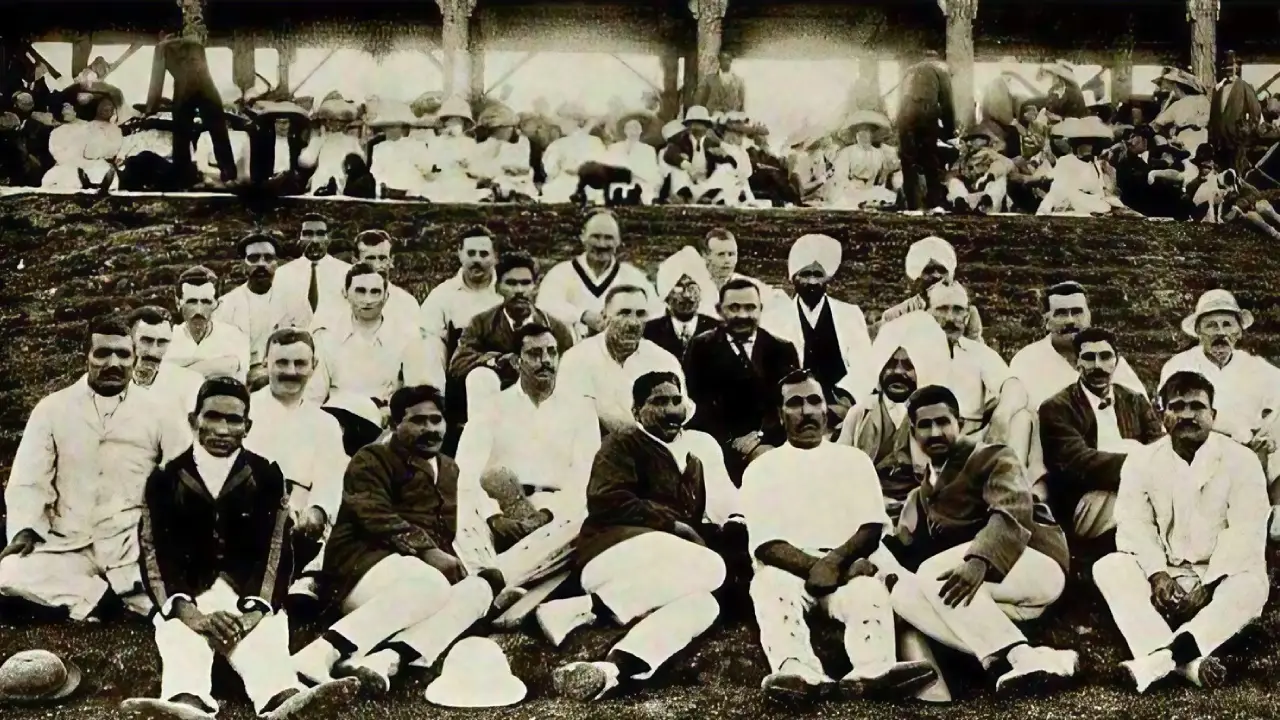
In the case of Kashmir, the story is much older. The British had brought cricket into Kashmir soon after they sold Kashmir to Maharaja Gulab Singh in 1846. By 1922, Kashmir’s exceptionally short-statured monarch, Maharaja Partap Singh, was part of Kashmir-11, a team that had international status.
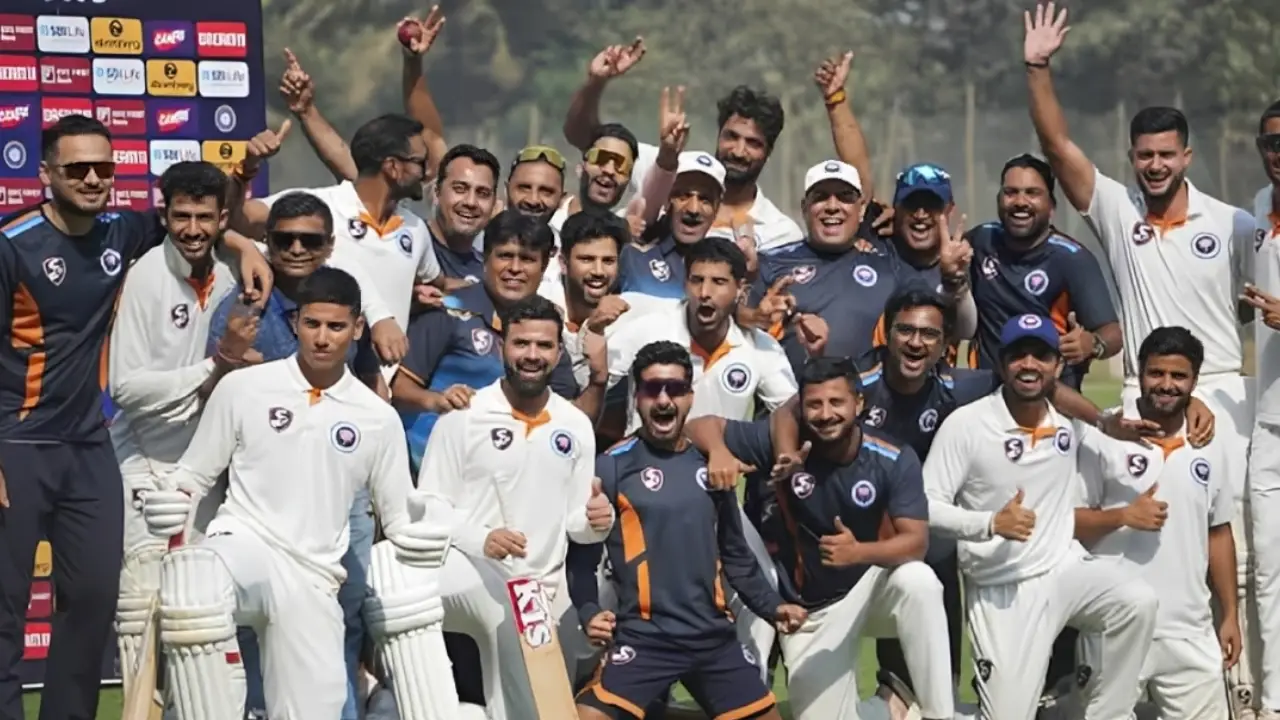
Initially, the bat remained confined to educated elites in Srinagar and Jammu, but post-partition, it expanded beyond its early social boundaries. Much later, the formalisation of the Jammu and Kashmir Cricket Association gave the game administrative structure and institutional backing in the region. It is a story that is still evolving.
The state made its Ranji debut in the 1959-60 season. Early campaigns were defined by constraints. Professional infrastructure was limited; exposure to high-level competition was scarce. Harsh winters shortened playing windows in the Valley, compelling fixtures to be scheduled largely in Jammu. For years, simply advancing to the knockout stages seemed aspirational.
Through the 1970s and 1980s, Jammu and Kashmir remained largely confined to the lower tiers of the Ranji structure. There were flashes of promise, isolated victories that suggested latent potential. Yet the gulf between participation and prominence persisted.
The early 1990s imposed a different kind of interruption. Political turbulence and violence disrupted sporting calendars and fractured team compositions. Between 1990 and 1994, cricketing activities were severely constrained. Representation from the Valley diminished as tournaments were curtailed or relocated. Those who continued to play did so under circumstances that tested both logistics and morale.
A Gradual Comeback
A gradual recalibration began in the early 2000s. Placed frequently in the Plate Division, a tier intended to nurture emerging domestic sides, Jammu and Kashmir used the period as a developmental corridor. Facilities improved incrementally. Exposure tours and structured coaching began to produce visible dividends. Twice between the early 2000s and 2014, the team breached the knockout barrier, a symbolic shift from participation to contention.
One of the most resonant statements of that era was a victory over the Mumbai cricket team, the most decorated side in Ranji history with more than 40 titles. For a team long relegated to the margins, defeating the tournament’s hegemon signalled psychological emancipation.
Emerging Icons
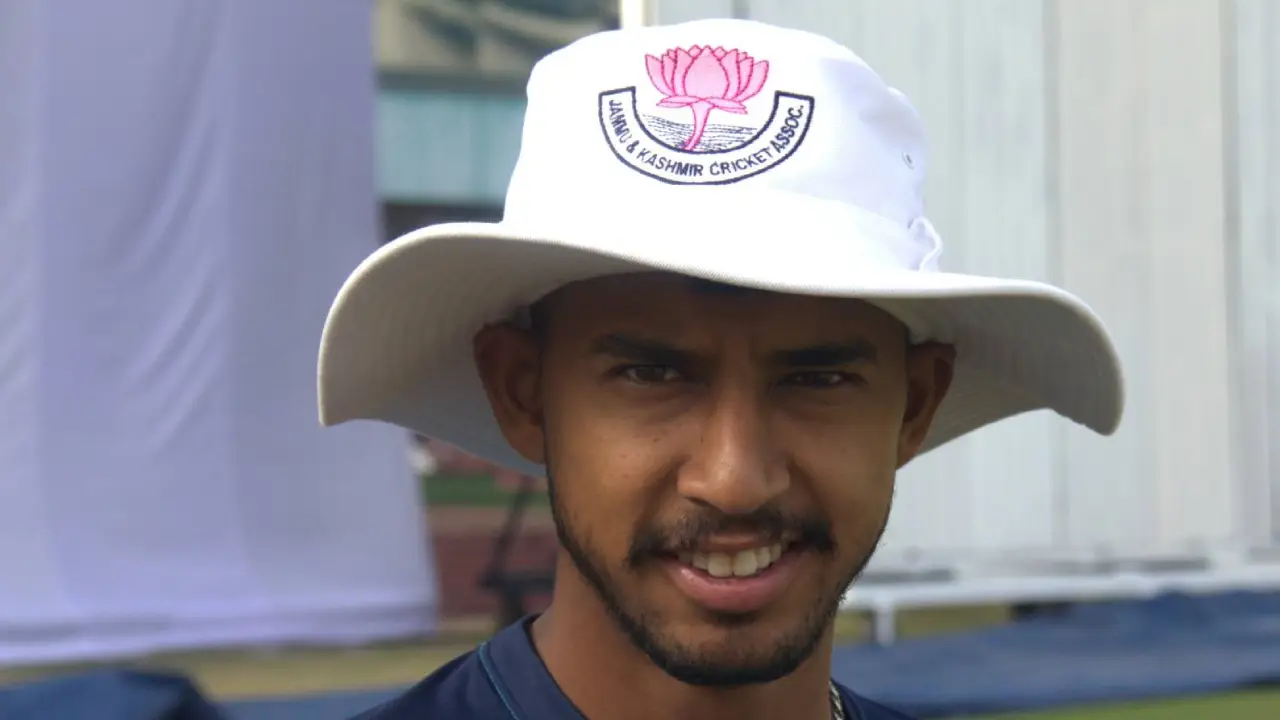
Yet for decades, the state had not produced a cricketer who transitioned convincingly to the national frame. That changed with Parvez Rasool. Hailing from Bijbehara in South Kashmir, Rasool’s 2012-13 Ranji season, over 500 runs and more than 30 wickets, was a declaration of all-round authority. His subsequent call-up to the India A squad redefined aspiration within the Valley. For young cricketers, the pathway no longer seemed theoretical.
Rasool credits much of that transformation to the influence of Bishan Singh Bedi, who coached the state side between 2011 and 2013. A former India captain and one of the game’s most cerebral slow left-arm orthodox bowlers, Bedi’s tenure extended beyond technical instruction. He instilled belief. According to Rasool, Bedi challenged players to discard inhibition, to approach contests with tactical clarity and emotional discipline. The seeds planted during those years would germinate over the next decade.
Following Rasool’s ascent, a new generation emerged. Umran Malik, with his searing pace; Abdul Samad, known for his aggressive stroke play; and Rasikh Salam, among others, signalled a widening talent pipeline. Institutional support expanded. The Sports Council invested more deliberately in facilities and grassroots tournaments. The narrative was no longer confined to isolated breakthroughs; it suggested continuity.
A Breakthrough
By October 2025, as the 91st Ranji season commenced, Jammu and Kashmir entered Elite Group D alongside formidable opponents: the Delhi cricket team, Mumbai, and the Himachal Pradesh cricket team. On paper, progression appeared demanding.
The campaign began with a landmark result: a victory over Delhi, the first in 43 Ranji meetings between the sides. It was not a narrow escape but a composed assertion. Performances from Aqib Nabi, Paras Dogra, Abdul Samad and Qamran Iqbal constructed the win through discipline rather than spectacle.

Momentum followed. Rajasthan were defeated, with Nabi and Samad again central to the outcome. A subsequent win against Himachal Pradesh secured a quarter-final berth. Historically, this had been the ceiling; previous teams had faltered at precisely this juncture.
The quarter-final, staged from February 6 to 9, pitted Jammu and Kashmir against the Madhya Pradesh cricket team. It unfolded as a classic red-ball contest. Aqib Nabi’s seven-wicket haul in the first innings fractured the opposition’s resistance. Kuldeep Sen responded with a five-wicket burst of his own. In the second innings, Vanshaj Sharma’s measured 54 provided batting ballast, while the bowling unit, Sen, Nabi and Venkatesh Iyer, executed sustained pressure. When the final wicket fell, the scoreboard reflected more than numerical superiority; it marked psychological emancipation from a long-standing barrier.
Dramatic Semi-Final
The semifinal posed an even sterner examination against the Bengal cricket team, twice champions and thirteen-time runners-up. Bengal’s pedigree in knockout cricket is well established, and few expected the newcomers to dictate terms.
Yet Jammu and Kashmir did precisely that. In the first innings, Aqib Nabi claimed a five-wicket haul, unsettling Bengal’s top order. Abdul Samad’s 82 injected attacking impetus into the batting effort. The second innings consolidated the advantage: Sunil Kumar and Nabi shared eight wickets, dismantling resistance with controlled aggression. As Vanshaj Sharma struck the decisive boundary, teammates surged onto the field. For the first time since their debut in 1960, Jammu and Kashmir stood on the threshold of a Ranji final.
A Historic High
The response back home was immediate and expansive. Former players and coaches described the progression as overdue vindication. Messages of congratulations arrived from across the political and sporting spectrums. Lt Governor Manoj Sinha and Chief Minister Omar Abdullah publicly commended the squad. Former India internationals Irfan Pathan and Suresh Raina, along with commentator Harsha Bhogle, acknowledged the scale of the accomplishment.
For bowling coach P Krishna Kumar, the emphasis remained on process rather than occasion. He attributed the run to cohesion, the internal alignment of a dressing room that understood role clarity. In first-class cricket, where matches extend across four days and require both patience and strategic recalibration, collective temperament is decisive.
The ascent of Jammu and Kashmir’s Ranji team cannot be reduced to a single season’s statistics. It is the culmination of layered investment: administrative restructuring, mentorship under figures like Bedi, role models in Rasool, and the normalisation of ambition among younger cohorts. Equally, it reflects the stabilising of competitive routines after decades in which external disruptions periodically overshadowed sport.
Cricket in the region once contended primarily with weather and infrastructure. Later, it contended with instability. Today, it contends on equal terms with established powerhouses. The vocabulary has shifted from survival to strategy.
Future Outlook
The Ranji final, irrespective of its eventual result, recalibrates perception. It signals to selectors that the talent pool is not peripheral. It assures aspiring cricketers in Anantnag, Srinagar, Jammu and beyond that, pathways are viable. It compels opponents to prepare not for sentimental narratives but for structured competition.
In the broader cartography of Indian domestic cricket, hierarchies are rarely overturned overnight. They erode through persistent incursions. Jammu and Kashmir’s 2025 campaign represents such an incursion, disciplined, cumulative, and resistant to intimidation.
Cricket’s enduring appeal lies in its accommodation of long arcs. Teams can remain unheralded for decades and, through calibrated evolution, arrive at decisive junctures. For Jammu and Kashmir, the journey from sporadic participation in 1959-60 to a Ranji final appearance is not merely a sporting milestone. It is an institutional affirmation that sustained effort, even when historically obscured, can recalibrate destiny.
In the annals of the Ranji Trophy, where legacy is measured in sessions won and collapses averted, Jammu and Kashmir have shifted classification, from hopeful entrants to credible contenders. The transformation did not occur in a single over. It unfolded across generations.
And in doing so, it reaffirmed a foundational truth of the sport: that resilience, once systematised, becomes competitive advantage.