A generational rebuild, structural reform and disciplined execution have propelled Jammu and Kashmir to the brink of their maiden Ranji Trophy title, signalling a decisive shift in India’s domestic cricket hierarchy, reports Asrar Syeed
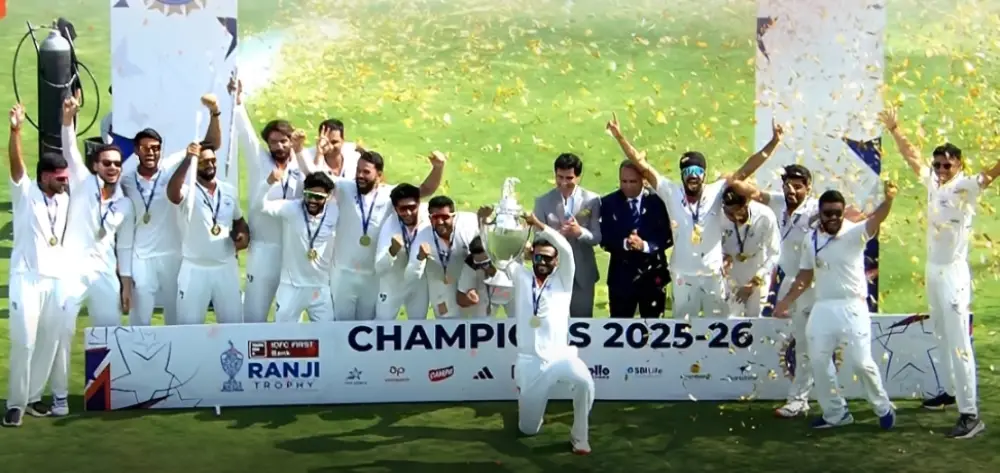
Finally, the ascent is complete.
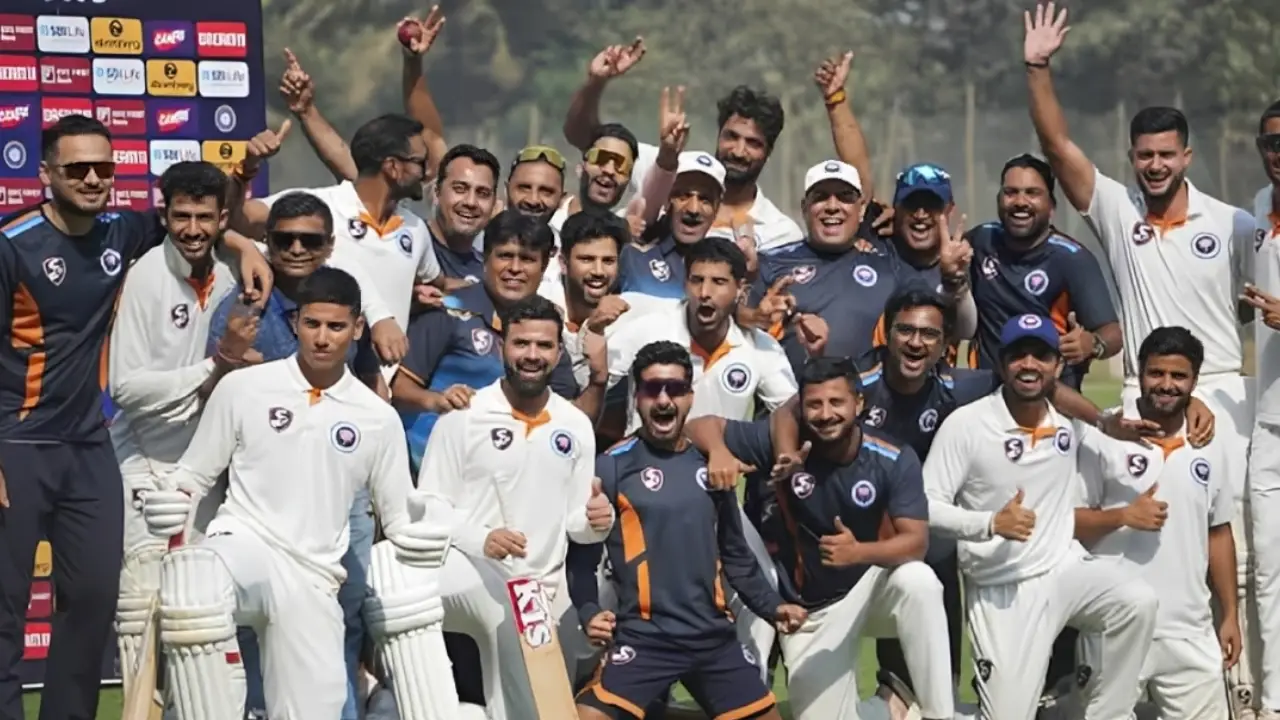
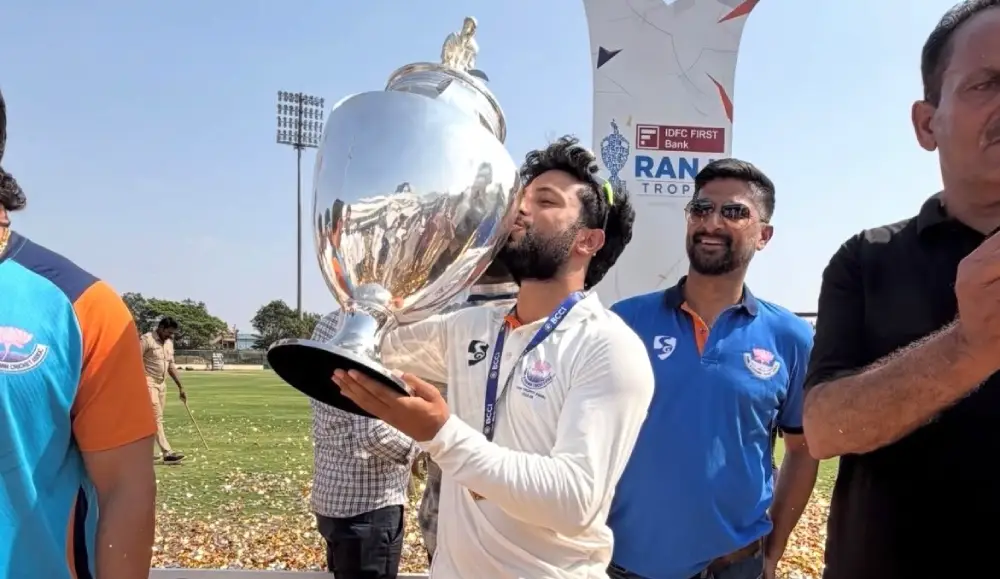
The Jammu and Kashmir cricket team has won the Ranji Trophy, defeating Karnataka in a final that will be remembered as a turning point in Indian domestic cricket. For the first time since their entry into the competition in 1959–60, Jammu and Kashmir is finally at the summit of the country’s premier first-class tournament.
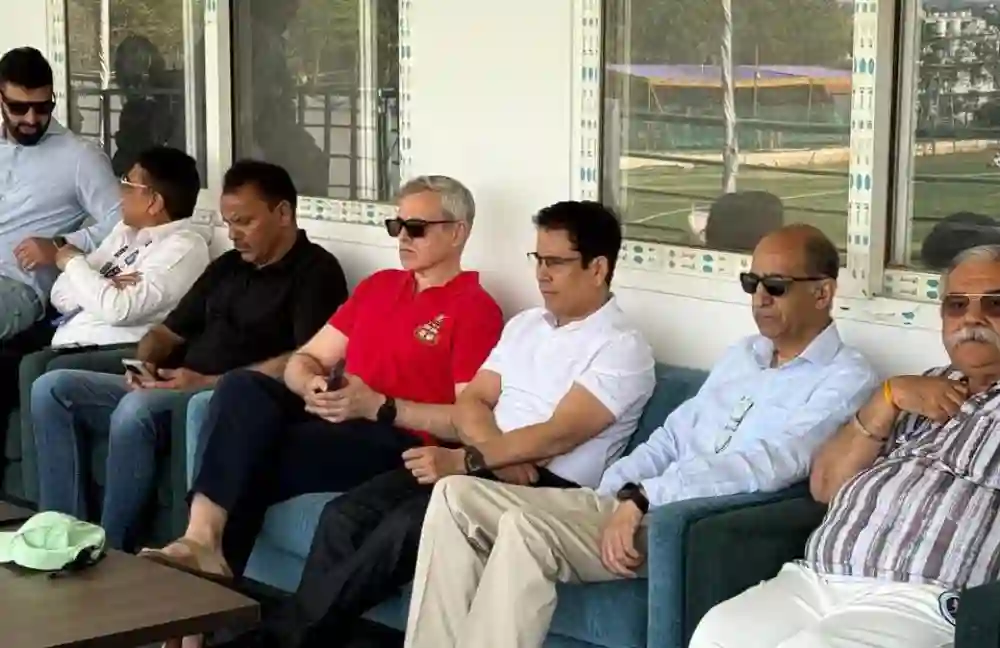
The victory is not a seasonal anomaly. It is the culmination of a long evolution, based primarily on generational renewal and the convergence of experience with youth. To ensure that the historic moment is celebrated at the right place, Chief Minister Omar Abdullah flew from Srinagar to Hubbali to cheer for his team.
Their victory is already being described as one of the most significant moments in the history of Indian domestic cricket. For Jammu and Kashmir, it represents far more than a title. It marks the transition from peripheral participants in the national cricketing order to champions at its core.
This triumph was not spontaneous. It was cumulative.
The Evolution
Although Jammu and Kashmir was a globally recognised cricket team as early as the 1920s, it first entered the Ranji Trophy in the 1959-60 season. In the decades that followed, the team remained competitive but rarely dominant. Advancement beyond group stages was intermittent. The state’s climatic conditions restricted practice windows. Infrastructure development lagged behind established cricketing centres such as Mumbai, Delhi, and Karnataka. Exposure to sustained high-intensity competition was limited.
The 1990s proved particularly disruptive. Political instability and security concerns interrupted fixtures and constrained structured training. Generations of promising cricketers grew up without consistent competitive frameworks. Yet cricket endured in informal settings, school tournaments, district-level matches, and improvised grounds in towns and villages.
Rebuilding began slowly in the early 2000s. Participation in the Plate Division (group D) provided breathing space for technical recalibration. Coaching structures were strengthened. Administrative focus shifted toward grassroots identification. Gradually, the team began recording victories against more established units.
A psychological turning point arrived during the 2012-13 Ranji season, when Parvez Rasool produced a landmark all-round performance that drew national attention. His success demonstrated that elite red-ball performances could emerge from Kashmir. Under the mentorship of Bishan Singh Bedi, who briefly coached the side, emphasis was placed on discipline, mental resilience and structural clarity.
The subsequent rise of Umran Malik and Abdul Samad to national prominence via the IPL further altered aspiration levels. Young cricketers from Baramulla to Rajouri could now visualise a pathway to the highest levels.
Yet aspiration alone does not win a Ranji Trophy. Institutional maturity does.
This season marked the convergence of aspiration and structure.
An Impressive Run Up
Jammu and Kashmir’s ascent to the summit of domestic cricket has been nothing short of phenomenal, a campaign built on discipline, resilience and an unshakeable belief that this season would be different. From the opening ball of their group campaign to the decisive moments of the semi-final, the team combined sharp execution with calm temperament, steadily dismantling reputations along the way.

Before toppling eight-time champions Karnataka cricket team in the final, the Jammu and Kashmir cricket team scripted a formidable campaign in the 2025–26 Ranji Trophy, defeating five former titleholders along the way. They overcame the Hyderabad cricket team, the Delhi cricket team and the Rajasthan cricket team in the group stage, edged past the Madhya Pradesh cricket team in the quarter-finals, and outclassed the Bengal cricket team in the semi-finals. The only former champion to halt their momentum was the Mumbai cricket team, who handed them their sole defeat of the season.
The journey began at the Sher-e-Kashmir Stadium in Srinagar, where Jammu and Kashmir faced Rajasthan in their opening fixture. On a surface that demanded patience, the home side produced a controlled performance to secure a 41-run victory, setting the tone for what would become a historic run. Confidence surged in the next encounter against Delhi, a team that had long dominated this fixture. In what proved to be a watershed moment, Jammu and Kashmir defeated Delhi for the first time in Ranji history, sealing a seven-wicket win that reverberated across the domestic circuit.

Momentum gathered as the group stage unfolded. Matches against Maharashtra, Assam, Vidarbha and Saurashtra tested both batting depth and bowling discipline. By the end of the six group fixtures, Jammu and Kashmir had registered four victories, with the remaining two matches ending in draws. The consistency was striking; this was no flash performance but a sustained campaign built on structured planning and collective effort.
The quarter-final against Madhya Pradesh marked the first major psychological barrier. Jammu and Kashmir had reached this stage in previous seasons but had fallen short of progressing further.
This time, the narrative shifted. Facing a formidable opponent, the team relied on precise bowling execution and measured batting. Aquib Nabi emerged as the defining figure, claiming a decisive seven-wicket haul that dismantled Madhya Pradesh’s resistance. His spell was supported by disciplined field placements and relentless pressure from the other bowlers. In reply, Shubham Khajuria composed 60 runs provided batting solidity at a crucial juncture, ensuring that the advantage gained with the ball translated into scoreboard control. Calm under knockout pressure, Jammu and Kashmir crossed a threshold that had previously eluded them.
Reflecting on the breakthrough, Parvaiz Rasool, the first cricketer from Kashmir to earn selection to the India A squad, observed that earlier teams had faltered at the quarter-final stage due to internal shortcomings. This time, he said, the side’s collective maturity and sharper execution carried them into their maiden semi-final appearance.
That semi-final, played on February 15 in Kalyani, West Bengal, pitted Jammu and Kashmir against Bengal, a two-time Ranji champion with a reputation for excelling in knockout contests. The venue added another layer of challenge, with the match staged at Bengal’s home ground before a partisan crowd. Few outside the dressing room predicted the outcome that followed.
Winning the toss, Jammu and Kashmir opted to field first, seeking to exploit early conditions. Bengal posted 328 in their first innings, but the score concealed the sustained pressure applied by the visiting side. Aquib Nabi once again led the bowling effort with a five-wicket haul, while Sunil Kumar provided critical support with three wickets. Every breakthrough was the result of disciplined lines and calculated aggression rather than rash experimentation.
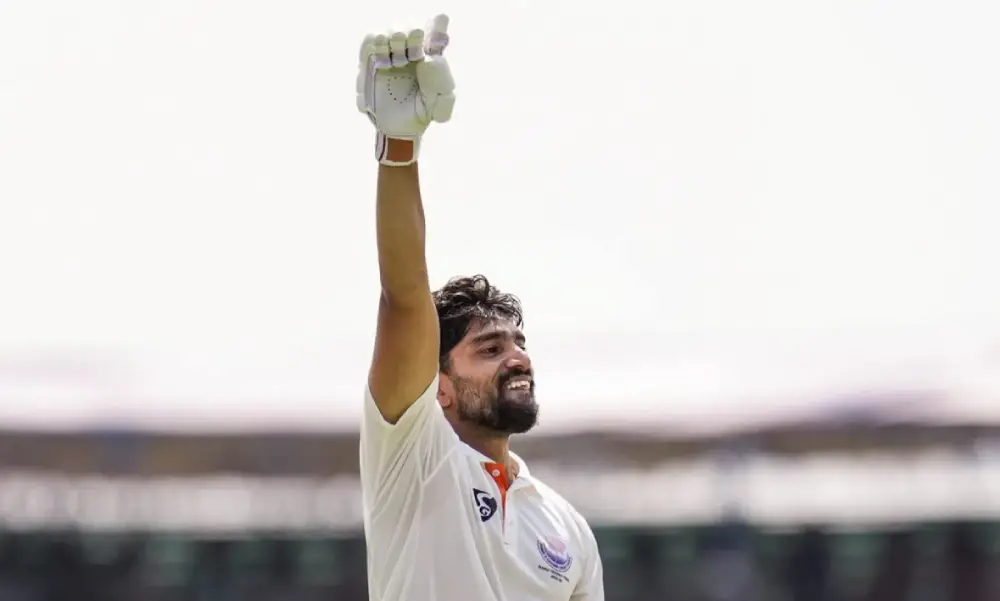
In response, Jammu and Kashmir’s batting unit displayed resolve. Abdul Samad’s fluent 82 injected momentum into the innings, while captain Paras Dogra anchored the middle order with a measured 58. Bengal’s Mohammed Shami produced an outstanding eight-wicket spell that limited Jammu and Kashmir to 302, allowing Bengal to retain a slender advantage. Yet the contest remained finely balanced, shaped by tension rather than dominance.
The second innings proved decisive. Aquib Nabi and Sunil Kumar combined to devastating effect, each claiming four wickets in a spell that shifted the match irreversibly. Their control over length and movement forced Bengal into errors, compressing scoring opportunities and building sustained pressure. When Jammu and Kashmir began their chase, the task required composure. In 34 overs, they accumulated 126 runs, guided by Vanshraj Sharma’s vital 43 and a steady contribution of 30 from Abdul Samad. The winning moment came emphatically as Vanshraj struck a towering six, prompting jubilant scenes on the field. Teammates surged forward, fully aware that they had secured a place in the Ranji Trophy final for the first time in the state’s history.
Bowling coach P Krishna Kumar attributed the victory to the squad’s cohesion. While coaches could provide direction, he noted, success ultimately rested on the players’ execution. The dressing-room environment, he said, fostered unity and clarity of role, enabling the team to perform under high-stakes pressure.
Across the campaign, certain patterns emerged. Aquib Nabi’s consistency with the ball established him as the spearhead of the attack, while the batting order demonstrated resilience at critical junctures. Leadership from Paras Dogra provided stability, and contributions from emerging talents ensured that the burden did not fall on any single individual. The result was a balanced side capable of adapting to shifting match situations.
Those Missed Chances
This season marked a decisive shift from earlier campaigns when Jammu and Kashmir had come close but failed to cross critical thresholds. The team had previously reached the quarter-finals in the 2013-14 Ranji Trophy season, where they encountered the formidable Mumbai side. Despite moments of promise, they were unable to sustain momentum against an opponent whose depth, bench strength and long-standing experience in knockout cricket ultimately proved decisive.
The following season, in 2014-15, Jammu and Kashmir once again advanced to the quarter-final stage, this time facing Tamil Nadu. Over several days of competitive cricket, they matched their opponents in phases but lacked the final push required to convert resilience into victory.
The Leadership
Part of the victory was possible because the team was in order and had enough on the bowling and batting sides.
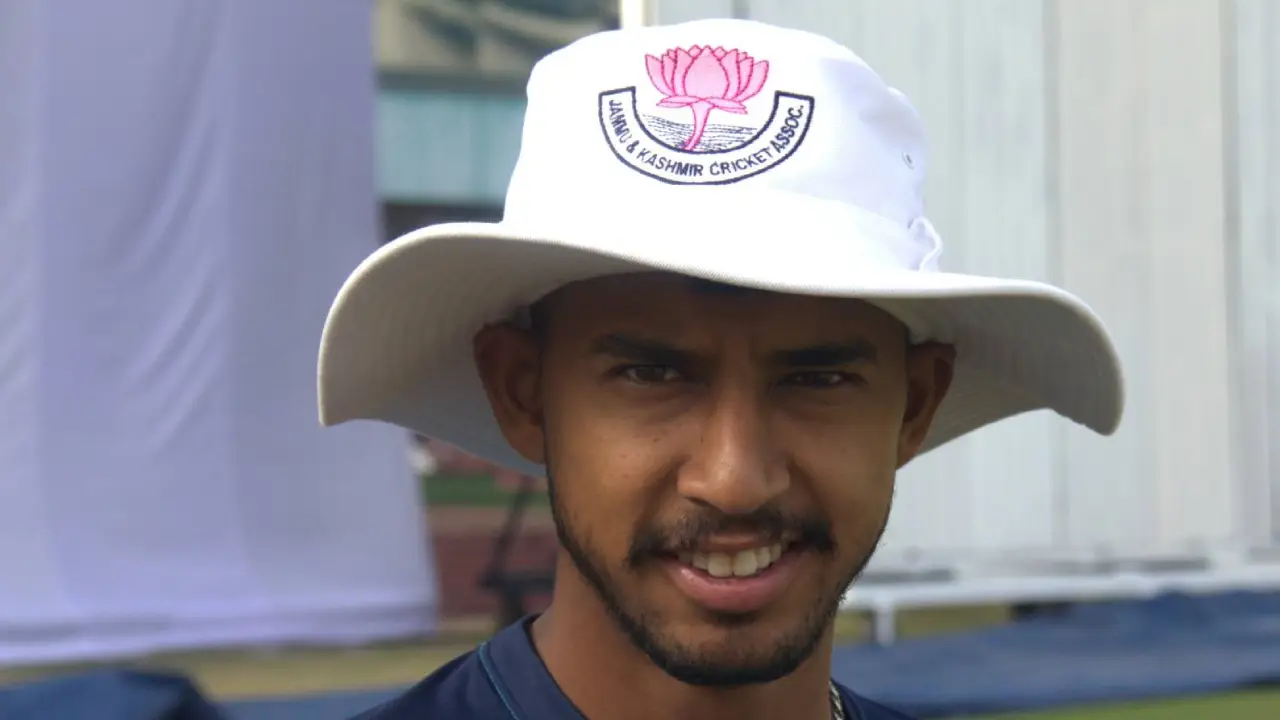
Paras Dogra’s arrival signified professional consolidation. At 41, the captain of the Ranji-winning side is older than many domestic peers and nearly twice the age of some teammates. Originally from Palampur in Himachal Pradesh, Dogra began his cricketing journey at 12, influenced by a father who had himself played Ranji cricket for Haryana.
His first-class career spans multiple teams, including Himachal Pradesh and Puducherry. When he joined Jammu and Kashmir as a professional, he brought with him two decades of red-ball experience. Dogra’s leadership this season was defined not by flamboyance but by procedural clarity.
In the final against Karnataka, his tactical field placements and patient batting approach stabilised critical phases. Competing against younger, faster athletes, Dogra’s fitness regimen and adherence to routine have allowed him to remain not only relevant but decisive.
Teammates frequently described him as the side’s “architect.” That architecture has now produced a championship.
The Batting Core
The batting order reflects the layered evolution of Jammu and Kashmir cricket.
Shubham Khajuria, born in Jammu, represents revival. He debuted in the Ranji Trophy at 16 and represented India Under-19 in 2013. A shoulder injury in 2014 halted his momentum and required surgery, sidelining him for nearly two years. Many careers falter at that juncture. Khajuria returned with renewed discipline, rebuilding his technique and accumulating runs consistently.
Exposure to English league cricket further strengthened his adaptability. In this Ranji campaign, his starts in knockout matches prevented early collapses and ensured scoreboard continuity.
Yawer Hassan Khan, the 22-year-old from Bijbehara in South Kashmir, embodies the new wave. His early years were marked by extraordinary dedication, attending school examinations and cricket trials on the same day. Supported by a family that recognised his commitment, he matured into a reliable top-order contributor. His performances this season reinforced the widening talent geography of the team.
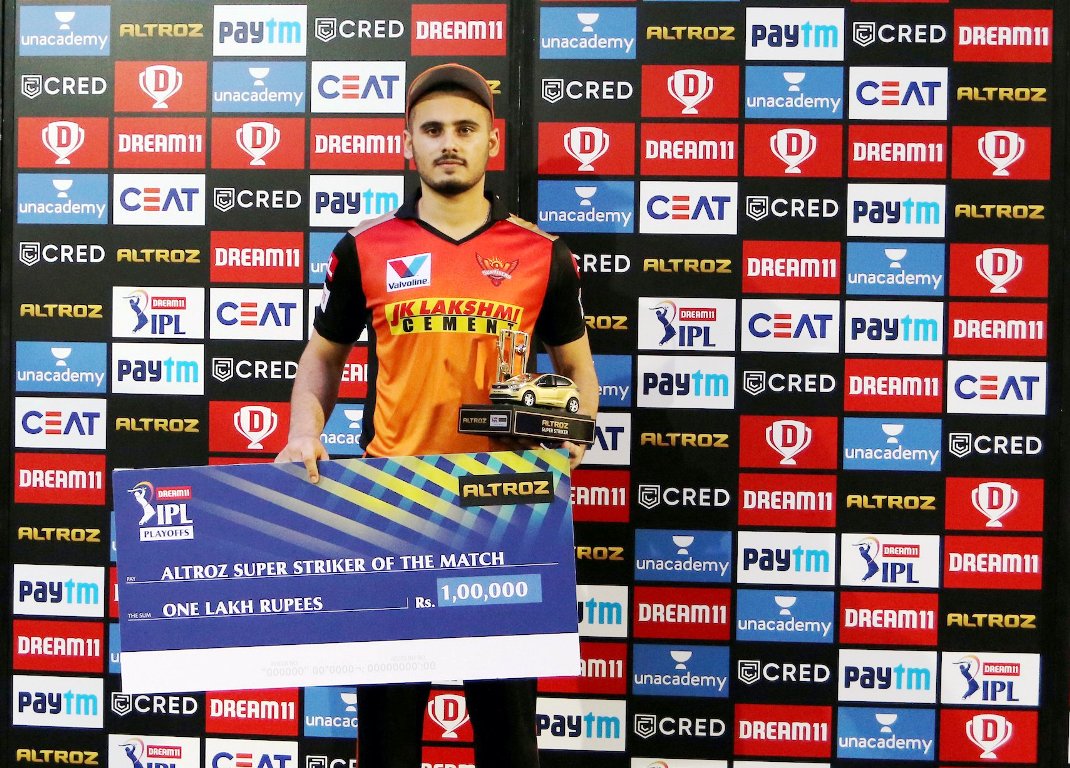
Abdul Samad provided momentum. Born in Rajouri and raised in Jammu, Samad’s IPL stints with Sunrisers Hyderabad and later Lucknow Super Giants sharpened his awareness of tempo. Known for explosive hitting in T20 cricket, he recalibrated his approach in the longer format, accelerating when conditions permitted and consolidating when necessary. His innings in the semi-final and measured aggression in the final altered match trajectories.

Behind the stumps, Kanhaiya Wadhwan delivered composure. Since debuting in 2018, he has refined the demanding craft of wicketkeeping. His glovework during long spells from the seamers enhanced bowling efficiency, while his lower-order runs in knockout matches extended innings at crucial junctures.
Kawalpreet Singh, balancing academic commitments with professional cricket, overcame months without structured practice during the COVID-19 disruption. His lower-order resilience and disciplined overs contributed to the team’s depth.
Vanshaj Sharma, discovered during a state talent hunt, emerged as a left-arm spinner of promise. His ten-wicket haul on debut in 2024 announced his arrival. In the semifinal that propelled Jammu and Kashmir into the final, his unbeaten 43 under pressure displayed the temperament that belied his age.
The Bowling Power
If the batting unit supplied stability, the bowling attack delivered supremacy.
At its centre stands Auqib Nabi Dar of Sheeri village in Baramulla. His journey is emblematic of the region’s transformation. In his early years, there were no adequate grounds in his village. He travelled to Srinagar for practice, borrowed shoes to compete, and relied on financial sacrifices from his father, a school teacher who initially hoped his son would pursue medicine. That persistence has culminated in national recognition, including a high-value IPL contract with Delhi Capitals.
But it is his red-ball performance that has etched his name into Ranji history. Auqib finished as the highest wicket-taker of the tournament. His spells in the quarterfinal dismantled opposition resistance; in the semifinal, he delivered decisive breakthroughs that broke Bengal’s backbone; in the final, he sustained relentless pressure against Karnataka’s experienced batting line-up.
Former India captain Sourav Ganguly publicly observed that a bowler who leads the wicket charts in the Ranji Trophy places himself firmly in contention for national selection, remarking that Auqib’s performances merit serious consideration for the Indian team.
The endorsement reflects both statistical dominance and tactical maturity. Auqib’s control of seam movement, reverse swing and length discipline under pressure were hallmarks of the campaign.
Complementing him was Umar Nazir, the tall seamer from Pulwama, often referred to as the Pulwama Express. Since beginning his first-class career in 2013-14, he has claimed 148 wickets in 63 matches. His height generates natural bounce; his experience ensures patience. Beginning his cricketing journey on open fields with limited infrastructure, Nazir now runs a cricket academy in Pulwama, mentoring young aspirants while continuing to anchor the senior attack.
Yudhvir Singh Charak, originally from Rajouri, brought pace variation and composure shaped by IPL exposure with Mumbai Indians, Lucknow Super Giants and Rajasthan Royals. His ability to extract bounce and maintain intensity in middle sessions created sustained pressure.
Abid Mushtaq Mangnoo, the left-arm spinner from Bhaderwah (Doda), offered control and variation. Identified during domestic tournaments and encouraged by former India cricketer Irfan Pathan, Abid’s rise includes an IPL stint with Rajasthan Royals. The passing of his father last year added personal adversity, yet he responded with discipline and resilience, delivering crucial middle-over breakthroughs throughout the tournament.
The Final
The final against Karnataka unfolded as a test of patience rather than a spectacle. Karnataka’s domestic pedigree and structural depth presented formidable opposition. Jammu and Kashmir responded not with recklessness but with method.
After winning the toss on February 24, Jammu and Kashmir chose to bat first against a Karnataka side equipped with a balanced attack featuring pace spearhead Prasidh Krishna and seasoned spinner Shreyas Gopal. The decision paid immediate dividends. Openers Shubham Pundir and Yawer Hassan stitched together a commanding partnership that laid the foundation for a massive first-innings total. Pundir struck a superb 121, while Yawer contributed a fluent 88, frustrating Karnataka’s bowlers until Prasidh broke the stand in the 51st over. Jammu and Kashmir ended the opening day strongly at 284 for 2.
On the second day, Karnataka removed Pundir, but the middle order ensured there was no collapse. Captain Paras Dogra, Abdul Samad, Kanhaiya Wadhwan and Sahil Lotra added valuable runs as Jammu and Kashmir piled up an imposing 584, a formidable total in domestic red-ball cricket. The innings drew praise from former India internationals Irfan Pathan and Suresh Raina, reflecting the scale of the performance.
Karnataka’s reply began with international names KL Rahul and Mayank Agarwal at the crease, but early breakthroughs shifted momentum. Aquib Nabi dismissed Rahul in the 11th over, and Sunil Kumar removed Devdutt Padikkal soon after. Though Mayank Agarwal counterattacked to steady the innings, Aquib returned to claim his crucial wicket in the 91st over, triggering Karnataka’s collapse at 293 and handing Jammu and Kashmir a commanding 291-run lead.
In the second innings, early setbacks saw Yawer Hassan and Shubham Pundir depart quickly, and Paras Dogra followed with the score at 72 for 3. However, Qamran Iqbal anchored the innings with an assured unbeaten 94, guiding Jammu and Kashmir to a dominant overall lead of 477 by the close of play, firmly placing the team in control of the final.
A Regional Reclassification
The squad draws from Baramulla, Pulwama, Rajouri, Kathua, Doda, Jammu and Anantnag, districts that once existed on the fringes of Indian cricket’s talent map. Their convergence into a cohesive unit reflects structural maturation.
The victory alters perception within the domestic ecosystem governed by the Board of Control for Cricket in India. Jammu and Kashmir are no longer occasional disruptors; they are champions.
For young cricketers in the Kashmir and Jammu region, the pathway is now tangible. Infrastructure investments gain renewed urgency. Academies expand. Talent hunts intensify.
And in doing so, they have permanently altered the map of Indian domestic cricket.