From the still shikara waters of Dal Lake to the high-stakes Strait of Hormuz, a quiet generation of Kashmiri men is navigating some of the world’s most volatile sea lanes. Raised in a landlocked valley beneath the Pir Panjal, where water meant lakes and the Jhelum, they now chart contested oceans, reshaping what it means to come from a place that never knew the sea, reports Afreen Ashraf
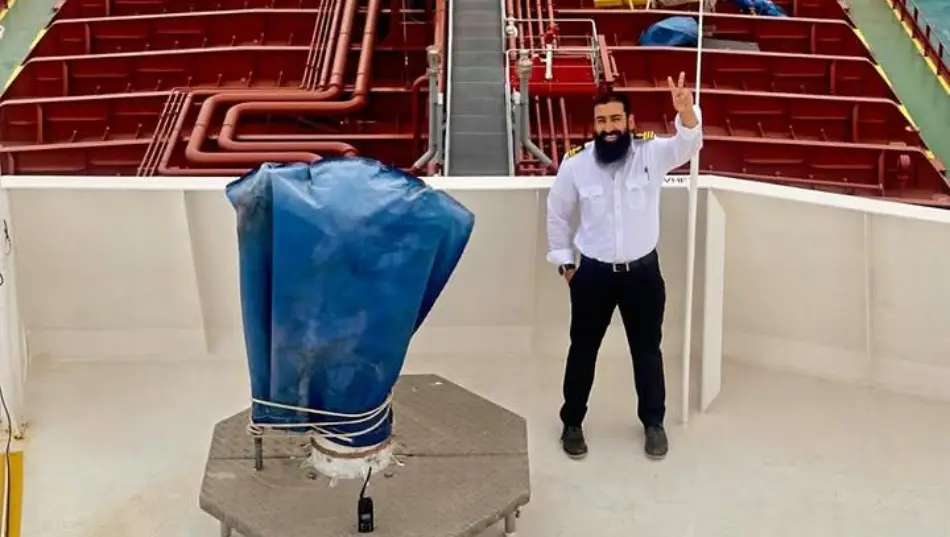
The radio crackles. The Gulf of Aden stretches ahead, grey and restless. Razor wire lines the deck. Extra lookouts scan the horizon. A small radar blip appears, and within seconds, the entire crew is on edge. Zahir Aslam, the vessel’s Kashmiri chief officer, stands his watch. He does not look away.
Thousands of miles from his Sharifabad HMT home in Srinagar, overlooking the Hokersar wetland, this young Kashmiri is doing something his geography never prepared him for. He is navigating one of the world’s most dangerous maritime corridors, keeping a laden tanker moving through waters where piracy was once an everyday threat.
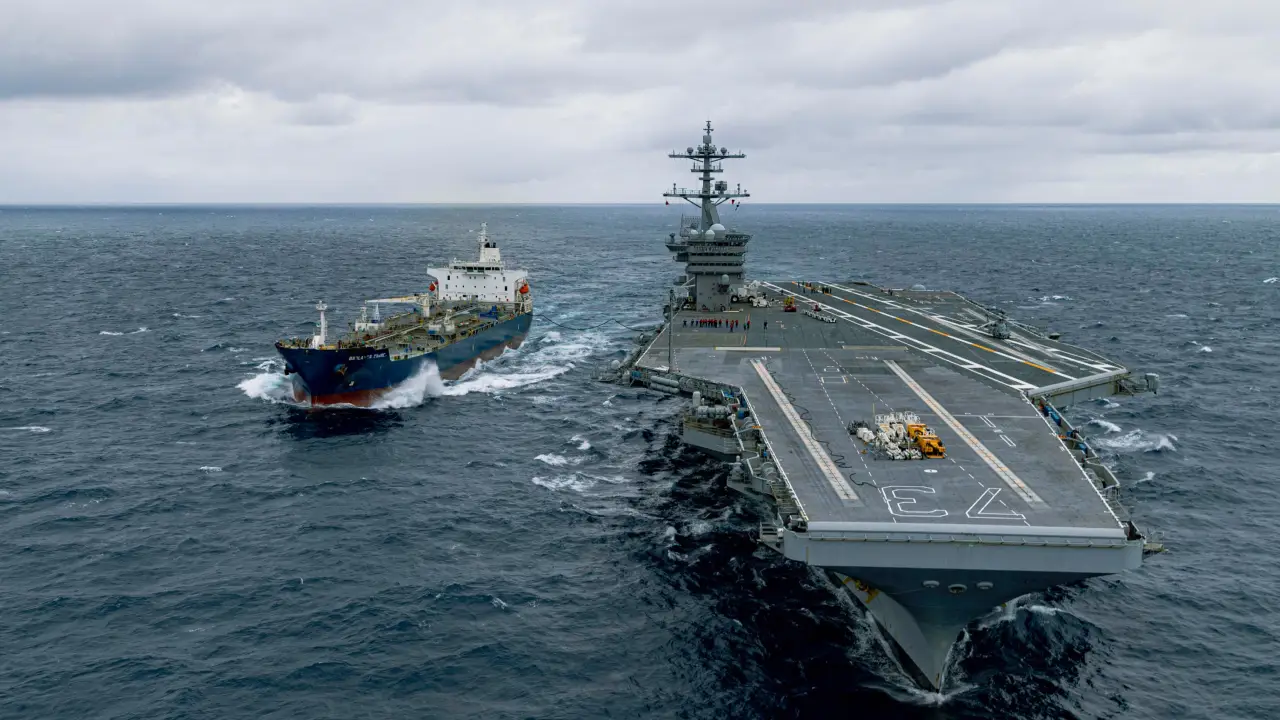
Today, the world’s anxious gaze is fixed on the Strait of Hormuz. Nearly a fifth of the world’s oil passes through that narrow channel. The escalating confrontation between the United States, Israel, and Iran has made it more fraught than ever. It is worth pausing to ask: who are the men keeping these ships moving? Among them, quietly, are a handful of Kashmiris.
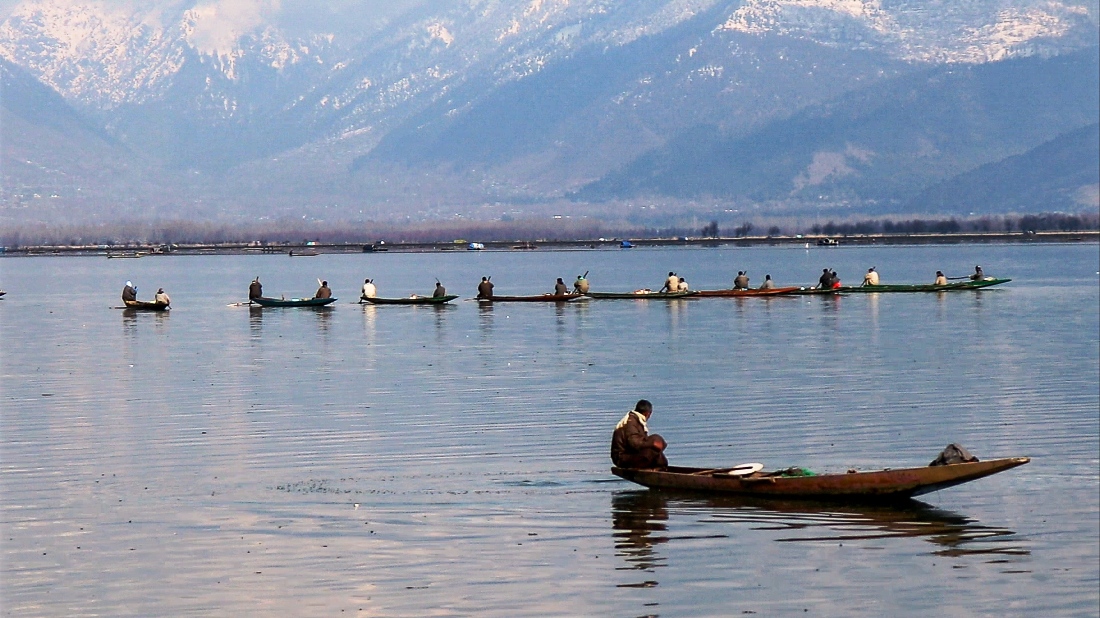
Their presence here is improbable by almost every measure. Kashmir is landlocked. It has no coastline, no port, no cargo ship. Its waters are inland: the Dal, the Wular, the Jhelum. Its vessels are Donga and Beheatch boats, as shikaras survive as the water taxis. The sea, for most Kashmiris, is an abstraction. Something encountered only in a geography textbook. Something glimpsed in a film. And yet, over the past two decades, young men from Kashmir have been stepping onto merchant ships. They are sailing across the world’s oceans. Quietly, without fanfare, they are dismantling the assumption that a landlocked people cannot find their footing at sea.

A Valley of Lakes
Kashmir sits enclosed on all sides. To the north, the Karakoram. To the south and west, the Pir Panjal Range. To the northeast, the Western Himalayas. Three major river systems carve through its terrain. Its most iconic image of water is not a crashing wave. It is a shikara gliding silently across the Dal at dusk, the Zabarwan hills reflected in still water.
This geography is not merely physical. It shapes imagination. It tells people, over generations, what is possible for them and what is not. The sea, in this imagination, belongs to someone else. It belongs to coastal communities, to people who grew up watching the tide.
A Kashmiri boy watching the Dal does not naturally dream of tankers and ocean swells. He dreams of mountains, of rivers, of the particular stillness of a valley morning. The idea that he might one day stand watch in the Strait of Hormuz, or navigate through a North Atlantic storm, or spend fourteen months at sea without returning home, this is not part of the script that the landscape writes for him.
And yet some of them have rewritten it entirely.
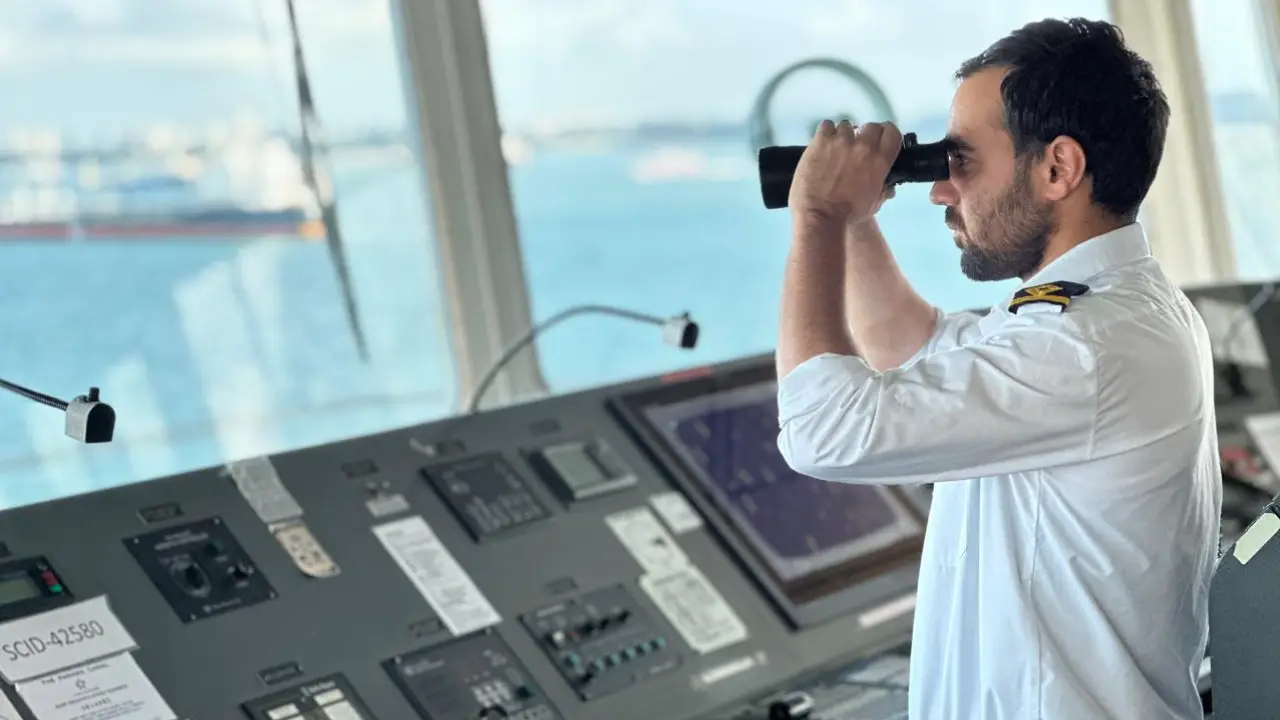
The irony is not lost on Arbaz Hasan Bhat. He is a second officer from Hazratbal. His home sits on the very edge of Dal Lake. Arbaz has navigated tankers stretching over 170 metres through waters across multiple continents. He has sailed remote maritime routes that most people will never see on a map. And yet he has never ridden a shikara. He had, in fact, never visited Dal Lake until G20-related developments brought him there for the first time.
“I had never been to Dal Lake, never ridden a shikara,” he said on the phone. The candour carries its own kind of poetry.
The contrast only sharpens on closer telling. During a recent visit home, Arbaz took an evening walk near Nishat. Water bikes were lined up along the lake’s edge. He asked one of the operators if he could ride one himself. The operator refused, politely, for safety reasons. Later, recounting the moment to his family, Arbaz reflected on the quiet absurdity of it. The operator was only doing his job. He did not know that the man standing before him navigated vessels across open oceans every day.
This is the paradox at the heart of this story. The sea was never part of Kashmir’s self-image. But some of its young men found their way there anyway.
The Television That Started It All
For Zahir Aslam, the sea entered his life through a small television screen. He grew up in HMT, Srinagar. He was in the seventh grade when DD National aired two shows, Sea Hawks and Arohan. Both were centred on life in the Indian Navy. He was transfixed.
“That is where this all started,” he recalled.
His early life had not been easy. Zahir lost his father when he was five years old. His mother raised the family alone. “It was a difficult time,” he regretted. “But one thing my mother never compromised on was education.” That commitment, he said, became the foundation for everything that followed.
He set his sights on the Indian Navy. But when he could not clear the final stage of the examination, he pivoted. What had been a backup plan became the main path, the Merchant Navy. It is a pattern that repeats itself across this community. The sea is rarely the first dream. It is often the door that opens when another closes. What surprises these men, again and again, is how completely it claims them once they step through.
Over the past fifteen years, Zahir has worked his way steadily through the ranks. He has spent his entire career on tankers, oil and chemical ships. Today, as chief officer, he oversees cargo operations and safety onboard. He has his sights set on becoming a captain.
His voyages have taken him across nearly every continent. One port that stayed with him was Warri, in Nigeria. He saw people living without basic facilities. It reshaped his understanding of life. He also managed to offer prayers at one of the region’s oldest mosques, a moment of quiet continuity amid a life lived largely in motion.
But it is the high-pressure corridors that define the texture of his working life. He has sailed through the Gulf of Aden during the peak years of piracy. Razor wire on deck. Extra lookouts posted. Every radar contact is treated as a potential threat. Nights were heavy with watchfulness. In the Strait of Hormuz, he describes the pressure as quieter but no less intense. Narrow waters. Dense traffic. A constant naval presence that makes the air feel different. “No matter where you are in the world, or what the situation is,” he said, “you stand there, do your duty, and make sure the ship keeps moving safely.”
When asked how he handles the pressure of command, Zahir’s answer is unexpectedly domestic. “I treat it like being the head of a family,” he said. “Sometimes you have to make tough decisions for everyone’s safety.” It is a frame that makes sense for a man raised by a mother who made hard choices quietly and without complaint.

World’s Pressure Points
The Strait of Hormuz is, at its narrowest, only 33 kilometres wide. Yet through it passes an extraordinary share of the world’s energy. Oil from Saudi Arabia, the UAE, Kuwait, and Iran, bound for Asia, Europe, and beyond. When tensions rise in the region, the strait becomes the most-watched body of water on earth. Navies crowd it. Insurance premiums spike. Ship owners recalculate routes.
The men on board the ships, however, cannot stop. The cargo still has to move.
Kamran, a second officer from Nowshera, Srinagar, has been sailing since 2019. He explains this plainly. “During tensions in areas like the Strait of Hormuz, ships cannot stop working. The ship still has to move.” He has seen routes disrupted and diverted. When the Suez Canal becomes impassable or inadvisable, ships are rerouted around the Cape of Good Hope. That adds thousands of miles and additional weeks at sea. It places enormous strain on the crew and resources. But there is no option of simply waiting it out on land.
Kamran also serves as the administrator of an online group called the Seafarers Association of Kashmir. It connects Kashmiri seafarers and cadets across postings and oceans. It is a modest but meaningful institution, a digital community that functions like a guild. Seniors share experiences. They guide newcomers through the unfamiliar world of maritime careers. Kamran did not start out planning a life at sea. Like many young Kashmiris of his generation, he was preparing for competitive examinations. Then he gradually found himself drawn to maritime work. “I wanted to see the world,” he asserted. “And this profession gives you financial independence at an early age. That is what kept me committed.”
His first real encounter with the ocean’s indifference came during a trans-Pacific voyage. The ship rolled heavily through rough weather. “It was new for me, but I managed,” he remembered. There is a particular kind of confidence that the sea builds in those who stay with it. Not bravado. A quiet, settled knowledge of what one is capable of enduring.
He is matter-of-fact about the COVID-19 years. Seafarers found themselves marooned on board while the world locked down on land. “We had to keep essential supplies moving. In many ways, we are like the veins of the world,” he said.
The Seafarers Association of Kashmir now counts somewhere between 35 and 40 officers among its members. That number, modest as it sounds, represents a genuine shift. When Kamran joined in 2019, the Merchant Navy was not considered a mainstream career in Kashmir. Social media has changed that. Young people are discovering the profession through videos and word-of-mouth in ways that were not possible a decade ago.
Shalimar to the Indian Ocean
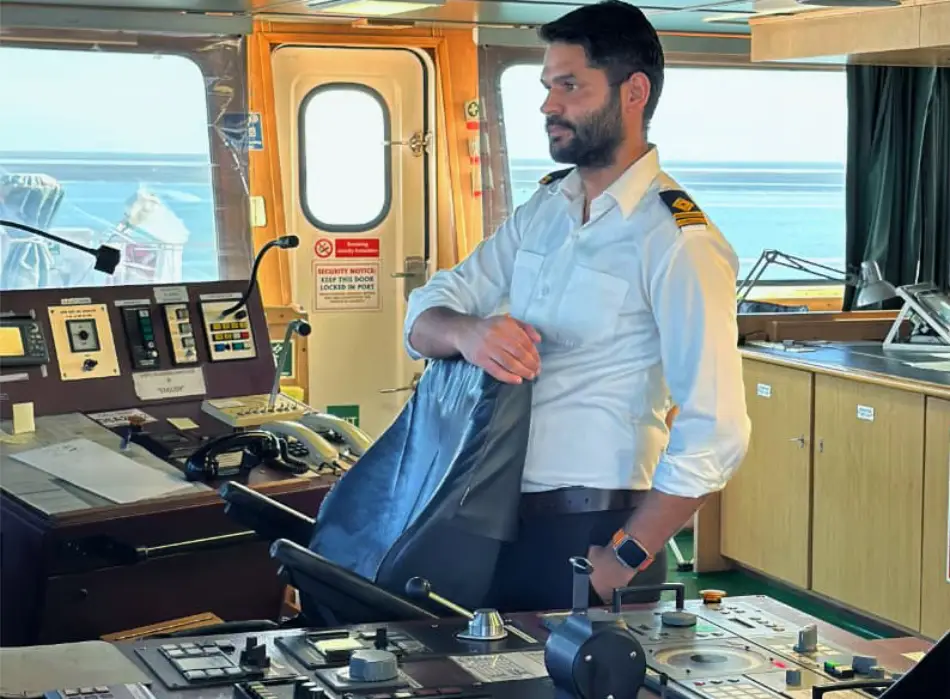
Najam-ul-Hasan decided he wanted to join the Merchant Navy when he was in Class 9. He is from Shalimar, Srinagar. He made the decision years before he had ever seen the sea. He began on the deck side. He has worked his way up over nearly a decade, from trainee to third officer to his current position as second officer with Anglo-Eastern Shipping Management. He is presently sailing through the Indian Ocean on a bulk carrier headed towards the United States, via South Africa. “With every promotion comes pride, but also more responsibility,” he said.
He has sailed through the world’s busiest and most sensitive routes. He has not personally encountered piracy. But he has known fellow seafarers who were taken hostage. The risk, he said, is never entirely abstract. It is present in every briefing, in every protocol, in every extra set of eyes posted on deck when the ship passes through certain waters.
Two incidents have stayed with him. The first was in the North Atlantic, sailing from Brazil to Norway. Rough weather slowed the ship dramatically. The captain eventually changed course for safety. The second was in the Mediterranean. The ship had to alter its route and wait near an island while a storm passed. These are the kinds of decisions, small, invisible, unglamorous, that keep global trade functioning.
What the experience has given him, he said, is a sense of scale. “Coming from a place surrounded by mountains, being in the middle of the ocean makes you realise how vast the world is.”
He works to stay connected to home. On Eid, he asked the ship’s cook to prepare rogan josh. He speaks Kashmiri whenever he comes across someone from the valley. “Distance actually makes you more connected to where you come from,” he revealed. It is a sentiment echoed by almost every Kashmiri seafarer this correspondent talked to. The further they sail from the valley, the more precisely they understand what the valley means to them.
14 Months and the Great Belt
Arbaz Hasan Bhat has been at sea since 2019. The years have not been without their ordeals. He recalls one passage through the Great Belt, the strait near Germany, when the ship met rough weather and began rolling. The vessel covered only about 21 miles in four days. It is the kind of helplessness that no training fully prepares you for. The sense of being subject entirely to conditions beyond your control. Of watching the distance to your destination barely change across days of effort.
Then came the pandemic. The world went into lockdown. Most people were confined to their homes. Arbaz and several other seafarers were confined to something else entirely, the ship. He spent nearly fourteen months onboard without returning home. Fourteen months of nun chai on the deck. Brief satellite calls to Kashmir. Watching the world’s crisis from the particular remove of open water.
He spoke of that time without bitterness. The Merchant Navy demands this kind of endurance as a condition of employment. Long separations from family. Limited connectivity. The psychological toll of isolation. What keeps him grounded, he revealed, are small rituals. On deck, he drinks nun chai with sout. These are not grand gestures of cultural loyalty. They are quiet, daily acts of continuity. The way he carries the valley with him across waters that have no name for it.
Life on the Cruise Ships
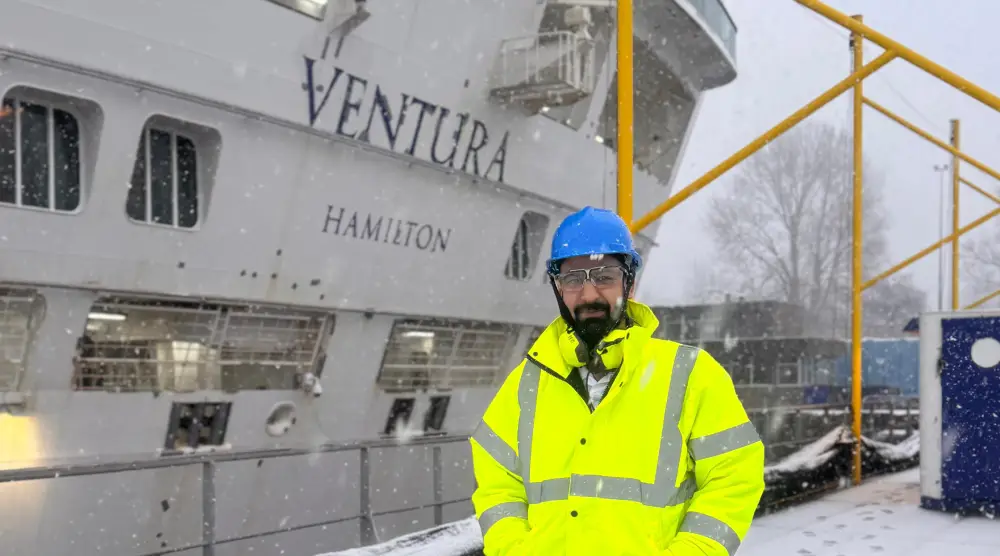
Not all Kashmiri seafarers find themselves on tankers or bulk carriers. Raqib Qayoom, from Nowshera, Srinagar, took a turn in his career that led him somewhere markedly different. He now works as a third engineer on a Carnival Cruise Line vessel.
He began conventionally enough, in 2019, after a friend introduced him to the field. His early years were on cargo vessels, a bulk carrier moving iron ore between China, Australia, and Bangkok. Then, chemical tankers. Then, general cargo ships. He served as a fourth engineer on a general cargo vessel before making a move that changed the character of his professional life entirely.
The contrast, he said, is stark. “On cargo ships, life is mostly work and isolation. On cruises, there is more interaction, more people, and a different energy.”
In his free time onboard, Raqib explores the ship. He talks to passengers from different parts of the world. He learns about their lives and shares his own. He occasionally teaches fellow officers a few words in Kashmiri. He has rarely seen Kashmiri passengers onboard but he hopes to see them on cruise ships one day.
The discipline and responsibility at the core of his work remain unchanged. The machinery he tends does not care whether tourists are dancing on the deck above. But the texture of daily life is different. Shorter contracts. A more social atmosphere. The hum of a floating world that exists to give people pleasure. For someone who grew up in Kashmir, that is itself a kind of destination, visited, photographed, longed for, there is perhaps a particular fitness in working on a ship designed for wonder.
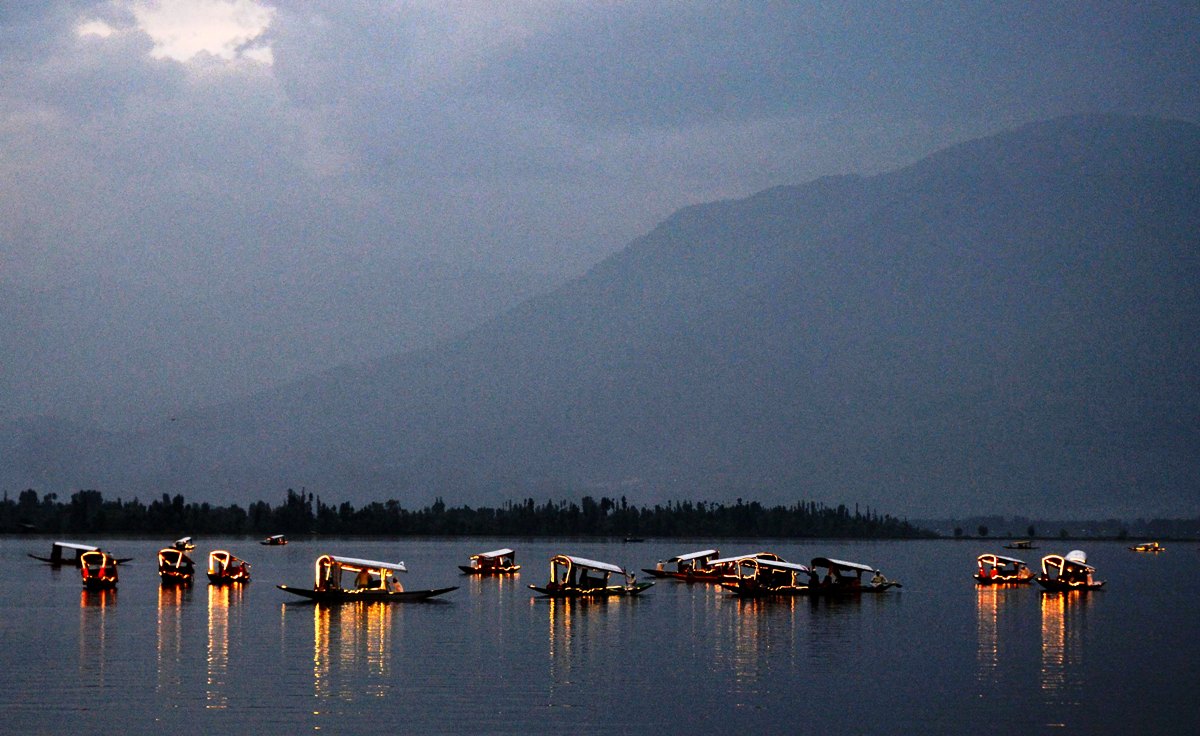
PHOTO BY BILAL BAHADUR
The First Time He Saw the Ocean
Ahmed, a cadet currently on his first voyage, grew up in Srinagar knowing the sea only as an idea. If pressed, as Dal Lake.
He was a strong student. The expectation around him was conventional: to become a doctor or an engineer. He was not interested. He did not want competitive examinations or a desk. He wanted movement. An encounter with the world as it actually is. One day, searching online, he came across the Merchant Navy. It seemed to offer exactly what he was looking for.
He began his cadetship in 2025. He is now sailing with Stena Bulk, a Swedish company, on a chemical tanker of around 86 metres. His first voyage has already taken him from Mumbai to Dubai, Oman, Singapore, Taiwan, China, South Korea, and back again. This is the route that would have been unimaginable to the schoolboy who once expected to spend his life preparing for entrance examinations in Srinagar.
The first time he saw the open ocean, the experience was almost disorienting. “Before this, my idea of the sea was only Dal Lake. When I saw the ocean for the first time, it felt like I had entered another world.” And then, almost in the same breath, he added that even while discovering that world, his mind kept returning to Kashmir and to the Dal. The ocean does not displace home. It enlarges it.
He is still finding his footing. His days begin with a morning meeting where tasks are assigned. He spends the rest of his time assisting senior officers. He jokes that he sometimes tries to stay out of sight so that no senior officer gives him additional work. Then he added, almost immediately, that he is grateful for the pressure. It is how he is learning.
He does not have night shifts as a marine engineering cadet. But the sea does not always respect schedules. Sailing through Chinese waters, he was woken by the ship rolling heavily. Where other first-timers might have been frightened, Ahmed was exhilarated. “It felt like a swing,” he said. “At first I felt like vomiting, but then I told myself, seize the day.”
There was also a fire alarm in the middle of the night. The entire crew rushed out in alarm. It turned out that steam from the captain’s shower had triggered the sensor. “It was serious for a moment,” he recalled, “but later we all laughed.”
He misses things: evening bike rides to the Dal with friends; trekking to alpine lakes with his father. These are textures of a life he has stepped away from, not abandoned. “No matter where I go,” he said, “I carry Kashmir with me.”
He is already thinking ahead, wondering whether cruise ships might suit him better eventually.
The Veins of the World
Sahil Hassan, a merchant navy officer serving as a second officer, puts the scale of the industry plainly. “Almost everything in your daily life has travelled across oceans. The clothes you wear, the fuel you use, the food you eat, the medicines you rely on, all have been carried by ships at some point.”
The Merchant Navy is among the most essential systems sustaining modern civilisation. Yet it is almost entirely invisible in public life. Roughly 90 per cent of global trade moves by sea. When shipping lanes are disrupted by piracy, by geopolitical tension, by a blocked canal, the effects ripple outward into every economy on earth. The men keeping these routes open are not celebrated. They are rarely seen. They spend months away from home. Under conditions that would break most people’s sense of ordinary life. They navigate the Strait of Hormuz, the Gulf of Aden, and the Red Sea. They do so with the calm precision that the job demands.
Among them, now, are Kashmiris.
The mountains that once enclosed their world have not disappeared. They have simply been joined, now, by the sea.