From medieval sultans to wandering mystics, Kashmir’s long relationship with the Hajj made it both a way-station for Makkah-bound Central Asian pilgrims and a launch-pad for remarkable Kashmiri journeys far beyond the Pir Panchal mountains. Now, that centuries-long odyssey of faith, hardship, and transformation has shrunk to a tightly scheduled flight between Srinagar and Jeddah, writes Masood Hussain
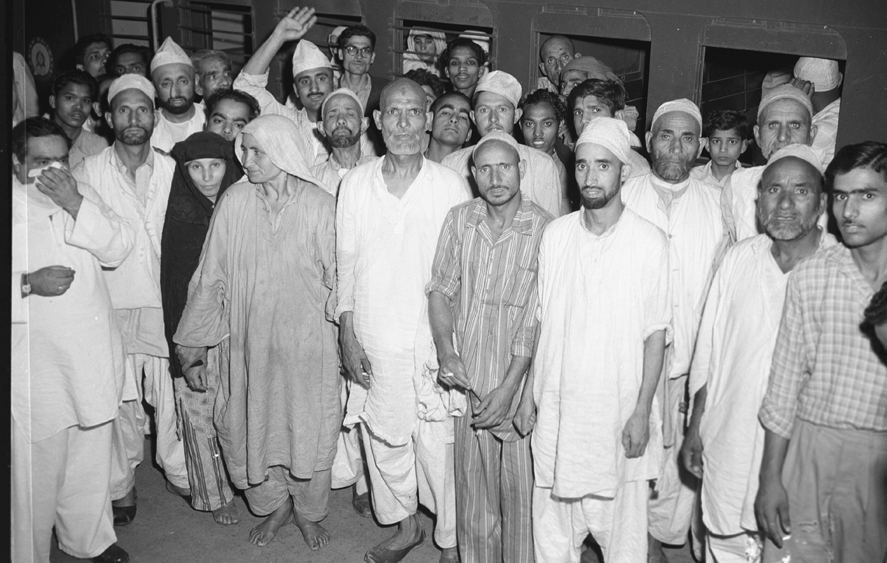
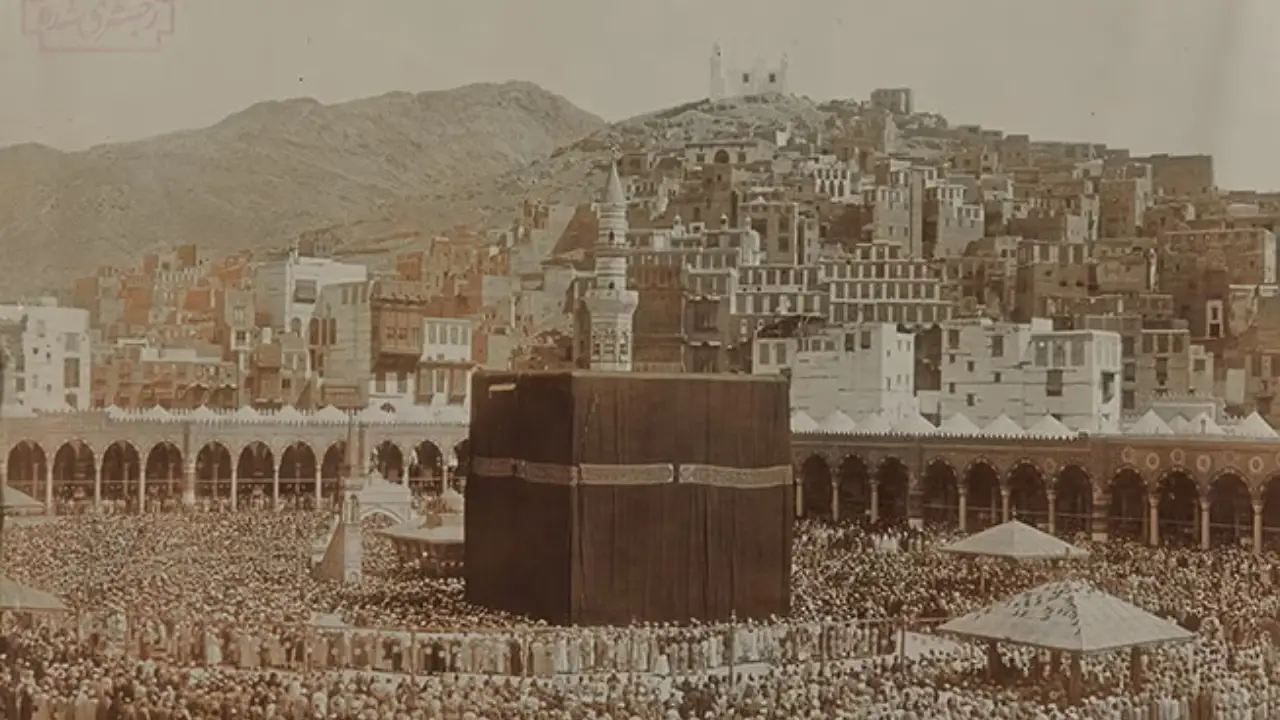
Almost 15 years after his retirement as a medical officer in the Jammu and Kashmir government, Mehmood Ahmad turns nostalgic about his Hajj in 1980, when he boarded the ship Noorjahan for sailing to Jeddah. He had just completed his bachelor’s degree from the Aligarh Muslim University. The voyage was as if stolen from the pages of the Arabian Nights.
“We left in August and returned in December,” he remembers. “Reaching Makkah was almost a 36-day travel, including three days by train, some days for quarantine in Bombay and then 16 days at sea.”
His voyage was pleasantly different. “I had to hand over some shawls to an officer in Bombay, and while I was taking leave from him, he enquired about my next destination,” Ahmad recalled. “When I told him that I was about to embark on a voyage to Hajj, he stopped, went in, wrote a small chit and advised me that I should give it to the captain of the ship he knew.”
Many days into the sea, a bored Ahmad one day decided to visit the bridge, the command deck of the vessel. “It was hectic and restrictive, but somehow I reached the captain, and when he read the chit, he said you should always come and sit and eat with me, but do not tell the fellow pilgrims,” he recalled. “I would go, eat and return, but then, one day, there was a crisis on the ship. It stopped for three days, and nobody told us why. Once we resumed the voyage, we were told that pirates had intercepted the ship and negotiations had led to a breakthrough.”
He remembers spending long days on the ship and offering evening prayers on the deck. “It looked like an Eidgah,” he said. “There were more than 5,000 pilgrims on board, and 1,300 of them were from Kashmir. Politician Abdul Rahim Rather led the Kashmir pilgrims.”
Ahmad was accompanying many relatives. These included the wife of a distant cousin who had performed Hajj when the Kaaba had a sandy courtyard so scorching that pilgrims would have their feet burnt. Another remarkable person in the group was Mohammad Khalil, a barber, who would earn the costs of another Hajj while being on Hajj. Hajj then cost Rs 10,300. “He had four pilgrimages as he would work during Hajj and then get Japanese sewing machine needles that would fetch him a huge amount back home,” Ahmad said.
A few years later, when Ahmad got another opportunity to fly for another pilgrimage, he saw things had changed completely on the ground. “Arabs associated with the pilgrimage were better economically,” he remembered. “The old dilapidated homes around Madinah had been demolished, and new accommodation had come up. There were more facilities for the pilgrims, and the Mualims who would send their agents from village to village in Kashmir had stopped moving out for their clients.”
A Historic Change
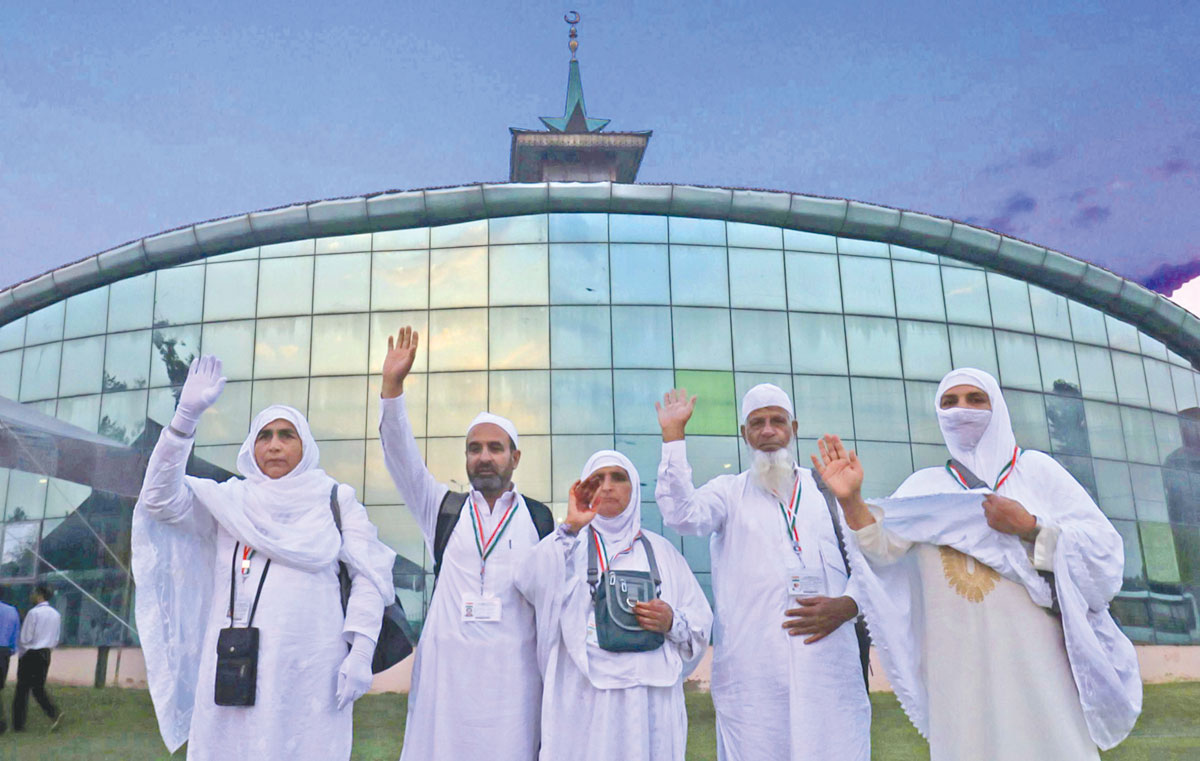
Times have changed. The Hajj is now crowded but comparatively easy to perform. The Hajj Committee in India does everything that is required. Never in history was the Hajj so easy to perform. While the ritual remains unchanged, things around it have shifted completely, especially in the case of Kashmir. Author and former officer Khalid Bashir Ahmad has done an extensive report on the changes that the institution of Hajj has witnessed in Kashmir over the last century.
Before the establishment of modern nation-states, however, the Hajj in the era of empires was for Kashmiris a great exposure to the world, an exceptional course in knowledge, and in certain cases, the opening to an extraordinary career. Most of Kashmir’s medieval Muslim scholars went on protracted journeys while on Hajj and returned more knowledgeable and perhaps wiser. The road to Makkah, for them, was never merely a road to Makkah.
Scholars and Sultans
One of Kashmir’s great Sufi poets and scholars, Sheikh Yaqub Sarfi (1521–95), proceeded on Hajj twice through the land route involving Sialkot, Lahore, Kabul, Samarkand, Mashhad, Makkah, and Medinah. He is recognised as the spiritual successor of the great master Sheikh Hussain of Khwarazm, is globally acknowledged for his scholarship, has personally interacted with Shaikh Salim Chishti of Fatehpur Sikri in Madinah during his pilgrimage, and had the honour of teaching Sheikh Ahmad Sirhindi, the Mujaddid Alf-i-Sani, whose letters and teachings would go on to reshape Sufi practice from the Ottoman court to the steppes of Central Asia.
Srinagar city’s patron saint, Sheikh Hamza Makhdoom’s elder brother, Sheikh Baba Mohammad Ali Raina (b. 1494 CE), also performed Hajj by the same land route, travelling far and wide. Unlike Makhdoom Sahib, who is resting in Srinagar, Raina lies buried at home, in Tujar, Sopore.
The land routes took a long time and were arduous, involving Afghanistan, Persia, and Iraq before reaching the Kaaba. But there was an alternative. Most of the Kashmiri Sultans who performed Hajj would take a hybrid route: trekking south to Surat in Gujarat, then called Bab-ul-Makkah (the Door to Makkah), and sailing from there to Arabia. The Kashmir Sultanate had retained close diplomatic relations with the ruler of Makkah throughout this period. In his magnum opus, Kashmir Under the Sultans, Prof Mohibul Hasan records that Sultan Zain ul-Abidin, Kashmir’s Budshah, had “friendly relations” with the Sharif of Makkah.
Even though Budshah himself never visited Makkah, it was precisely a Hajj that brought him to the throne. His elder brother, Ali Shah, was a weak-willed Sultan (ruled 1413–1420 CE) who one day decided to go on pilgrimage. He crowned Zain ul-Abidin in his place and left for Makkah. “On the way, interested persons pointed out the difficulties and privations of the journey to Mecca; and, when he reached Jammu, his father-in-law disapproved of his decision,” Hasan writes. Ali Shah was supposed to reach Thatta, a major port city in Sindh on the lower Indus, near modern Karachi, and the last staging point before the sea crossing to Arabia, but he turned back. He raised an army in Rajouri to reclaim his throne, got it without a battle, but eventually Zain ul-Abidin wrested it from him permanently.
By then, Hajj was deeply embedded in Kashmiri court life, especially among kings, elites, and scholars. Amir-e-Kabir Mir Syed Ali Hamadani, whose contributions to the spread of Islam in Kashmir are historically foundational, left for Hajj at the conclusion of his only visit to the valley. “Sultan Qutbuddin (ruled 1373–1389 CE) failed to propagate Islam in accordance with the wishes and aspirations of Amir Sayyid Ali Hamadani and as such the latter found himself reluctant to stay on in this land,” the anonymous contemporary author of Baharistan-e-Shahi has recorded. “Consequently, after a short while, he left via Baramulla under the pretext of proceeding on a pilgrimage to Mecca.” Amir-e-Kabir passed away on his way home.
Like father, like son. Hamadani’s son Mir Mohammad Hamadani also left for Hajj from Kashmir and passed away on the journey. “It must not remain unknown that on account of the obduracy and animosity of Sayyid Hisari towards Amir Sayyid Muhammad Hamadani, the latter found himself disheartened in this land,” the same author wrote. “After seeking the permission of Sultan Sikandar, he set out on a pilgrimage to Mecca to perform Hajj and Umrah.” Two generations of the Hamadanis left Kashmir for Makkah and neither returned. The corridor between the valley and the holy cities had claimed them both.
Becoming Cosmopolitan
Unlike Sarfi and Raina, there were many Kashmiri scholars who left on Hajj and found entirely new career paths opening before them, during or after the sacred pilgrimage. For them, the road to Makkah became the road to the wider world.
One of them was Badruddin Kashmiri, known to scholarship as Badr al-Dīn al-Kashmīrī ibn Abd al-Salām al-Ḥusaynī ibn Sayyid Ibrāhim, the most influential Kashmiri literary figure in 16th-century Central Asia. He left the valley in 1552 CE, taking the land route to Makkah.
According to the Encyclopaedia Iranica, he met a native of Khojand, a Silk Route town in modern Tajikistan, in Kandahar, who redirected him northward toward the great Naqshbandi networks of Central Asia rather than onward to Arabia. It was a chance encounter that changed not only his life but the historical record of an era.
In the Naqshbandi Sufi order, he emerged as a towering figure. He moved to Bukhara and entered the influential Juybari Sufi network, named after the village near Bukhara from which the great Naqshbandi master Khwaja Muhammad Islam Juybari hailed.
Badri, as he signed his poetry, emerged as the most prolific Persianate intellectual attached to the courtly and religious elite of the region. Closely linked to the Uzbek ruler Abdullah Khan II and the powerful Juybari Shaikhs, he produced major historical, devotional, and hagiographical works in both prose and verse. His writings became important records of the political, social, and religious life of 16th-century Central Asia, “essential, though still largely untapped, sources”, as the Encyclopaedia Iranica characterises them. He lived into old age, eventually residing near his master’s burial place in Dahbid, near Samarkand.
The Diplomat Scholar
The story of Khwaja Abdul Karim is perhaps the most extraordinary of all. Scholars know him as Abd al-Karīm ibn Khwāja ʿĀqibat Maḥmūd ibn Khwāja Bulāqī al-Kashmīrī. He was staying in Delhi seeking permission from the royal court to proceed to Makkah for Hajj when Nadir Shah invaded Mughal Delhi in 1739. He impressed the Persian king so profoundly that Nadir Shah took him to Iran and appointed him to an important position at court. He soon emerged as the Foreign Minister of Iran and was deputed to Turkey as the king’s envoy to resolve disputes between Iran and the Ottomans. After his diplomatic triumph in Istanbul, Nadir Shah sent him to Baghdad and Damascus.
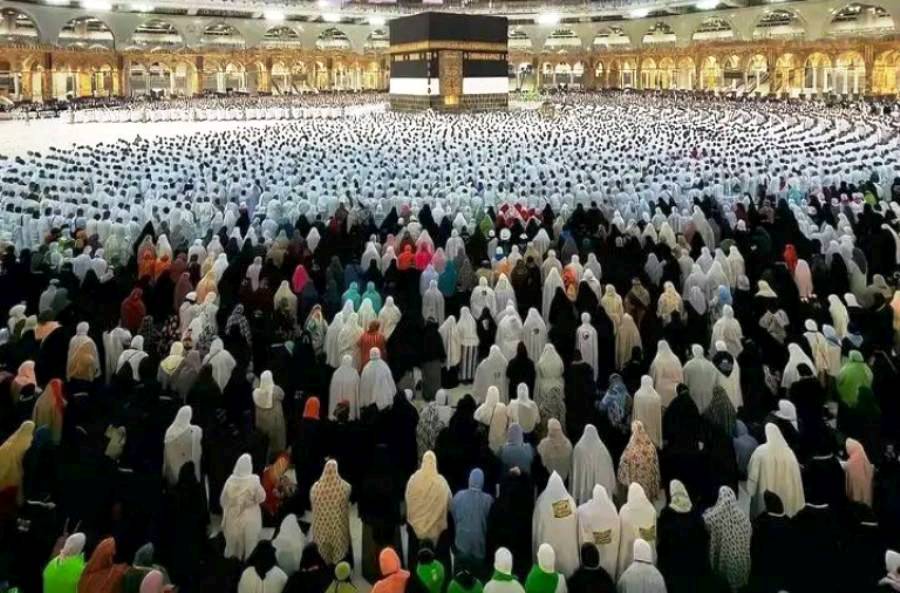
When Nadir Shah finally arrived in Qazvin in 1741, after successive campaigns across Punjab, Sindh, Afghanistan, Khorasan, Transoxania, and Khwarazm, Karim took leave to go to Makkah. He took the land route to Arabia, performed Hajj, and then sailed back to Hooghly in Bengal aboard a vessel captained by a British officer, completing one of the most remarkable circular journeys in the history of the pilgrimage.
He returned to Delhi and wrote the Bayan-e-Vaqi, an account focused on the life of Nadir Shah but rich with his own observations of the Islamic world across two decades of travel. It was published in Calcutta in 1788, and Francis Gladwin translated it into English in London soon after, making it one of the first South Asian Muslim texts to appear in English within the author’s own lifetime.
His preface announces his origins with a literary flourish that carries the weight of exile: “Abdul Kureem, the son of Khojeh Akebut Mahmood, and grandson of Mohammed Bolaky, was born in the land of Cashmere, the semblance of the celestial paradise, the inheritance of our great ancestor, and like him was banished from his native soil, but with this difference, that Adam had first tasted the fruit of his son.”
He died in Delhi in 1784.
A Trader in Makkah
Nadir Shah’s invasion of India in 1739 set other Kashmiri lives in motion as well. Historians record that the invasion prompted Abdul Hakim, a Kashmiri connected to the Mughal establishment, to take his brothers and flee to Bengal. One settled in Sylhet; another in Begum Bazaar in the heart of Dhaka. A third, by tradition the most devout of the brothers, is said to have made for Makkah, perhaps to settle there permanently, though history loses his trail at the gates of the holy city.
The family that rooted itself in Dhaka would become one of the most powerful Muslim families in Bengal. But the Hajj remained at the heart of their identity. Moulvi Abdullah’s eldest son, Khwaja Ahsanullah Sr, is said to have died in 1813 while on his way to Makkah. Later, his family would fund forty Hajj seekers in Bengal annually and send them on the pilgrimage of their lifetime. Nawab Ahsanullah Jr later contributed to the funding of Nahr-e-Zubaida, the historic canal that carries water through Makkah, completing a circle from Kashmiri trader to patron of the holy city itself.
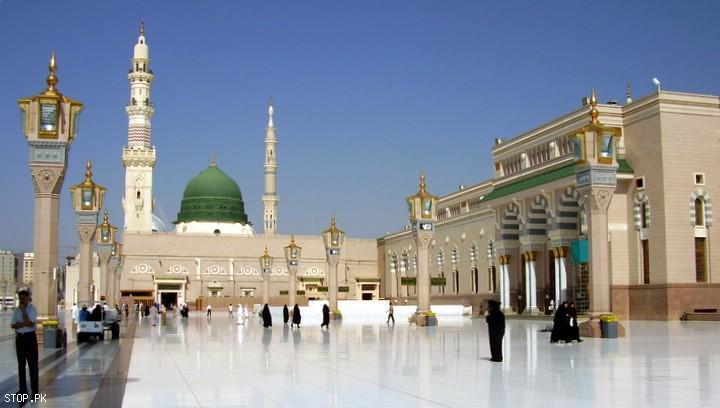
Managing Masjid-e-Nabvi
Kashmir’s connections with Central Asia were never interrupted, and they sustained a steady traffic of souls moving between the valley and the wider Islamic world. Sometime in the early 18th century, a Kashmiri Sufi named Abd al-Qayyūm Kashmīrī reached Dahbid, near Samarkand, to join the Naqshbandi network led by Khwāja Mūsā Khān (d. 1776 CE). Khān had himself visited Kashmir and acquired a Mujaddidī affiliation there from Mīān Muḥammad ʿĀbid Jahānābādī, which means that a Kashmiri’s own spiritual influence had already reached Dahbid before Abd al-Qayyūm arrived. The disciple was following a path the master had already walked in reverse.
The account of what happened next is preserved in Hamid Algar’s foundational essay in Central Asian Pilgrims: Hajj Routes and Pious Visits between Central Asia and the Hijaz (eds. Alexandre Papas, Thomas Welsford, and Thierry Zarcone, Klaus Schwarz Verlag, 2012), drawing on primary Tajik and Uzbek manuscripts. Soon after his initiation at Khān’s hands, Abd al-Qayyūm departed on the Hajj and stayed in the Haramayn for seven years.
During that time, he was appointed overseer of the Masjid al-Nabawī, the Prophet’s Mosque in Medina, one of the most significant administrative positions in the Islamic world, and a historic distinction for a Kashmiri. He subsequently spent time in Iraq and Iran, transmitting the Naqshbandi order to disciples along the way. Then, in 1796, at nearly a hundred years of age, he set out on the Hajj a second time. He died in 1801, roughly four years after his return.
A Kashmir Effendi
The Kashmiri presence in the Ottoman Empire has its own distinct story. Sometime in the 15th century, the Ottoman king Fatih Mehmet Sultan (1432–1481 CE) agreed to a request by an Indian scholar, Khaje Ishak Bukhari-i-Hindi, that a lodge be established for Indian Sufi pilgrims passing through Istanbul on their way to Makkah or returning from it. This was the origin of the Horhor Tekkesi in the Aksaray district of Istanbul. Despite being conceived as a transit accommodation, a caravanserai for the faithful, it gradually became a major centre for Naqshbandi Sufis and is known to history as the Horhor Hindiler Tekkesi.
One of the Sufis who made this centre his permanent seat was Hacı Ahmad Efendi, known to history as Horhor Sheikh Ahmad Efendi bin Muhammad Shah, and to the people of Aksaray simply as Horhor Baba. He died in 1869-70. The historian Rishad Choudhury, in Hajj Across Empires: Pilgrimage and Political Culture after the Mughals, 1739–1857 (Cambridge University Press, 2024), uses the Nüfus Vukūʿātī Defteri, an Ottoman population register of Istanbul’s Sufi lodges that, uniquely, records not just names but specific places of origin, to establish that Horhor Baba was a Kashmiri, identified in the register as Keşmirli.
A Great Scholar
The Hajj, in the case of Maulana Anwar Shah Kashmiri, was a turning point that opened the way to his life’s greatest work. In 1905, he went to perform Hajj. In Makkah, he met his teacher Mahmud Hasan, who persuaded him to take up the post of Sheikh al-Hadith at Darul Uloom Deoband. When Mahmood Hasan himself subsequently relocated to Medina in 1908, Shah was given his position teaching Hadith and returned to Deoband in 1909. For eighteen years, until he died in 1933, he taught the core Hadith texts, the Sahih of Imam Muslim, the Sunan of Imam al-Nasai, and the Sunan of Imam Ibn Majah, without taking a salary.
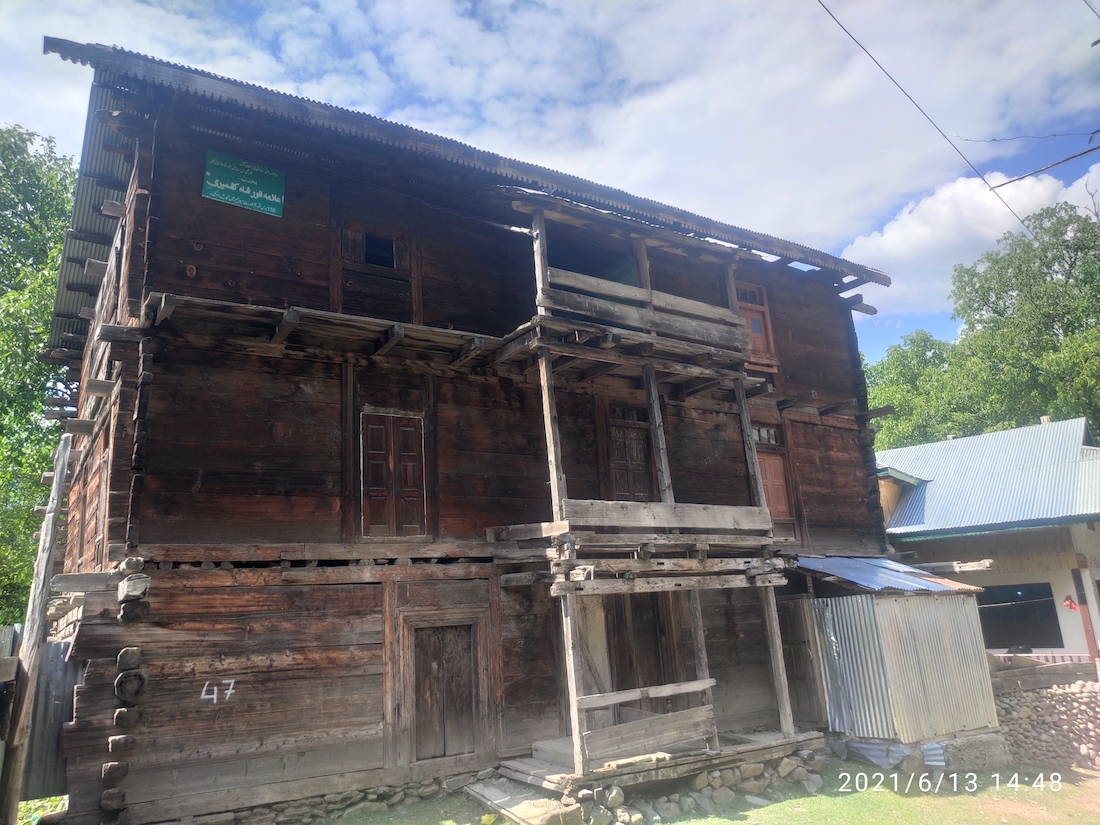
The scale of his influence is staggering. During his teaching career at Deoband, he trained approximately two thousand hadith scholars. The Syrian scholar Sayyid Rashid Rida said of him: “I have never seen a more distinguished scholar of hadith than Allamah Kashmiri.” Allama Muhammad Iqbal arranged a condolence ceremony at his death, at which he described Kashmiri as the greatest Islamic scholar of the last five hundred years. A Kashmiri from the Lolab valley, who had gone to Makkah seeking a pilgrimage and nearly stayed in the Hijaz permanently, returned instead to shape Islamic learning across the entire subcontinent. He died in 1933.
Living in Hijaz
Faith was not the only force drawing Kashmiris toward the Hijaz. Knowledge, fellowship, and trade all played their part.
In 1839, Mirza Ghalib’s friend and fellow Delhi poet, Nawāb Muṣṭafā Khān Shefta (d. 1869), performed Hajj and wrote one of the finest Persian-language travelogues produced in India, to help others understand the pilgrimage. What he found in Makkah astonished him. “Makkah is a big city. It has a large population and is full of life,” an overawed Shefta wrote in his Safarnāma-yi Ḥijāz. “People are found here from every city and every land, including Hind, Sindh, Persia, Bukhara, Kabul, Kashmir, Rūm, Ḥabash… the Javanese and Turkish people especially are here in great numbers, and so are the Egyptians.” These were not visiting pilgrims he was describing; they were residents. A settled Kashmiri community already lived in Makkah by 1839, their presence a testament to centuries of movement along the corridors of faith.
It was not faith alone that was drawing Kashmiris to the Hijaz. Trade followed the pilgrim routes as surely as dust follows a caravan. Kashmiri shawls were being sold in the markets of Jeddah as early as 1870, carried there by the same merchant-pilgrims who combined the sacred and the commercial in the manner that Bernier had observed in Srinagar two centuries earlier: the merchant and the pilgrim were often the same man.
Not every Kashmiri who set out for the holy cities returned transformed by knowledge or elevated by fortune. The archives preserve a quieter and more common story, of the faithful who spent everything they had on the sacred journey and found themselves stranded, old, and destitute far from home.
A Persian petition preserved in document 24239 of the Organisation of Libraries archive, dated Muharram 1307 AH (September 1889-90 CE), carries the voice of one such traveller: Haji Sayyid Qasim Rizvi Kashmiri, a man of learning from Kashmir who had spent an entire year at the shrine of his ancestor Imam Rizvi, selling his belongings and riding animals one by one to survive. “The distance from here to Kashmir is six months’ journey,” he wrote to the custodians of the shrine, “and there is not much coming and going such that someone could send money or provisions.” Too old to beg, too weak to labour, too proud for charity, he asked for two riding animals and six months’ expenses to return to his family, who were, he wrote, “anxiously waiting.” A note in the margin records that a local notable had vouched for him; the treasurer’s instruction at the top of the document granted him five thousand in cash and a draft. He got home, but only because an archive happened to preserve the moment he almost did not.
In that era, Kashmir was destituted as everything except air was taxed. Still, the Hajj-bound pilgrims were impressive. “It is true that they observe very strictly the fast of Ramzan, but they do not keep Friday as the day of rest, and very few Kashmiris make the pilgrimage to Mecca, though the journey is now easy, and does not cost more than Rs 340,” Sir Walter Lawrence, Kashmir’s famous British settlement commissioner, wrote in his Valley of Kashmir. “In 1892, twenty-one Kashmiris went to Mecca, and this was an unusually large number.”
Road to Makkah
For centuries, however, Kashmir was a major waystation for Hajj pilgrims from Central Asia, mostly from Yarkand, Khotan, Kashgar and their surrounding regions. Kashmir’s historic trade partners, they would take two months to cross eleven high-altitude passes to reach Leh and eventually Srinagar, on their way south to Sindh and the sea crossing to Makkah. For them, every step toward Kashmir was a step toward Makkah, and the road to Srinagar was the road to Paradise.
After spending a year in Kashgar, when British army officer and Great Game political agent Francis Younghusband (1863–1942) left for Kashmir in July 1891, he was struck by the scale of the pilgrimage traffic passing through. “In only one respect do they show any enterprise, and that is in making pilgrimages to Mecca,” he recorded in The Heart of a Continent. “Hundreds of them do this, whole families of them, fathers, mothers, and children in arms, will set off across those bleak passes, over the Himalayas, through all the heat of India, and over the sea to Makkah. Numbers perish on the journey, but still, year after year, others follow in their track; and that so apathetic a people should go to such extremities is one of the most remarkable instances I know of the stirring influence of religion.”
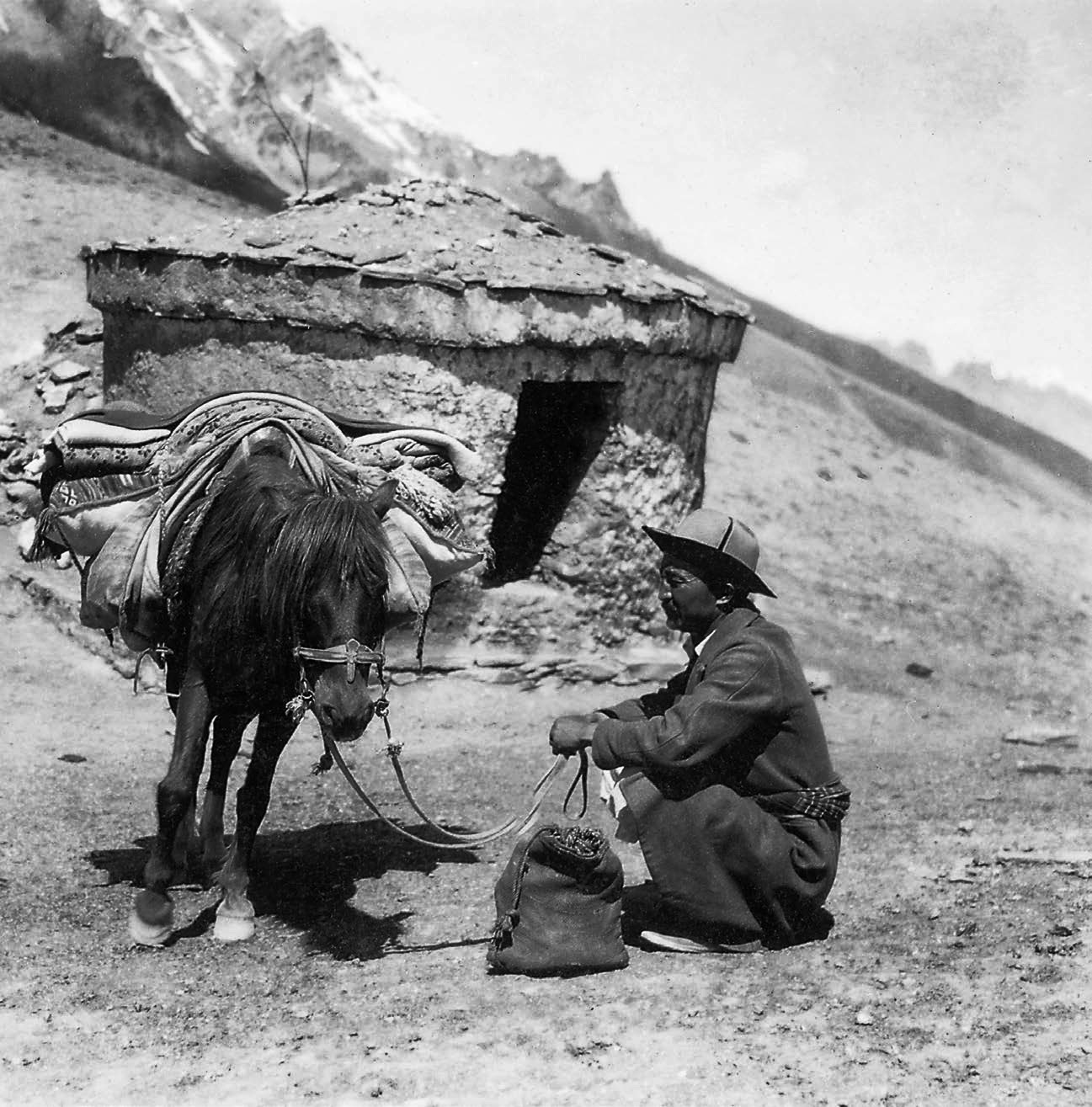
European travellers who documented the region across nearly a century of the Great Game have left extensive accounts of this pilgrimage traffic. Some pilgrims took years to reach the Kaaba and return, working their way forward in stages, earning as they went.
One of them was Haji Casim, discovered by British army surgeon Henry Walter Bellew (1834–1892) in Murree. Bellew was part of the diplomatic mission led by Sir Douglas Forsyth to Kashgar in 1873–74, and he recorded Casim’s story in From Kashmir to Kashgar: A Narrative of the Journey of the Embassy to Kashghar in 1873–74.
Casim had left Yarkand in 1868, the son of a baker who had grown up amid the chaos of the Tungani rebellion, when bloodshed and looting forced his family to hide in underground cellars while his father died in the turmoil. After the order was restored under Yakub Beg, Casim joined a caravan of pilgrims travelling to Makkah through Kashmir, leaving his mother to run the family bakery.
With only three ponies and a few pounds between them, the group crossed the harsh Tibetan plateau toward Leh. Two ponies died on the road, their carcasses left beside countless others along the caravan route. The last pony was sold to meet expenses. From Leh, they reached Srinagar, then travelled through Punjab to Bombay, where they boarded a crowded pilgrim ship for Arabia. The journey soon turned tragic. Relatives disappeared in different cities; some died; others were separated forever. Casim himself wandered through Makkah, Constantinople, and India, often cheated, hungry, and surviving on charity or odd jobs. Eventually, he returned to Leh as a mule driver, fell ill on the route, and was cared for at the British charitable dispensary there by a hospital assistant named Khuda Bakhsh. Through this connection, Casim eventually entered the service of Bellew and reached home in 1873, five years and a lifetime after he had left.

Robert Barkley Shaw (1839–1879), British explorer, linguist, and political officer who became one of the first Europeans to journey from Leh across the Karakoram into Yarkand and Kashgar, encountered the return traffic on the same roads. “We were travelling with many Hajis returning from Mecca to their homes in Central Asia,” he wrote in Visits to High Tartary, Yarkand and Kashgar (1871). “It was fascinating to watch their ceremonial prayers, which, as pilgrims, they observed with great devotion.”
Among them was a small orphan boy named Rozee, whose parents had died while returning from Makkah. Shaw took the boy under his care as far as he could toward Yarkand. “He is very sharp,” Shaw noted, “and in broken Hindustani tells us about his country. He declares he will send me down a quantity of gold as a present from his home at Khotan, where there are mines of it.” Sitting over a campfire one night, Shaw’s shepherd boy asked Rozee whether he would take him back to Yarkand with him. “No,” said Rozee, “you are a Hindoo, and they would first kill you, and then me for associating with a kafir.”
The pilgrims were also a vital source of political intelligence for the British during the Great Game. According to Ney Elias (1844–1897), a British explorer, surveyor, and diplomat who later served as envoy in Kashgar, it was a Makkah-bound Kashgari pilgrim who first reported a clash between Beg Kuli Beg and a usurper, and in December 1877 brought the first news that the Chinese had actually entered the capital of Kashgar. When the Qing re-conquered the region and banned the pilgrimage entirely, Elias intervened and had the ban lifted.
“As a result, a thousand pilgrims were said to be on their way,” records Gerald Morgan in Ney Elias: Explorer and Envoy Extraordinary in High Asia. “The ability of pilgrims to travel to Mecca through India was of great importance to the devout Muslims of Central Asia. In their faith, they faced a journey fraught with danger, crossing the passes of the Karakoram and the Himalayas, liable to be cheated in India and risking death in pestilential pilgrim ships. Many failed to return, but those who got back, perhaps two years later, dyed their beards red and became Hajis, venerated by all in their native villages.”
For Kashmir, it was also business. The State had set up a chain of sarais in Srinagar, the Kak Sarai, the Yarkand Sarai, the Sarai Bala, and one in Rambagh, to provide accommodation, stabling, and storage for the Central Asian caravans. By 1887, around 400 Makkah-bound pilgrims were passing through Kashmir annually, according to British records of the era.
William Moorcroft, who spent two years in Ladakh between 1820 and 1822 while waiting for permission to enter Kashgar, employed a man named Hajji Sayyid Ali as his Persian munshi, precisely because the Hajjis, who had traversed the Islamic world, were considered to be the most knowledgeable and worldly people available. Alexander Cunningham, who visited Ladakh in 1846 and 1847 and later founded the Archaeological Survey of India, recorded in Ladak, Physical, Statistical, and Historical that “Moorcroft was informed that the population of Yarkand was between 50,000 and 60,000… Of these, I was told that 500 houses belonged to Kashmiris alone, and thirty or thirty-two to Argons, or half-blood.” Those Kashmiri settlers were engaged in two things above all others: trade and managing the pilgrim rush from Central Asia through Kashmir on its way to Makkah.
An Easier Hajj
The Yarkand Sarai still stands in Srinagar, the last physical monument of a corridor that once ran from the steppes of Central Asia to the courts of Makkah. But it no longer echoes with the voices of Yarkandi Hajis resting their feet before the final push south. The road to Paradise now runs through departure terminals and airline booking systems, and what was once a year-long, sometimes lifetime-long, odyssey of faith, commerce, hardship, and transformation has become a tightly scheduled few weeks. The Hajj is easier than it has ever been in fourteen centuries of Islam.
What has been lost in the simplification is the world the old Hajj made possible: the Kashmiri in Bukhara who became a court historian; the Kashmiri in Medina who became overseer of the Prophet’s Mosque; or the Kashmiri in Istanbul who became the sheikh of the Ottoman Empire’s most important Indian lodge. For them, the Hajj was not a destination alone. It was the beginning.
The crucible survives. The fire that heated it is gone.