by Khalid Bashir Ahmad
A detailed historical account of Kashmiri Hajj pilgrims, documenting difficult journeys, sea voyages, pilgrim traditions, travel regulations, and changing Hajj practices across generations.
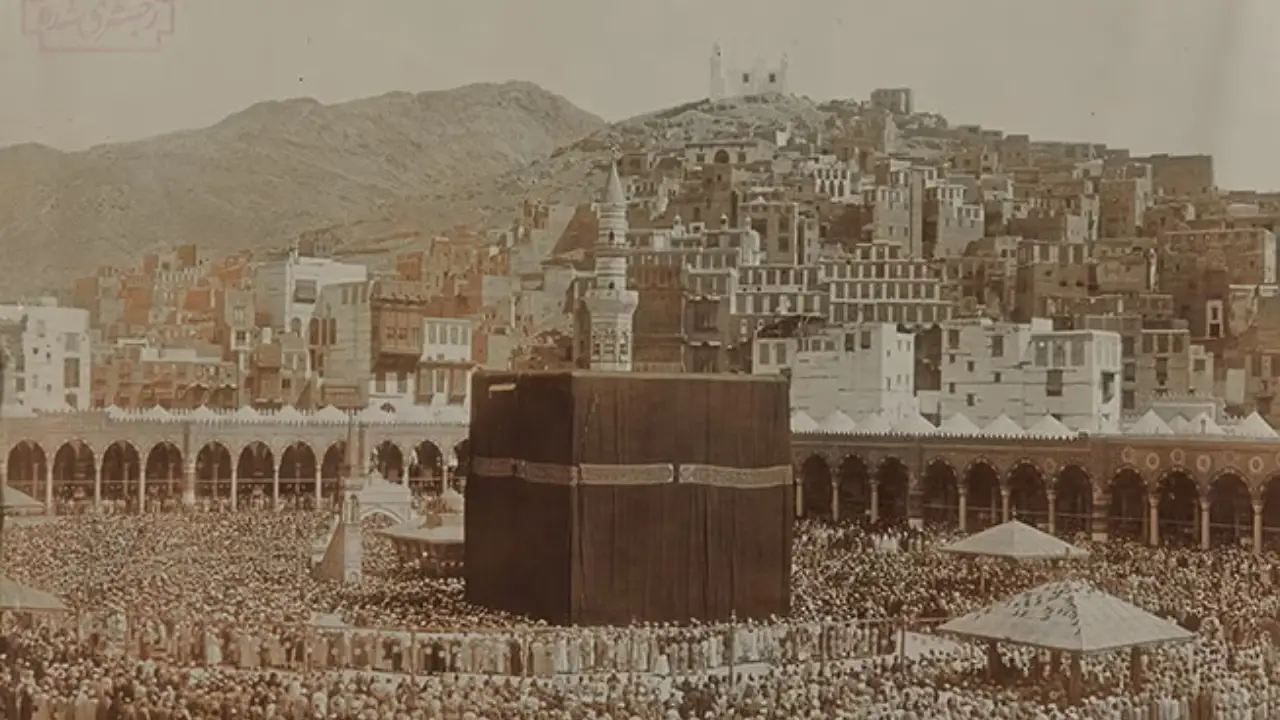
In olden times, travel to and from Makkah was arduous and time-consuming. Very few people would embark upon the pilgrimage due to the difficult journey and poor economic conditions. Some resolute and devout people, though, would undertake the journey on foot, travelling through Afghanistan, Iran and Iraq.
Haji Ali Joo Katju of Nalbandpora was one such pilgrim from Kashmir who is said to have travelled to Makkah on foot a few hundred years ago. Like him, Noor Shah Qadri of Dangarpora, Eidgah in Srinagar, travelled on foot to perform Hajj in the distant past. About 80 years back, Mohammad Sultan from the central Kashmir village of Chhatargam also achieved this feat and returned after a long time. Yet another pedestrian pilgrim was Abdur Rehman, later Imam of a local mosque at Zampa Kadal, who had performed Haj in the 1930s. He had stayed in Medina for ten years and worked as a sweeper there, and came to Kashmir in 1948 along with migrating Muslim Tibetans (Rehman’s story was narrated to the author by Jalaluddin Shah on July 17, 2018).
There are many interesting stories from old times about people from Kashmir going on the Hajj pilgrimage and coming back after years. If a pilgrim did not return for a year or two, he was presumed dead and the family would perform his last rites in absentia. In certain cases, a ‘dead pilgrim’ would one day suddenly come home walking. Muhammad Rajab Saqqa of Breyikujen returned years after his last rites had been performed. His family members were pleasantly shocked to see him alive. It appears that many people who went for Haj preferred to settle down in the holy land.
Nawab Mustafa Khan Shaifta, Urdu poet and a contemporary of Mirza Ghalib, who left for Haj on 2 March 1839, mentions Kashmiris among the people of “different countries who have settled down in Makkah” (Shaifta, Nawab Mustafa Khan, Shaifta ka Safarnama Haj, Monthly Qaumi Digest, Lahore, 1997, p. 72).
The Sea Route
For a long time, sea voyage remained the main mode of travel for South Asian Haj pilgrims. A century ago, the embarkation points for sea route pilgrims were Karachi and Calcutta. Bombay (now Mumbai) was added later.
Pilgrims from Kashmir would take the Karachi route and arrive there by travelling through Punjab. This practice continued till the Partition of India in 1947. The road distance between Srinagar and Karachi was 611 km less than between Srinagar and Bombay, and Karachi was 589 nautical miles closer to Jeddah than Bombay. The pilgrims carried no passports.
Their travel document was a Pilgrim Pass issued by the concerned Deputy Commissioner or by the Port Haj Committee, if the pilgrim failed to bring it with him, against a payment of Rs 8 (Kashmiri, Fazil, Tasveer-i-Haj, 1958, p. 55). Likewise, if the pilgrim was not inoculated at the place of his origin, he was vaccinated by a doctor of the Karachi Municipality before boarding the ship.
Abdul Salam Narwari, a trader from Amira Kadal, Srinagar, was 36 years old when he went to perform Haj via Karachi in 1936. His pilgrim pass, bearing registration number K653 and issued on 27 November 1936, mentions his nationality as ‘K. State’. His inoculation certificate bears the seal and signature of Dr Bhagwan Das, Deputy Health Officer, Karachi Municipality (Narwari’s nephew, Javed Azar, has preserved his Pilgrim Pass as a precious relic).
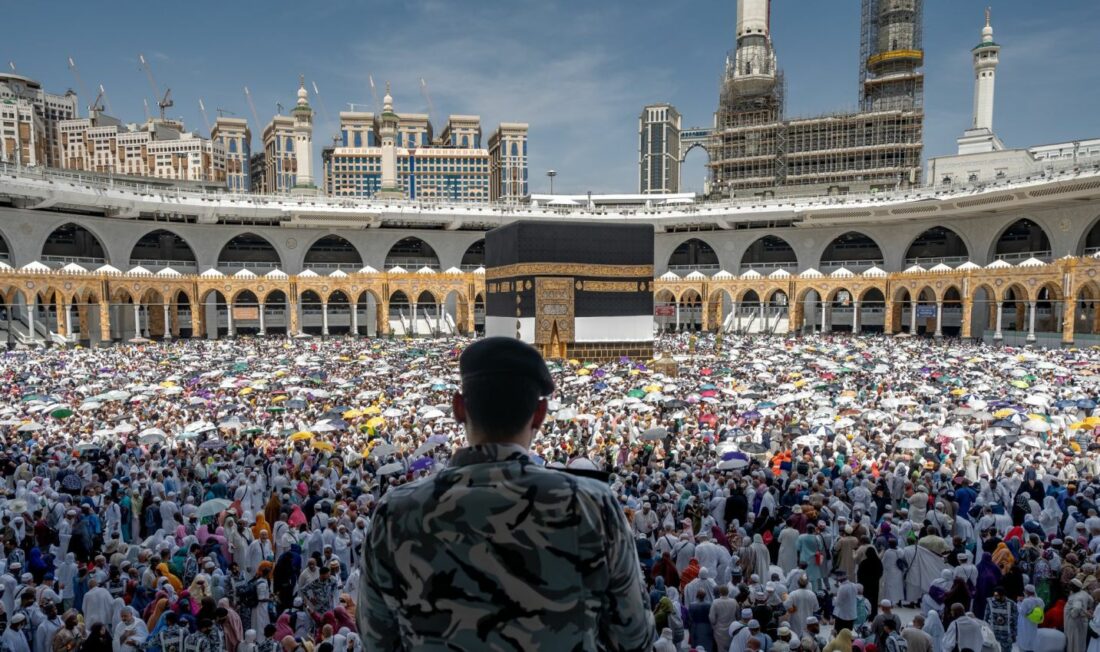
It took six months for Narwari to return from the pilgrimage. The ship he was travelling in had to drop anchor at Aden in Yemen instead of Jeddah due to armed hostility going on there. From the port of Aden, he covered the distance to Makkah by travelling on camelback and also boarded a train at a particular point. One-way sea travel would take 15 days. On his return, he visited the Mochi Darwaza graveyard in Lahore where his uncle, who had passed away there about two decades earlier while returning from Haj pilgrimage, was buried.
In 1936, an official communiqué on the sailing schedule of pilgrims’ ships was issued in Srinagar for the guidance of Haj pilgrims. The communiqué provided information on three ships named S.S. Jehangir, S.S. Islami and S.S. Alavi, owned by Messrs Turner, Morison and Company Ltd., operating from Bombay and Karachi (File №418/P. N.-24, The Prime Minister, Publicity Branch, 1936, Archives Repository, Jammu). As given out in an advertisement issued by the Mughal Line (The Bombay and Persia Steam Navigation Company Ltd.) in 1937, there were other Haj pilgrim ships like S.S. Rehmani, S.S. Akbar and S.S. Rizwani operating from Karachi and Bombay (File №418/P. N.-24, The Prime Minister, Publicity Branch, 1936, Archives Repository, Jammu).
The Luggage
During the voyage, pilgrims were supplied with cooked food as cooking on board by passengers was strictly prohibited. A pilgrim was supplied with morning tea, breakfast, luncheon, afternoon tea and dinner. Unlike first and second class passengers, deck pilgrims were required to express, at the time of buying their tickets, preference between rice and chapatti and whether they would have dry fish with a vegetable dish.
Articles of food were also made available to pilgrims on payment of extra charges. A fowl with gravy cost one rupee and 7 annas each; mutton korma and kofta, 3 annas a plate; biryani, 7 annas a plate; and a shaami kebab, 9 pies each. A boiled egg was sold at 1 anna and 6 pies, fried egg at 2 annas and 3 pies, curry and rice at 6 annas per plate, rice at 1 anna and 6 pies a plate, halwa (pudding) at 3 annas a plate, and tea without milk at 9 pies a cup and with milk at 1 anna (File №418/P. N.-24, The Prime Minister, Publicity Branch, 1936, Archives Repository, Jammu).
A cup of coffee with milk cost 2 annas. An orange was sold at 1 anna and 6 pies and an apple at 2 annas. It may be appropriate to recall that before 1957, when India shifted to decimalised currency, 16 annas made a rupee and 12 pies made an anna. All cooks and attendants employed on board the ship were Muslims. Deck pilgrims had to provide their own plates, cups and other receptacles in which food was served. Water from ‘No-waste taps’ was allowed to be taken four times a day, each for a duration of two hours.
Sadly, the official communiqué on the sailing schedule for Haj pilgrims was refused publication by the Martand and the Kashmir Times, newspapers owned by members of a particular community, unless the Government issued it as a paid advertisement.
The return fare with food charged by Messrs Turner, Morison and Company Ltd. from Karachi and Bombay was Rs. 602 and Rs. 626 respectively for first-class pilgrims, Rs. 427 and Rs. 451 for second-class pilgrims, and Rs. 172 and Rs. 178 for deck pilgrims. The Mughal Line (The Bombay & Persia Steam Navigation Co. Ltd.) information brochure of 1937 shows a uniform increase of Rs. 2 and 4 annas in the fare of all classes (File №418/P. N.-24, The Prime Minister, Publicity Branch, 1936, Archives Repository, Jammu). The return air fare from Bombay to Jeddah was Rs. 1500 (Kashmiri, Fazil, Tasveer-i-Haj, 1958, p. 50).
Start, By Road
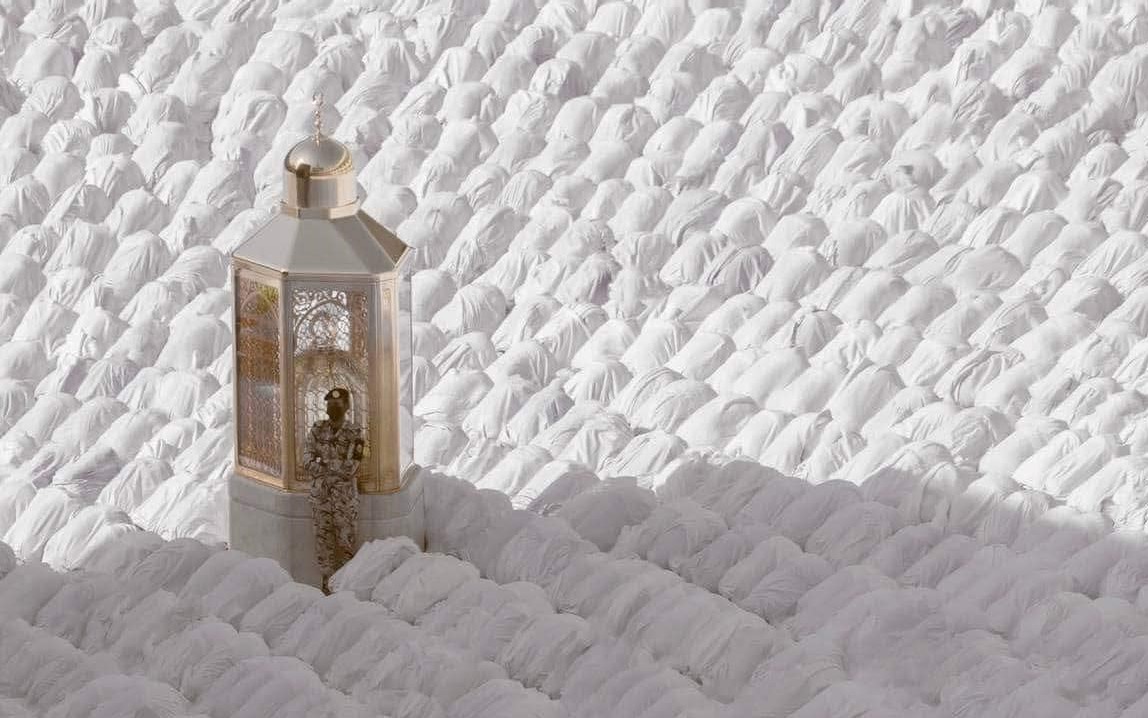
The Haj pilgrims from Kashmir would leave and return together on a single day. They travelled in buses from Srinagar to Pathankot, a surface distance of 427 km. From there, they would board a train to Bombay and then sail to Jeddah. Till a few decades back, women pilgrims from Kashmir were far fewer in number. The situation has changed and their number is steadily increasing. In 2015, the number of women pilgrims from Kashmir was 2,549. The next year, it rose to 2,644. In 2017, there were 3,332 women pilgrims and in 2018, 3,745 Kashmiri women performed Haj through the aegis of the State Haj Committee.
At one point in time, women in Kashmir were reluctant to submit their photographs for travel documents as taking a lady’s picture did not carry social approval. In 1937, Amir Gul Khan from Anantnag tehsil submitted an application to the Governor of Kashmir seeking a passport for his mother, Gul Bibi, wife of Sarwar Khan Pathan, to go on Haj pilgrimage with two other women who had already obtained travel documents and were now “anxiously waiting” for her (Correspondence between the Governor’s office and Amir Gul Khan, Archives Repository, Jammu).
Khan was asked to produce a photograph of his mother to complete the formalities. In response, he informed the Governor that his mother was a “pardah nisheen aurat” (veil observing lady) and since taking a picture of a woman was not allowed in the family, he could not submit her photograph. “Attested documents would be submitted, nevertheless”, he pleaded.
Mualims’ In Srinagar
There was a time in the 1950s and 1960s when Muallims from Saudi Arabia would come to Kashmir to book accommodation for Haj pilgrims in Makkah and Medina. A Muallim, literally meaning a teacher, was a Saudi national who owned residential property in the two holy cities and rented it out to pilgrims with provision for food too. He would also act as the pilgrims’ guide.
One such Muallim, Zainul Aabideen, had cultivated considerable influence in the Valley. He would arrive ahead of the Haj season and register prospective pilgrims. To ensure maximum publicity, he distributed leaflets at important shrines and mosques.
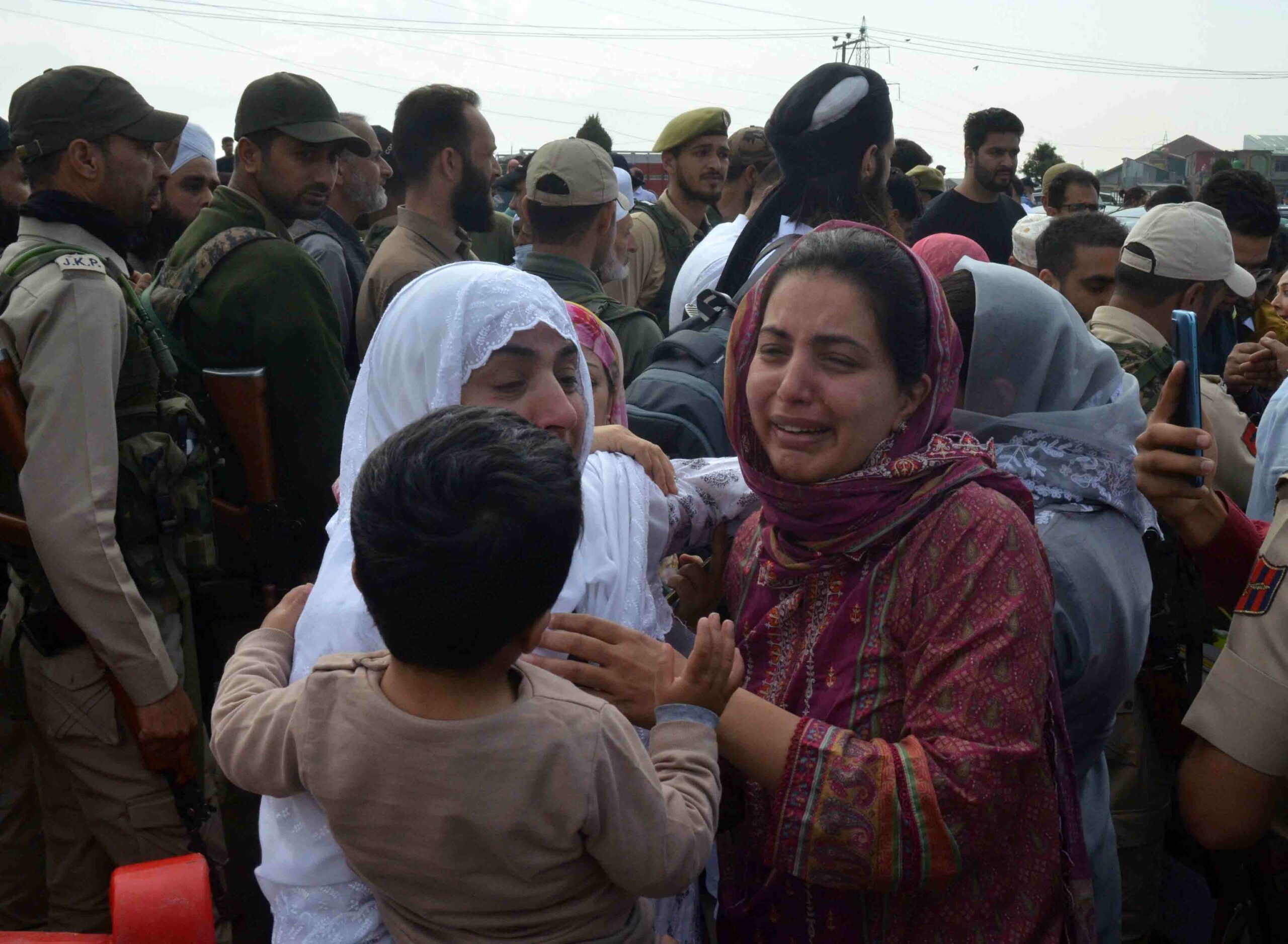
The departure and return of Haj pilgrims used to be occasions of festivity in Kashmir. Pilgrims were taken in processions from their homes to the Tourist Reception Centre amid the shouting of religious slogans. Enthusiastic children in large numbers joined these processions to raise and respond to slogans at full pitch. Women of the family and neighbourhood would shower candies on a pilgrim once he stepped out of his home. In cases where family members could afford it, they travelled to Pathankot to bid the pilgrim farewell there.
Festivity was also observed in villages and towns of Kashmir at the time of bidding farewell to and receiving Haj pilgrims. On the pilgrims’ return, welcome arches were erected and feasts held by their families for relatives and neighbours. Immediate relatives also invited the pilgrim to sumptuous meals before he left for Haj. In 1972, the Jammu Railway Station was commissioned and rail travel for Haj pilgrims from Kashmir began from there instead of Pathankot.
Taking Provisions Along
Till recently, Kashmiri pilgrims would take with them rice, dried vegetables, mixed spice cakes, chilli and turmeric powder, salt, dried fish, green tea leaves and pickle to have homely food while being away from home. Some chronic smokers also carried tobacco and hookahs with them. Mercifully, that practice has now stopped. The pilgrims carried light bedding and a large steel trunk filled with clothes and food items, which they watched over all the time.
KL Image: Bilal Bahadur
During the return journey, the steel trunk would carry different gifts for family members and relatives which generally included dates, beads, praying rugs, pieces of dry soil from Medina believed to possess curative properties, perfume, pocket and wrist watches, Kamkhwab cloth, kohl, umbrellas, transistor-cum-tape recorders and video cassette recorders (VCRs). Unlike now, when only 5 litres per pilgrim are allowed, there was no prescribed limit for carrying Zamzam water and pilgrims would bring large canisters of the holy water.
On their journey to Makkah, pilgrims would reach Bombay weeks before sailing. The wait could extend for as long as 20 days, during which time formalities were completed and tickets were booked. A long queue was seen at the booking centre and, since most pilgrims were illiterate or modestly literate, filling forms and completing other formalities took a long time. Most of the pilgrims in the queue would return to the Saboo Sidiq Musafir Khana, named after a philanthropist who died at the young age of 26, only to come back again the next day.
The process would continue till all passengers were booked and the ship was ready to sail. The time of departure printed on the ticket meant little, as no ship ever left Bombay without postponing its departure several times and, in certain cases, pilgrims were made to wait longer than a month. In 1994, when the last ship carrying Haj pilgrims sailed from Bombay, the total number of pilgrims from all over India, taking both air and sea routes, was 25,685. Of these, 4,650 had opted for sea travel (Central Haj Committee, Mumbai, www.hajcommittee.gov.in/previous_records.aspx).
Incommunicado
Communication systems being very primitive, with near non-existent telephony, a pilgrim would be in touch with his family only through a letter which took weeks, if not months, to reach its destination. In the age of mobile telephony and social networking applications like WhatsApp and IMO, where a pilgrim can even relay live to family and friends his circumambulation of the Ka’ba or paying obeisance at the Green Dome in Medina, it is difficult to imagine today that pilgrims would virtually go incommunicado for months.
In certain cases, communication received by the family would cause grief and anguish when the sender had meant to convey good news. In the early 1970s, after a long wait in Bombay, when the day of departure finally arrived, Dost Muhammad of Uri sent a two-word cable — “Sailing today” — to his home. The telegram received by the family read “Ailing today” (Dost Muhammad’s one-time neighbour, Mir Abdur Rashid, vividly recalled this incident). The news caused concern and grief at home. A member of the family was rushed to Bombay to take care of the sick pilgrim. When the person arrived in the port city, he came to know that Dost Muhammad, like the other pilgrims, had since departed for Jeddah.
New Set Up
In 1957, new rules were laid down for facilitation of the pilgrims. The shipping companies were asked to publish the tentative departure schedule six to nine months in advance and the final schedule at least 15 days ahead of departure (Official press release №170 dated 11 September 1956 issued by the Department of Information, Jammu & Kashmir Government). Bookings were ordered to begin with the publication of the tentative schedule. The pilgrims were directed to provide all personal details with their applications. An amount of Rs. 100 was to be deposited with the application in the case of each adult and Rs. 50 in the case of a minor pilgrim.
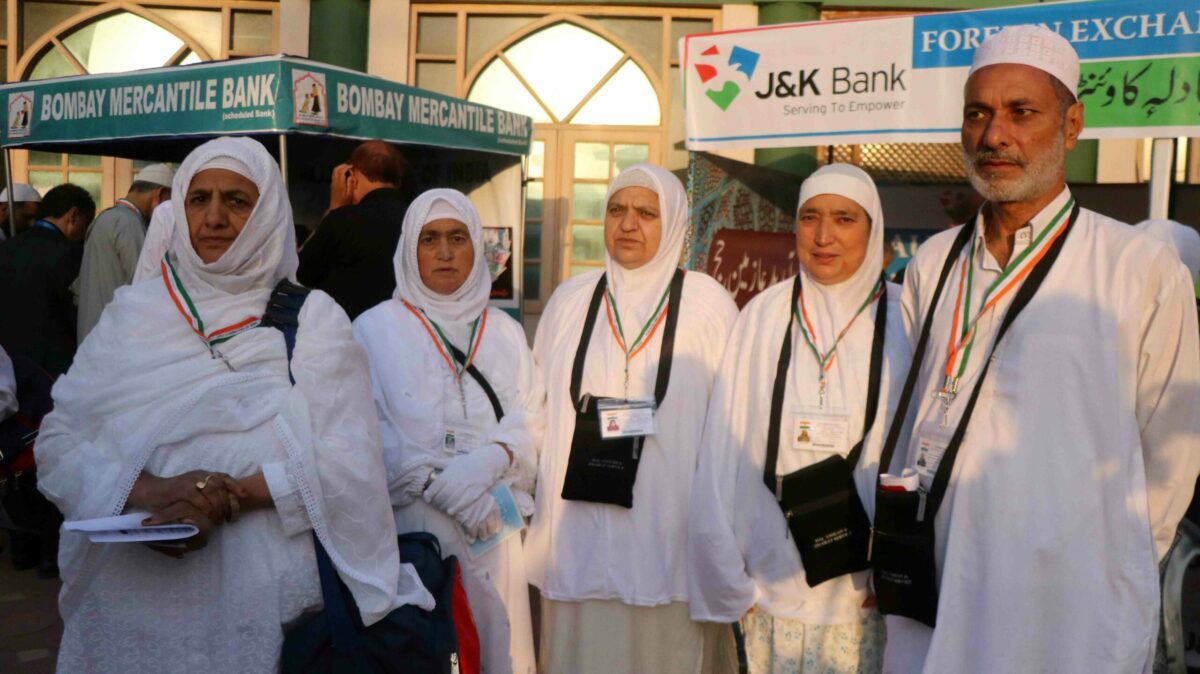
The pilgrims were asked to book their luggage at the Tourist Reception Centre a day before their departure and, on the day of leaving, reach the Polo Ground early in the morning from where they would board buses and set out for the holy journey. Pilgrims arriving in Bombay without booking their seats were required to register themselves with shipping companies as intending pilgrims on payment of a fee of Rs. 10 and attach their photograph with their application. Pilgrims who had already booked their seats were asked to buy their tickets at least three days before their ship left Bombay port.
The pilgrims were instructed to deposit their luggage a day before departure from Srinagar. According to a Government notification issued in 1958, the departure was scheduled for 29 May (Notification issued by the Chief Secretariat, Political Department, Jammu & Kashmir Government on May 13, 1958). The pilgrims were advised to deposit their luggage with Muhammad Yusuf Rafiqi, Haj Clerk, at the Tourist Reception Centre on 28 May between 10 a.m. and 4 p.m. and reach the Polo Ground at 6.30 a.m. the next day. They were also advised to report at the office of the Chief Secretariat, Political Department, Shergarhi on 25 May to pay the balance fare of ship, bus and rail.
The notification was issued by the Secretary, Haj Committee, Dwarika Nath. The sea-route pilgrims travelling in cabin or first class were required to submit an Income Tax certificate at the time of buying a ticket and could carry currency up to Rs. 3400. The deck-class passengers were exempted from the Income Tax certificate and the currency limit for them was Rs. 2400 (Kashmiri, Fazil, Tasveer-i-Haj, 1958, p. 56).
A Rare Travelogue
Fazil Kashmiri, poet and teacher by profession, who later rose to the heights of literary fame, was one of the 141 pilgrims, including 25 women, from Kashmir who performed Haj in 1958 (Kashmiri, Fazil, Tasveer-i-Haj, 1958, p. 66). There were two infants also in the group. On 29 May, which happened to be a Thursday, the pilgrims reached the Tourist Reception Centre early in the morning where a large number of people, including relatives, acquaintances and keen onlookers from different parts of Kashmir, had assembled to see them off.
The pilgrims were garlanded. At 8.15 a.m., when the buses started moving, the air was rent with slogans. People stood in two rows to pave the way for the moving buses and waved at the pilgrims, praying for their safe journey, sound health and successful completion of the pilgrimage. The caravan of pilgrim buses reached Anantnag at 10 a.m. and Qazigund at 10.30 a.m. Haji Muhammad Amin, an employee of the recently constituted State Haj Committee, accompanied the pilgrims (Kashmiri, Fazil, Tasveer-i-Haj, 1958, p. 53).
En route, groups of enthusiastic people were waiting for them along the road under heavy showers. They greeted them and, in reverence, kissed their hands. The pilgrims reached Jammu by 7 p.m. and stayed for the night in a travellers’ inn at Talab Khatikan. The next day, they were taken in a procession to the bus stand where they boarded buses for Pathankot. They spent the night at the Pathankot Railway Station and the train chugged off at 5.30 in the morning. During the train journey, many pilgrims cooked their food.
On their arrival in Bombay on June 2, the pilgrims were received, among others, by Haji Ghulam Ahmad Pardesi Kashmiri, a Bombay-based Kashmiri trader. From the railway station, they were taken to Saboo Sidiq Musafir Khana, the halting place for pilgrims in the port city, where they stayed till 9 June. During their halt in Bombay, the pilgrims purchased umbrellas, Ahram (unstitched cloth worn by pilgrims during the five days of Haj), dry milk, hand-operated fans, charcoal, beads, buckets and fruit for their onward journey.
After luggage check and customs clearance, the pilgrims sailed for Jeddah on 9 June in S.S. Rizwani, captained by B. M. J. Macklanahan. Most of the pilgrims, travelling by sea for the first time, felt bouts of nausea and some vomited out what they had eaten for breakfast. During the sea journey, a pilgrim was served morning tea with biscuits, lunch and dinner each comprising a plateful of mutton or vegetables, pickle and dal, and tea and pudding in the afternoon.
By June 13, the pilgrims had recovered from seasickness. Congregational prayers were held five times a day after Adan, the call for prayer, was said over a microphone. Later, muallims would deliver religious sermons explaining various elements of the Haj and how to perform them. The ship arrived at the port of Aden at the crack of dawn on June 16, and the pilgrims had their first sight of the seashore and the barren mountain line of the city after a week since their departure from Bombay.
The ship halted at the port for six hours during which the pilgrims were not allowed to disembark. Here, fresh drinking water was loaded into the ship and many small boats filled with merchandise came near the ship to sell goods to the pilgrims. At the port of Aden, pilgrims posted letters to their families back in Kashmir.
Three days after their departure from Aden, the pilgrims arrived in Jeddah on 19 June. Describing the city of those days, Fazil writes:
“This is Jeddah. A dazzling city sits here on the seashore with houses like those in Bombay. Not a single house is kucha; all are built in solid masonry. The buildings are 8–9 storeys high. The roads are wide and metalled on which hundreds of cars move one after the other. The ikkas and tongas [the main modes of transport in Kashmir in olden days] are not in use here. However, the donkey-driven chhakras [carts] are available everywhere for hire. Its driver usually sits on the back of the donkey that pulls it. The fare of the chhakra is higher than that of an exquisite motor taxi. Like in Lal Chowk where tongas move around here and there in search of passengers, superb motor cars run around in Jeddah to lift passengers. All the markets in the city look ambulant” (Kashmiri, Fazil, Tasveer-i-Haj, 1958, p. 89).
“…In Hedjaz, Coca Cola is available in sealed bottles. It is like black-coloured soda water and tastes very sweet. It saves a Haji from heat and thirst. It is very useful and chilly. You can drink it as much as you want. A bottle costs a little over half a Riyal” (Kashmiri, Fazil, Tasveer-i-Haj, 1958, p. 40).
The pilgrims arrived in Makkah at midnight. After performing Haj, they left for Jeddah to proceed to Medina, some by bus, some by motor taxi and a few, like Fazil, by air. On his return, he and 24 of his batch-mates sailed from Jeddah in S.S. Muzaffari and after 12 days of voyage reached Bombay on 1 August. Others returned by S.S. Rizwani. On 6 August, Fazil reached home.
Later, he came up with a useful and comprehensive Urdu-language Haj guide, Tasveer-i-Haj, with interesting details of the travel and hand-drawn sketches. He considered Rs. 1500 sufficient for moderate expenses of the pilgrimage and gave point-to-point expenditure on transport from Srinagar to Makkah and Medina, and back.
Goods costing more than Rs. 500 carried by a returning pilgrim were subjected to customs duty in Bombay. Within this limit, a pilgrim could bring home one wristwatch and one pocket watch, a fountain pen, a gramophone, toys, Zamzam water, utensils, pictures of holy places, religious books for personal use, soil from Medina, medicines for personal use costing not more than Rs. 30, personal bedding, four to six silk or cotton shawls, 42 yards of Zamzam-washed cloth, beads costing up to Rs. 25, dates, a camera costing up to Rs. 75, a bicycle, a sewing machine, a traveller’s typewriter, 100 cigarettes, 25 cigars, 250 bidis, half a pound of tobacco, a cigarette case, binoculars and three praying mats including a used one. Import of gold was banned and a violator was arrested and prosecuted. In 1957, some pilgrims had been jailed for committing this offence (Kashmiri, Fazil, Tasveer-i-Haj, 1958, p. 43).
A Changing Trend
A positive trend observed in recent years is that a large number of people prefer to perform Haj at a young age as compared to earlier times when only aged and often physically weak people embarked upon the pilgrimage. A person would think of performing Haj only after he had retired from service or business, built a house, financially settled his children, married them off and had no gainful work left to do.
It was then that his family members, friends or acquaintances would persuade him to go for Haj. Many who had never ventured out of the Valley were scared of sea or air travel. Some years back, one such pilgrim, when his plane encountered turbulence due to bad weather, sank into his seat, frightened and sweating, and was heard murmuring, “Noshi kaer saezish”, meaning that his daughter-in-law who had insisted on his going for Haj had actually conspired to get him killed in an air crash.
Some aged pilgrims would nurse the desire to die and be buried in the holy land. Any pilgrim passing away there was considered very fortunate. Yet his family members would mourn and grieve on receiving the news of his demise.
Names and Surnames
On his return from the holy pilgrimage, a Haji would narrate anecdotes, spiritual experiences and travel stories for months and years. There always were eager and interested listeners. Habibullah Wani of Sonawar, who had performed Haj in the 1960s, narrated tales of the pilgrimage over a long period of time at a local saloon and people would wait for him to take them on a virtual journey to the holy land.
In many cases, Haji became the surname of a person and his family after his return from Haj. There is, to this day, a family at Chhatargam with the surname Haji whose one member had performed Haj eight decades ago. Ramzan Haji of Sonawar had never undertaken the pilgrimage. His grandfather or great-grandfather had. Hence the surname.
Makkah and Medina being cities of reverence for Muslims across the world, some pilgrims removed their footwear while walking through streets and passages Prophet Muhammad (peace be upon him) is believed to have walked upon. In the early 1960s, when Ghulam Nabi Naqash of Malik Sahab, Safa Kadal, returned from the pilgrimage, his neighbours were aghast to see his feet in bad shape, with wide cracks in his heels and his eyes sunken deep into their sockets.
When Haji Muhammad Jamal, a senior neighbour, asked the reason for his run-down condition, Naqash told him that on his arrival in Jeddah he had thrown his slippers into the sea and travelled barefoot through Makkah and Medina.
Some pilgrims had pleasant encounters they would never have imagined. Habibullah Panzoo from Naid Kadal, who performed Haj in 1966, could not have asked for more when, to his great joy, he met Mirwaiz Molvi Muhammad Yusuf Shah there. After enquiring from Panzoo about his place of residence, the Mirwaiz asked after his family and told him how he had relished sumptuous food, especially the dish of spinach, many a time at his home.
A diehard follower of the Mirwaiz who, like thousands of others, had not reconciled to his separation as he had been living in exile in Muzaffarabad since 1947, could not control his emotions and cried, Ba haz lagai balayi (I will sacrifice my life for you).
(An author of many books on Kashmir history, Khalid Bashir has headed DIPR, Libraries and Archives in Jammu and Kashmir.)