by Dr Raja Muzaffar Bhat
Six years after the Forest Rights Act reached Jammu and Kashmir, authorities continue evictions while the law’s promised protections remain largely unrealised.
The Forest Rights Act (FRA), 2006, was enacted by Parliament to correct what it describes as the “historical injustice” suffered by India’s forest-dwelling communities. After the reorganisation of Jammu and Kashmir in 2019, the Act was extended to the Union Territory with the assurance that people here would enjoy the same legal protections available elsewhere in the country. Six years later, however, that promise remains largely unfulfilled.
Instead of implementing the Act in letter and spirit, the administration continues to rely on provisions of almost 100 year old law, the Indian Forest Act, 1927, to issue eviction notices to people who have lived on and cultivated forest land for generations. Across Jammu and Kashmir, Gujjars, Bakarwals, Chopans, Gaddis and many other traditional forest-dwelling communities are being asked to surrender land that has sustained their families for decades. In some places written notices are issued, while in others people are verbally directed to vacate. The absence of a uniform process has created uncertainty, fear and confusion.
This raises a fundamental question. If the Forest Rights Act is the governing law, why are actions being taken under older forest legislation without first implementing the rights guaranteed under the FRA?

The answer is significant because the Forest Rights Act is not an ordinary welfare scheme. It is a rights-based legislation with overriding effect over conflicting provisions of earlier forest laws. It recognises individual, community and community forest resource rights of Scheduled Tribes as well as Other Traditional Forest Dwellers. It also protects rights over land used for habitation, self-cultivation and livelihood, while enabling community development projects such as schools, health centres and water facilities through Gram Sabhas or Deh Majlis.
The problem in Jammu and Kashmir is not merely delayed implementation; it is the near absence of implementation. Thousands of claims for individual and community rights have been submitted but remain undecided. Many forest dwellers are still unaware of the law because systematic awareness campaigns were never conducted. Even members of Village Forest Rights Committees and officials responsible for implementation often lack adequate understanding of the Act.
For several years after the law was extended, the Forest Department itself functioned as the nodal agency for implementation. This was contrary to the practice followed across Indian states and UTs, where Tribal Welfare Departments oversees the FRA enforcement. Even at the national level, the Ministry of Tribal Affairs is the nodal ministry responsible for the Act. Although the Tribal Affairs Department in Jammu and Kashmir was eventually assigned this responsibility, the transition has not translated into meaningful protection for forest dwellers facing eviction.
Many affected families possess only small parcels of land that have been cultivated for generations, some dating back to the Grow More Food Programme of the early 1950s. The FRA itself places a ceiling of four hectares and recognises only land that is actually under cultivation by eligible families. There is no question of granting fresh land; the law simply seeks to recognise existing occupation where eligibility is established. Yet even these long-settled cultivators now face eviction before their claims are adjudicated.
The legal position has been further clarified by the Supreme Court. In Wildlife First & Others vs Union of India (Civil Writ Petition No. 50 of 2008), the Court initially directed states in February 2019 to evict those whose forest rights claims had been rejected. However, following the Union Government’s application highlighting serious procedural deficiencies in the rejection process, the Court stayed the eviction order and directed that the claims be reviewed. The stay continues, underscoring that due process under the Forest Rights Act must precede any eviction.

Against this backdrop, the current actions in Jammu and Kashmir become even more difficult to justify. When claims under the FRA remain pending, awareness is inadequate, implementation is incomplete and the Supreme Court has emphasised procedural safeguards, initiating evictions under the Indian Forest Act appears inconsistent with both the spirit and the framework of the law.
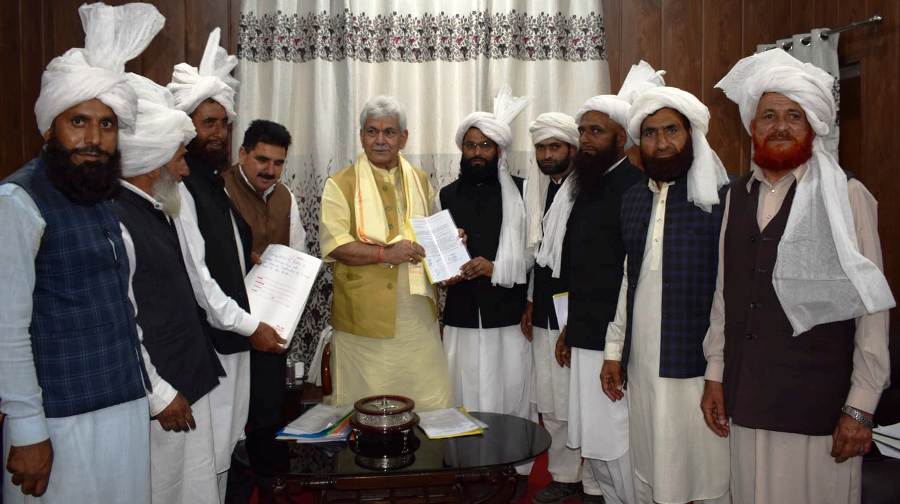
I brought this matter into the notice of Jammu and Kashmir Assembly Speaker Abdul Rahim Rather in Srinagar on Thursday at his residence. I along with my colleagues had a detailed meeting and we deliberated and brainstormed on FRA in detail. Mr Rather assured to take up this matter with Chief Minister and Forest / Tribal Affairs Minister.

The Forest Rights Act was introduced not to weaken forest conservation but to reconcile conservation with justice. It acknowledges that communities living in forests for generations are not merely occupants; they are stakeholders in the protection and sustainable management of these landscapes. Ignoring this principle risks undermining both conservation objectives and constitutional guarantees.
The Jammu and Kashmir government must immediately halt eviction proceedings until the Forest Rights Act is fully implemented. Every pending claim should be processed transparently, Village Forest Rights Committees strengthened, awareness campaigns launched, and the Tribal Affairs Department empowered to discharge its statutory responsibilities. Forest governance cannot be based on selective application of the law.
The promise made when central laws were extended to Jammu and Kashmir was one of equal rights, not selective enforcement. The question today is simple: if the Forest Rights Act was brought here to undo historical injustice, why are forest dwellers still waiting for justice while facing eviction?
(Dr Raja Muzaffar Bhat is a Kashmir based activist, writer and independent researcher. He is Founder of Jammu & Kashmir RTI Movement and Chairman JK Climate Action Group. Ideas are personal.)