by Prof Abdul Shakoor Bhat
Aluminium utensils may contribute to prolonged exposure, particularly when acidic or alkaline foods are cooked or stored in them, with concerns over accumulation, bone health, anaemia and neurological effects.

The characteristics of aluminium utensils, which have a bluish-white, silvery shine, include light weight, quick and even conduction of heat, corrosion resistance and relatively low cost. This metal is widely recognised for its effective heat transfer. Due to its excellent malleability and ductility, aluminium has been employed in the manufacture of diverse kitchen utensils and storage vessels. In any part of our country, the number of kitchen utensils made from aluminium is 2 to 5 per cent.
Since the invention of the first aluminium cooking utensils at the end of the last century, there have been occasional concerns that aluminium could be transferred from cooking pans to food, making it a health hazard. Typically, between 50 and 100 milligrams of aluminium are consumed daily through food or water under normal circumstances. However, due to the limitations in the absorption of aluminium, these exposure levels do not pose a direct threat to human health.
Long-term exposure to aluminium poses a risk as it is a cumulative poison, resulting in potential danger. Under normal circumstances, the kidneys of healthy individuals eliminate aluminium ions that enter the circulation after being absorbed from the gut. However, in some cases of renal dysfunction, aluminium accumulates in the body. It might be useful to note that if the net intake of aluminium exceeds the amount removed from the body, the excess aluminium is concentrated in the bones, parathyroid gland and brain. Compared to the rare cases of acute and rapid intoxication arising from the use of aluminium, its toxicity is chronic.
Harmful Effects of Aluminium
When aluminium enters the body, it disrupts the metabolism of calcium, phosphorus and fluoride, which could cause abnormalities in the skeleton. Because aluminium has a strong affinity for phosphorus, it forms complexes with it in the gut, preventing the intestines from absorbing phosphates and serving as an excellent phosphate binder. Because blood phosphate and calcium levels directly impact the structural integrity of bones, phosphates are crucial components of bones.
Additionally, bones serve as a sink for aluminium because aluminium that enters the system is deposited there as aluminium phosphate, making bones more prone to fractures. The same protein that carries iron through the blood also carries aluminium. This protein is known as transferrin, and when aluminium binds to it, it prevents iron from being transported. Additionally, aluminium prevents the intestines from absorbing iron. Iron deficiency anaemia is caused by both of these characteristics of aluminium.
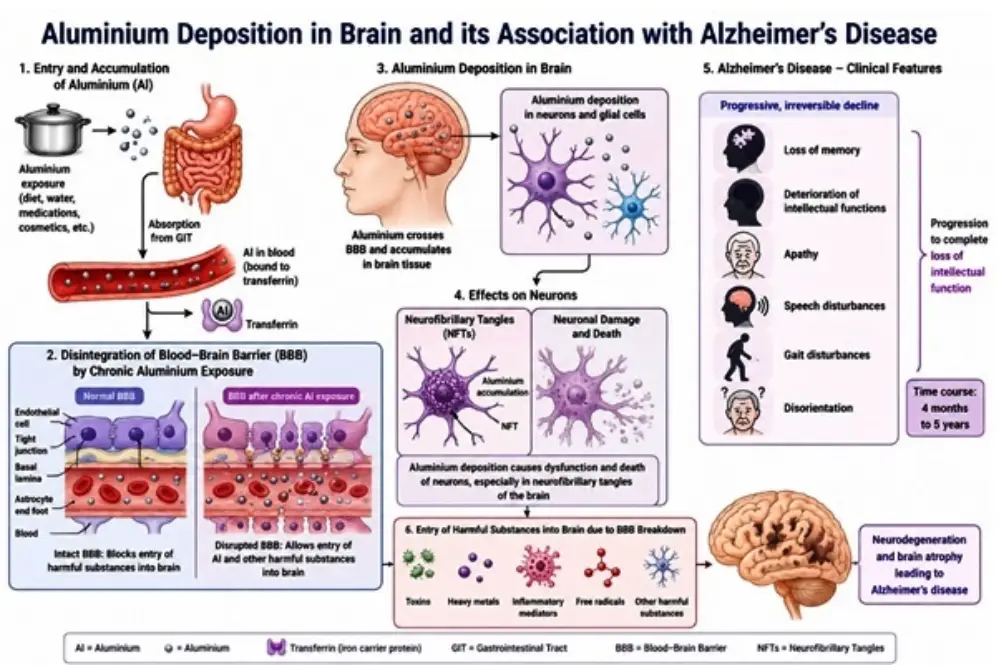
Alzheimer’s disease is a significant brain disorder that has been linked to aluminium deposition in the brain, which has been shown to kill and disrupt neurons, particularly in the brain’s neurofibrillary tangles. This disorder is characterised by a progressive, irreversible loss of memory, intellectual deterioration, apathy, abnormalities in speech and gait, and disorientation. The progression to total loss of intellectual function could take four months to five years. The author has demonstrated through experimentation that prolonged exposure to aluminium causes the blood-brain barrier to break down due to phosphorus deficiency, which allows dangerous substances to enter the brain.
Generally speaking, very little aluminium is transferred from cooking utensils into food and is regarded as insignificant. According to reports, food’s aluminium content increases by no more than 125 mg per day, even under extreme cooking conditions.
On the other hand, some foods can cause much more aluminium to leach from aluminium utensils. This is particularly probable when foods that are alkaline or acidic are prepared or kept in aluminium containers.
Pickles, tomatoes, vinegar, lemonade and fruit juices are examples of acidic foods that can react with aluminium and dissolve part of it. The organic acids in these foods may then combine with the released aluminium to form compounds that are easier for the digestive system to absorb.
Lactic acid, which can react with aluminium to form aluminium lactate, is found in curd and dairy products. Curd should therefore ideally not be kept in aluminium containers. Organic acids found in fruit juices naturally aid in the dissolution of aluminium. Therefore, it is best to avoid using aluminium utensils and containers when making or storing fruit juices.
The release of aluminium from utensils can also be increased by alkaline foods such as baking soda and other alkaline substances. Higher amounts of aluminium may be present in tea made in low-quality aluminium containers. Aluminium is naturally present in tea leaves, and extra aluminium may seep out of the container during preparation, especially in circumstances that encourage its dissolution.
Simple Precautions
Because aluminium is a hazardous element, it is wise to limit daily consumption by adhering to the following guidelines. Aluminium-containing food additives should be avoided, such as baking powders. Old, corroded and stained aluminium utensils should be avoided when preparing food.

A good nutrition plan should always be maintained. Including phosphate-rich foods such as milk and meat in the diet will promote the interaction of aluminium with phosphates in the stomach and decrease aluminium absorption.
Tea should be made with a significant amount of milk. This is because of the accumulation of aluminium in tea leaves by tea plants.
In summary, when cooking or storing food, one should never use inferior aluminium utensils, and anodised aluminium utensils should be preferred to non-anodised cookware. Further, avoid using harsh detergents and steel wool for cleaning aluminium utensils, as scratching leads to the leaching of aluminium ions from the utensils.
After washing, dry these utensils completely to avoid corrosion or the formation of white spots.
(The author is Professor of Veterinary Pharmacology and Toxicology at SKUAST-K, with a doctorate from IVRI and research interests spanning heavy-metal toxicology, pharmacology, pain and inflammation, zoonotic awareness, drug interactions and veterinary education. Ideas are personal.)