by Iqbal Ahmad
From Roman empresses to a Kashmiri queen, women rulers have rarely issued coins in their own names. Queen Didda left a distinctive legacy of power, patronage and coinage.

In ancient times, very few women rulers were able to issue coins in their own names. Roman and Greek rulers were among the earliest to issue coins bearing their names and busts. Archaeologists have discovered hoards of such coins across the vast territories of the ancient Roman and Greek empires. These coins are now housed in museums and numismatic collections across Europe and Asia. Several have also been found in the southern and northern regions of India. Many of these coins have been studied and documented in numismatic literature.
I have personally studied several Greek and Roman coins at the SPS Museum in Srinagar, including those of Faustina I and Julia Mamaea, Roman empresses.
Roman Queens and Their Coins
Annia Galeria Faustina, commonly known as Faustina the Younger, lived during the Roman imperial period from 161 to 180 AD. She is recorded as one of the Roman empresses whose coins were issued in her name. She was the daughter of Roman Emperor Antoninus Pius and Empress Faustina the Elder, and the wife of her maternal cousin, Emperor Marcus Aurelius.
Held in high esteem by soldiers and her husband, she received the titles Augusta and mater Castrorum, meaning “Mother of the Camp”. She was also accorded divine honours after her death. Coins issued in her name featured a draped bust on the obverse and a standing figure of Ceres on the reverse, holding ears of grain and a long torch. The letters “SC” appear in the exergue.
Julia Avita Mamaea, another Roman empress, was a Syrian noblewoman of the Severan dynasty. She was the mother of Emperor Alexander Severus and remained one of his principal advisers throughout his reign. She was killed alongside her son by rebel soldiers in 235 AD.
Her coins depict a diademed and draped bust on the obverse, accompanied by the legend “IVLIA MAMAEA AVGVSTA”. The reverse shows a seated figure identified as Juno, facing left and holding a flower and a baby in swaddling clothes. The inscription reads “IVNO AVGVSTAE”, with “SC” in the exergue.
Similarly, several Greek rulers, including Agathocles, issued coins. Such coins have since become prized possessions in museums and numismatic collections around the world.
Queen Didda of Kashmir
In Kashmir’s history, Queen Didda is remembered as one of the earliest women rulers to issue coins in her own name. Popularly known as Didda Rani, she is believed to have ruled during the 10th century AD.
Didda ascended the throne of Kashmir in 981 AD and ruled until 1003 AD. She is remembered for her political and social achievements. She was the daughter of Lahura Raja Sinharaja and was married to Raja Kshemagupta of Kashmir.
Kshemagupta is said to have plundered the famous Jayendra Vihara and used the molten brass from a Buddha image to cast images for his own temple. However, her husband’s policies do not appear to have determined the course of Didda’s own rule.
Her reign is associated with significant construction and religious patronage. She is remembered as a ruler who treated her subjects without discrimination and supported both Hindu and Buddhist religious institutions.
Besides founding several Vishnu temples, Didda is said to have built a number of Buddhist shrines. Writing about her patronage, Professor S. L. Shali notes that she continued the old tradition of supporting Buddhism by building monasteries, or mathas, and a vihara for Kashmiri students and foreign travellers.
Although not all the structures attributed to her have been identified, two Buddhist mathas associated with her are well known.
One prominent example is the Didda Matha, believed to have been named after her. It is associated with present-day Diddamar, situated on the right bank of the Jhelum near the seventh bridge.
Didda proved to be a successful ruler who retained control of the Kashmir throne until the end of her reign. She is also remembered as the first Kashmiri queen to issue coins in her own name.
Two series of coins are attributed to her. One was issued jointly in her husband’s name and bears the legend “Di-Kshemagupta”, while another carries her own name, “Didda”. These copper coins bear inscriptions in the Sharada script.

Several ancient copper coins attributed to Didda have been found in different villages and towns across Kashmir. Their designs feature a seated figure on the obverse and a standing figure on the reverse.
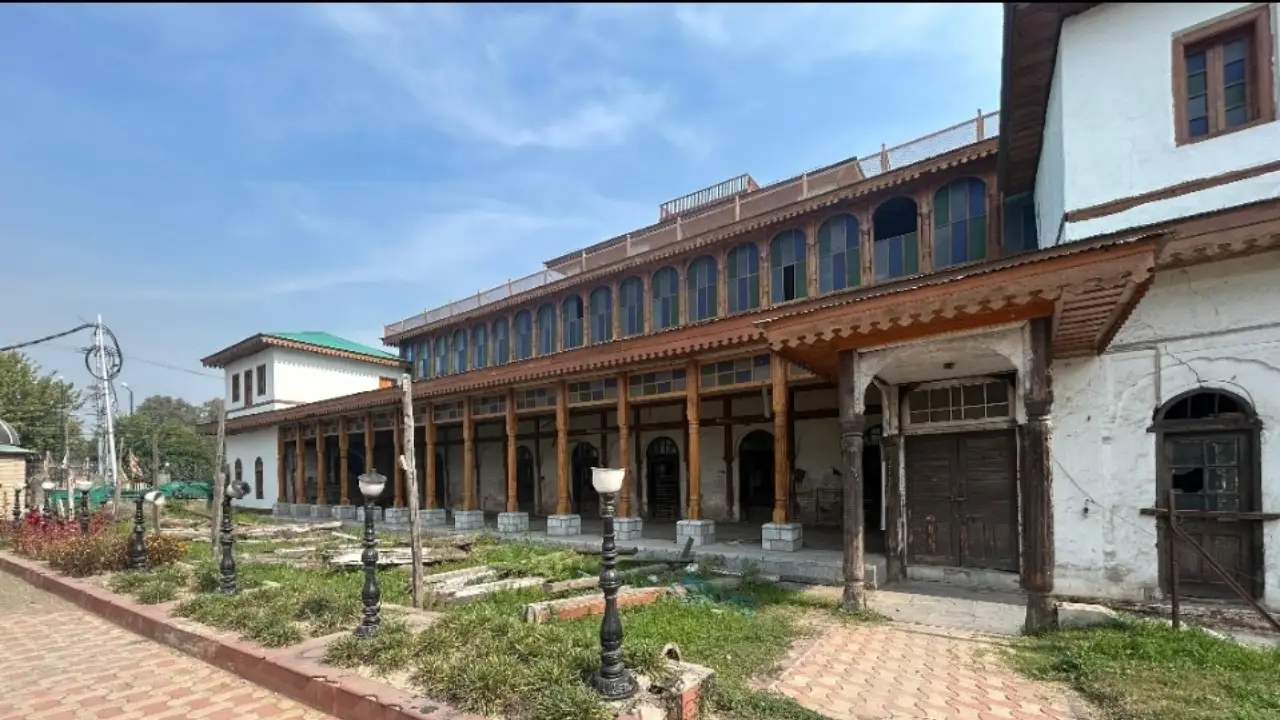
Many of these coins are reportedly preserved at the SPS Museum in Lal Mandi, Srinagar. Their inscriptions and designs offer material evidence of Didda’s place in Kashmir’s political and monetary history.
Didda was not an outsider but a Kashmiri woman who rose to become the ruler of the valley. Historical accounts credit her with supporting Buddhist traditions and leaving a lasting mark on the region’s religious and political life. Her coins remain an important part of that legacy.
(The author is an archaeologist. Ideas are personal.)