by Umer Jan
Built on lifelong friendships, hospitality, and mutual trust, Kashmir’s social fabric is fraying under prolonged uncertainty, envy, materialism, and silence. Rebuilding it requires honesty, empathy and collective responsibility.

Once, friendship in Kashmir was a bond for life. Neighbours shared meals, friends shared grief, and a promise was as good as a signed document. Today, many of us ask a painful question: who is still a friend?
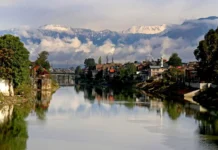
Kashmir’s natural beauty is beyond doubt. The snow on the Pir Panchal, Dal Lake at dawn and the Chinars in autumn leave every visitor speechless. That is why Kashmir is a wonderful place to visit for a few days. Living here for decades is an entirely different matter.
For years, our lives were dictated by hartals, curfews, closed markets and disrupted communication. Education stalled, careers were put on hold, and families lived with uncertainty. Time lost in this way can never be recovered. A society living under constant stress gradually turns inward, and the first thing to fray is trust.
Broken Bonds
Many people today feel suffocated, and not only by their circumstances. They feel the pressure within their own social circles. Friendships turn into rivalries, and rivalries into suspicion. Advice is doubted, success is resented, and sympathy is often little more than a show. This is the quiet mental torture that rarely makes headlines but finds a place in many homes.
The English proverb says, “A friend in need is a friend indeed.” In difficult times, many of us discovered that those we had counted on were nowhere to be found. Another proverb warns, “A man is known by the company he keeps.” In a place where everyone is anxious, even choosing one’s company has become difficult.
Kashmiri folk wisdom has long recognised the fragility of human relationships. One saying recorded by Koul observes that one guest does not like another, reminding us that jealousy between people is an old story. An old Hindi-Urdu idiom captures our grief particularly well: Is ghar ko aag lagi ghar ke chirag se (this house was set on fire by its own lamp). When the wound comes from our own people, it hurts the most.
False Companions
Where do we turn?
Many people, particularly the young, have found dependable companions in two places. The first is their digital devices. A phone never betrays a secret, never gossips and never judges. It connects us to a wider world from which our geography has so often isolated us. The second is nature. Mountains, rivers and meadows ask for nothing and offer peace freely. As Wordsworth wrote, “Nature never did betray the heart that loved her.”
Still, it is a sad society whose most dependable friends are screens and scenery. Human beings are social creatures. Another English proverb reminds us that “No man is an island.” If we cannot rebuild human trust, neither gadgets nor valleys can fill the gap.
Something else has changed in our society: the way we value people. Increasingly, a person’s worth is measured in rupees, cars and houses. Few ask how that wealth was earned. Quick money and shortcuts are quietly admired, while honest and modest work goes unnoticed. When the means no longer matter, honesty begins to look like foolishness.
The old English proverbs remain relevant. “Honesty is the best policy” and “Ill-gotten gains never prosper” are sayings we readily repeat but rarely practise. “All that glitters is not gold” applies to many of the fortunes we envy.
The result is a hollow kind of pride. Ask a well-off acquaintance sincerely for a referral, a recommendation or a little help, and you may be made to feel small, as though needing help makes you inferior. Assistance, which should be a natural obligation between neighbours, has become a favour handed down from above. As the proverb warns, “Pride goes before a fall.” A society in which the comfortable look down upon those who struggle is one that has forgotten its own values of hospitality and brotherhood.

Where trust and fairness weaken, darker feelings take their place: jealousy, grudges and envy. Too often, a neighbour’s success is met with resentment rather than pride. Instead of lifting one another up, we measure, compare and quietly pull each other down. And when injustice occurs, many remain silent, afraid of the consequences of speaking out. Silence in the face of wrongdoing is not peace; it slowly eats away at everyone.
The result is a growing sense of hopelessness. Many people no longer expect loyalty from friends, fairness from the system or happiness in everyday life. When people stop hoping for justice, they stop trying. And a community that stops trying begins to decline.
Rebuilding Trust
Healing must begin with us. We need more honesty, less envy and greater kindness in our neighbourhoods. Mental health can no longer be treated as a taboo. Counselling services, community spaces and open conversations should be regarded as necessities, not luxuries. Leaders and institutions must work towards lasting peace and stability so that another generation does not lose its formative years as the previous one did.
“Trust takes years to build and seconds to break,” as the saying goes. But a society that once built trust can build it again, if it chooses to.
(The author works in IT sector. Ideas are personal)