by Sri Varshith Kumar Reddy E
The negotiations in Antalya expose a widening gap between what developing countries are asked to do and what they can afford. An agreement worth having would change the terms on which they can act.
A finance minister in a developing country can agree with every word of a climate declaration and still struggle to pay for what it asks. A power grid needs investment before it can carry more renewable electricity. A coastal city needs drainage before the next storm. A government borrowing for either must make room for repayments alongside salaries, health spending and the cost of the last disaster.
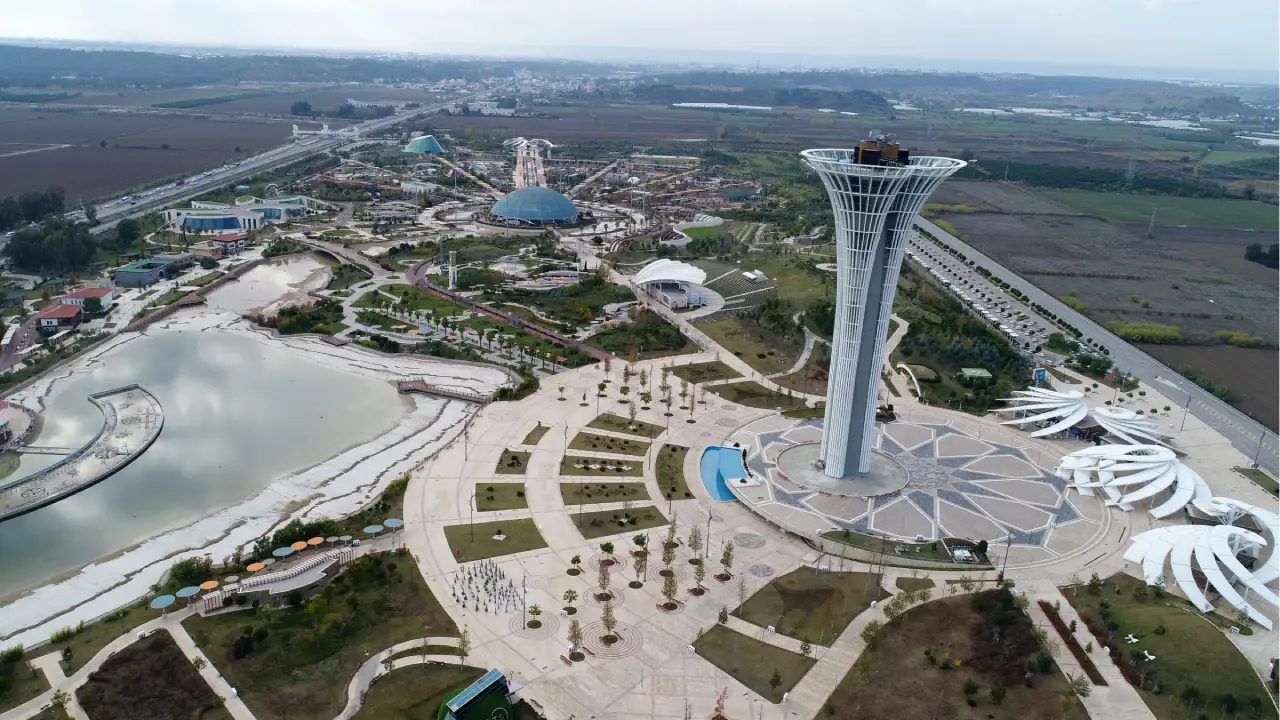
In Antalya, where COP31 has entered its final scheduled days, these pressures have surfaced in disputes over a global electrification target and the money available for adaptation. The two debates turn on a common question: who pays for investment now, and on what terms?
The question lands differently across the developing world. A small island government may have to protect a port on which much of its economy depends. A low-income country trying to extend electricity access has to consider what new consumers can afford. India must expand its power system while managing the transition’s consequences for coal-producing districts. These countries have good reason to bargain together for greater financial support. They have equally good reason to resist a single prescription for how to spend it.
The arithmetic of a promise
At COP30 in Belém, countries called for efforts to at least triple adaptation finance by 2035. One proposal in Antalya’s November 16 draft put a figure on that ambition: at least US$120 billion a year. The baseline remained contested. The UN Environment Programme puts international public adaptation finance from developed to developing countries at US$28.2 billion to US$31.7 billion in 2024. Depending on the baseline used, it estimates that tripling would yield roughly US$85 billion to US$120 billion a year by 2035. Even if the pledge is met, UNEP reckons it would cover just 20 to 29 per cent of estimated needs. As of November 19, the presidency’s revised text was still a draft.
The terms deserve as much scrutiny as the total. A concessional loan may make sense for a utility that can recover the cost of an investment through tariffs or lower operating expenses. A flood warning system has no such income. Neither does an evacuation route serving a poor coastal settlement. If the choice is between borrowing for a project that earns revenue and borrowing for one whose return is a disaster avoided, the finance ministry can defend the first more easily. A climate agreement that counts both loans at face value misses why the second project keeps losing out.
Developed countries have a reasonable case for using public money to bring in private investment where it can earn a return. Their taxpayers can also ask whether existing funds reach viable projects. Developing countries, in turn, are entitled to ask why a loan they must repay should be counted on the same footing as a grant. Antalya could make progress by requiring a public account of what was promised, what was disbursed, and how much support a loan actually provides after repayments. Those distinctions would tell a finance ministry more than a larger headline number.
Who gets to set the pace?
The dispute over electrification presents a different problem. One proposal discussed in Antalya would raise electricity’s share of global final energy consumption to 35 per cent by 2035. A common target can give manufacturers and investors a sense of the market ahead. It can also obscure what must happen first in different countries. An electric bus makes sense when a city can finance the depot, connect it to the grid and afford to run the service. A factory will hesitate to replace a fuel-fired boiler if its electricity supply is unreliable or the tariff makes the switch prohibitive. Increasing electricity use cuts emissions to the extent that it displaces fossil fuel use and the additional power is sufficiently clean.
National flexibility is therefore worth defending. It also comes with a responsibility to explain what a country intends to do with it. Governments seeking more time should be able to identify the transmission lines, distribution upgrades or worker protections that would make a faster transition possible. Governments pressing for greater speed should say which of those investments they are prepared to support. That would give negotiators a more useful argument than another round of competing dates.
From Antalya to COP32 in Addis Ababa, there is also a case for funding the work that precedes investment. A country may have an adaptation plan and still lack the money to commission engineering studies, compare sites or prepare a proposal a fund can approve. This gives administrations with access to consultants an advantage over places that may face greater danger. A modest grant for project preparation, with technical assistance available to several districts or municipalities at once, could widen access without relaxing scrutiny. The proposed Antalya-to-Addis Ababa roadmap offers a place to pursue that idea.
What the Jhelum asks of us
For India, the value of that argument depends partly on what it does at home. Research on the Upper Jhelum treats it as a glacier-fed watershed and examines how water demand could change under different socioeconomic scenarios. That is a useful starting point for Kashmir. The future of the basin depends on what happens in the mountains and on the demands that households, farms and towns place on the river. A drainage project can protect one locality while sending water more quickly towards another. A flood protection budget can rise while land-use decisions put more property in harm’s way. These are problems that individual departments, working within their own boundaries, are poorly placed to resolve.

Jammu and Kashmir could begin with a short public list of investments for the basin. A warning system should be judged by how much usable notice it gives exposed settlements. A drainage proposal should show where the water will go. A wetland restoration plan should say who will keep the land available for flood storage and who will pay for its upkeep. Where restrictions on construction are necessary, the administration should reckon with the difference between a developer holding several plots and a household whose only asset is a small piece of land. The distribution of those costs belongs in the appraisal from the beginning.
New Delhi could use such a list to pilot a funding window for mountain districts, with grants for design and provision for maintenance across budget years. Kashmir would gain a route from a recognised risk to a funded project. India would gain a concrete example to take to Addis Ababa of what it means to make climate finance easier to use.
A successful COP31 would give developing countries more certainty about the money they can count on and more room to decide how to use it. The responsibility that follows is equally practical. In Antalya, governments must decide how much of the cost they are willing to share. In Srinagar, the administration must decide what is worth paying for while the Jhelum is still within its banks.
(The author is a pracademic working on government policy and public institutions. Ideas are personal.)