by Rameez Ahmad Sudhan
A schoolchild’s death in a wall collapse underscores the urgent need to translate existing safety guidelines into practice through structural audits, disaster preparedness and collective community responsibility.

Somewhere there is a mother who still keeps watching for you to come home, and a father who listens for your footsteps at the door. There is a classmate looking at your empty seat, and a teacher who will call your name from the register. The world you left behind is quieter without you, and it will stay that way for a long time.
On November 14, 2026, a day set aside to celebrate childhood, a young student died when a wall collapsed in her school. What this tragedy can do is show us what we owe every child who walks through a school gate tomorrow morning. Frameworks, guidelines and processes already exist, and safety remains a top priority for schools. We must now ensure that safe practices are consistently implemented.
Shared Responsibility
School safety is usually described in two parts. Structural safety covers the physical body of the school: foundations, walls, roofs, staircases, boundary walls, railings, and the soil and drainage around them. Non-structural safety covers everything else that can hurt a child inside an otherwise sound building: unsecured almirahs and shelves, loose wiring, blocked exits, unsafe playgrounds, missing fire extinguishers and untrained staff who do not know what to do when something goes wrong.
Boundary walls, compound walls and retaining walls tend to fall between the two. Children play beside them, shelter under them and lean on them. A wall weakened by seepage, a harsh winter, freeze-thaw cycles or a neighbouring excavation can fail without any visible warning, and it fails precisely where children gather. School safety audits must therefore be strengthened, and existing measures require more urgent attention because children’s lives are at stake.
Safety Guidelines
The Ministry of Education’s Guidelines on School Safety and Security cover preventive education, reporting procedures, counselling and the creation of a safe environment. They build on the National Disaster Management Guidelines on School Safety issued by the NDMA, which the Ministry has repeatedly identified as the foundation for ensuring structural integrity. These guidelines are widely circulated and provide strong institutional backing for preventive and mitigation measures.
In August 2025, the Ministry directed all States and Union Territories to carry out comprehensive safety audits of school buildings. Structurally unsafe buildings are to be repaired or demolished wherever necessary and must not be used until certified safe. Newly constructed or repaired buildings should be occupied only after a qualified engineer or competent authority issues a fitness certificate. The policy framework is clear: all stakeholders must act together to ensure that buildings do not become a cause of damage to life or property.
J&K Position
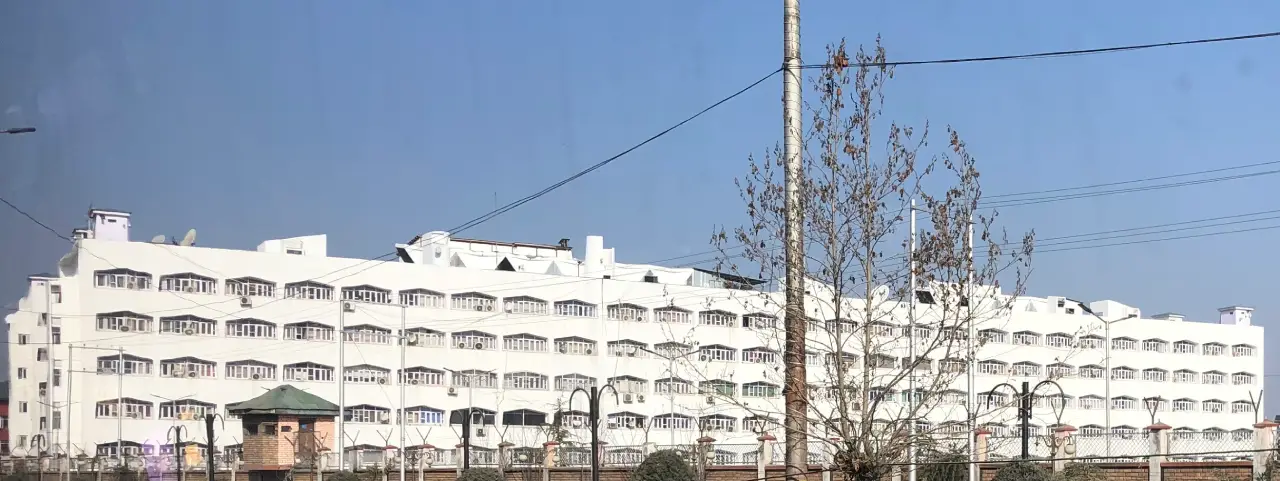
Our region faces a double burden. It is highly seismic and exposed to heavy snowfall, floods and landslides. The Samagra Shiksha scheme supports States and Union Territories in strengthening existing government schools and creating new facilities. The Centre’s guidance calls for periodic building safety audits, retrofitting and disaster response plans.
Audits have taken place. The government has declared 765 school buildings unsafe following inspections by various departments. In the education sector, the School Education Department has identified 765 school buildings as unsafe under the National School Safety Programme. These buildings are not being used for teaching purposes, and many are being dismantled after completion of the required codal formalities. Following the 2025 floods, authorities also ordered safety audits of all school buildings across the Jammu division.
Collective Action
The hard truth is that no single department can keep a school safe. Each of us holds one link in the chain. It begins with recognising danger, as envisaged under the 2021 guidelines: identifying a damp patch or a crack and reporting it to the competent authority. A fitness certificate is a promise to a child, and a proper audit can help ensure that this promise is kept.
Beyond structural safety measures, non-structural interventions such as safety drills, the use of first-aid kits and awareness campaigns are equally important in making the Comprehensive School Safety Programme (CSSP) a lived reality for our children.
Samagra Shiksha, through UNICEF India, conducted a major consultation and training programme for key partners on the J&K Comprehensive School Safety Framework (CSSF) in 2021, when the Guidelines on School Safety and Security were being shared across the country. We need to revisit these efforts and mainstream safety in our curriculum and practices as we move into the new academic year, with a pledge that no child or staff member is exposed to a hazard that could escalate into a disaster.
The community that owns the land, the drains and the neighbouring construction that can affect a school must also play its part. It should participate not merely in social audits but as an active partner in creating a safety net for children.
Finally, in the name of the child who lost her life, let every school have a team of safety warriors. Children themselves are among the best sensors a school has. Child Safety Clubs can give them the agency to speak up and voice their concerns about safety within their schools. One effective way forward would be to have School Safety Plans (SSPs) prepared, monitored and regulated by the District Disaster Management Authority (DDMA) in each district.
The Comprehensive School Safety Framework, adopted in India’s disaster-management approach, rests on three pillars: safe school facilities, school disaster management and risk-reduction education. All three are necessary and must work together.
Turning Tragedy
We cannot undo what happened, but we can make you a promise, our child. We will look at every wall, every roof and every staircase our children use. We will repair what is broken and not look away from what is unsafe. We will ask hard questions, listen to the answers and act on them.
Your name will be the reason a crack gets noticed in time somewhere, and a child who never knows about you will come home safely. We bid you adieu!
Sleep well, little one. You were loved, and you will be remembered.
(A school teacher and a Fulbright scholar, the author is a school safety specialist. Ideas are personal.)