by Asad Mirza
Manila’s Quad gathering tests US commitment to Indo-Pacific partners, while a separate Shenzhen meeting of Trump, Xi and Putin raises questions about great-power bargaining, regional security and India’s strategic autonomy.

The most dramatic event of the week is scheduled for Shenzhen, where US President Donald Trump, Chinese President Xi Jinping and Russian President Vladimir Putin are due to meet on November 19. Beijing says the leaders will discuss safeguarding world peace and promoting strategic stability. Trump has signalled interest in nuclear arms reduction, while China has traditionally argued that Washington and Moscow should reduce their much larger arsenals before Beijing joins such talks.
The setting invites grand comparisons, but a historic photograph is not a settlement. The three leaders have overlapping interests in avoiding uncontrolled escalation, yet sharply different aims. Putin gains stature from sitting alongside the US and Chinese presidents. Xi can present China as a convener of major-power dialogue, while Trump can claim a high-profile diplomatic role. These incentives may produce carefully managed language, but they do not, in themselves, resolve conflicts or create shared rules.
Ukraine is a particularly revealing test. Reporting ahead of the meeting suggested that Xi was wary of allowing the trilateral to become a forum for negotiating a European war without Europeans or Ukraine being present. US officials have indicated that Trump may focus on nuclear issues and Iran rather than Ukraine. Even if the war is raised, any durable arrangement affecting Ukraine’s sovereignty cannot credibly be made over Kyiv’s head.
Expect discussion, choreography and possibly a commitment to keep talking, rather than a dependable “new Yalta”. The analogy overstates the three leaders’ ability to divide the world or compel others to accept their decisions. Europe, Ukraine and Indo-Pacific states are not passive pieces on a board. Moreover, the three powers do not share a unified strategy. A meeting can manage friction, but it cannot erase their competition or reconcile their conflicting interests.
APEC Stakes
The danger is that the spectacle will eclipse APEC’s central purpose: economic cooperation across the Asia-Pacific. APEC provides a forum for discussing trade, investment and regional growth among economies with differing political systems. But a summit dominated by the strategic drama surrounding three leaders could turn the forum into a backdrop for bilateral and trilateral bargaining. Other members will be watching for signs that Washington and Beijing might strike deals affecting trade or security without consulting them.
There is also a practical limit to what a leaders’ encounter on the sidelines can achieve. Brookings notes that a Trump-Xi side meeting would be shorter than a dedicated summit, constraining detailed negotiations. The existing trade truce, extended until January 2027, also reduces pressure for an immediate breakthrough. APEC’s value may therefore lie less in a grand bargain than in preserving channels of communication and preventing bilateral rivalry from destabilising regional commerce.

Trump’s Quad Test
For Trump, the Manila meeting serves two purposes: demonstrating engagement with Indo-Pacific partners while retaining room for direct dealings with Xi and Putin. That dual track is not inherently contradictory. The problem is credibility. If the Quad is described as a “partnership of action”, its partners will look for concrete follow-through, not merely a meeting and carefully worded assurances. Recent trade disputes and doubts about Washington’s consistency have heightened scrutiny in New Delhi and other capitals.
The likely deliverables- cooperation on critical minerals, maritime security and economic resilience- are sensible precisely because they can be advanced without turning the Quad into a military alliance or demanding that members sever ties with China. But declarations will count for little unless they lead to practical coordination: more resilient supply chains, maritime information-sharing, infrastructure investment and trusted technology partnerships. The Quad’s credibility will depend on whether its members can sustain that work after the leaders leave Manila.
India’s Options
India should neither treat the trilateral as a settled new order nor dismiss it as theatre. The meeting could ease tensions, but it could also normalise a great-power habit of discussing regional security within a small club. New Delhi’s response should be to insist, through diplomacy, that decisions affecting Ukraine require Ukraine’s participation and that Indo-Pacific stability requires consultation with the states most directly exposed to it. Strategic autonomy is not silence; it is the ability to engage without surrendering independent judgement.
At the Quad, India can turn that principle into an agenda. It should press for specific, deliverable cooperation on maritime domain awareness, critical-mineral supply chains, clean energy, resilient infrastructure and disaster preparedness. These are areas where the four countries can build capacity while producing benefits for Southeast Asia. India should also make clear that the Quad must complement, not bypass, ASEAN-led regional processes. A durable Indo-Pacific framework will need the consent and participation of the region, not merely solidarity among four partners.
Modi’s Meetings
In Manila, Prime Minister Narendra Modi is expected to join US President Donald Trump, Japanese Prime Minister Sanae Takaichi and Australian Prime Minister Anthony Albanese for the first Quad leaders’ meeting in two years. The leaders are expected to discuss Indo-Pacific peace, prosperity and security, with maritime security, energy and economic resilience among the likely priorities. Modi is also attending the ASEAN-India Summit and the East Asia Summit, giving India a broader regional platform beyond the Quad.
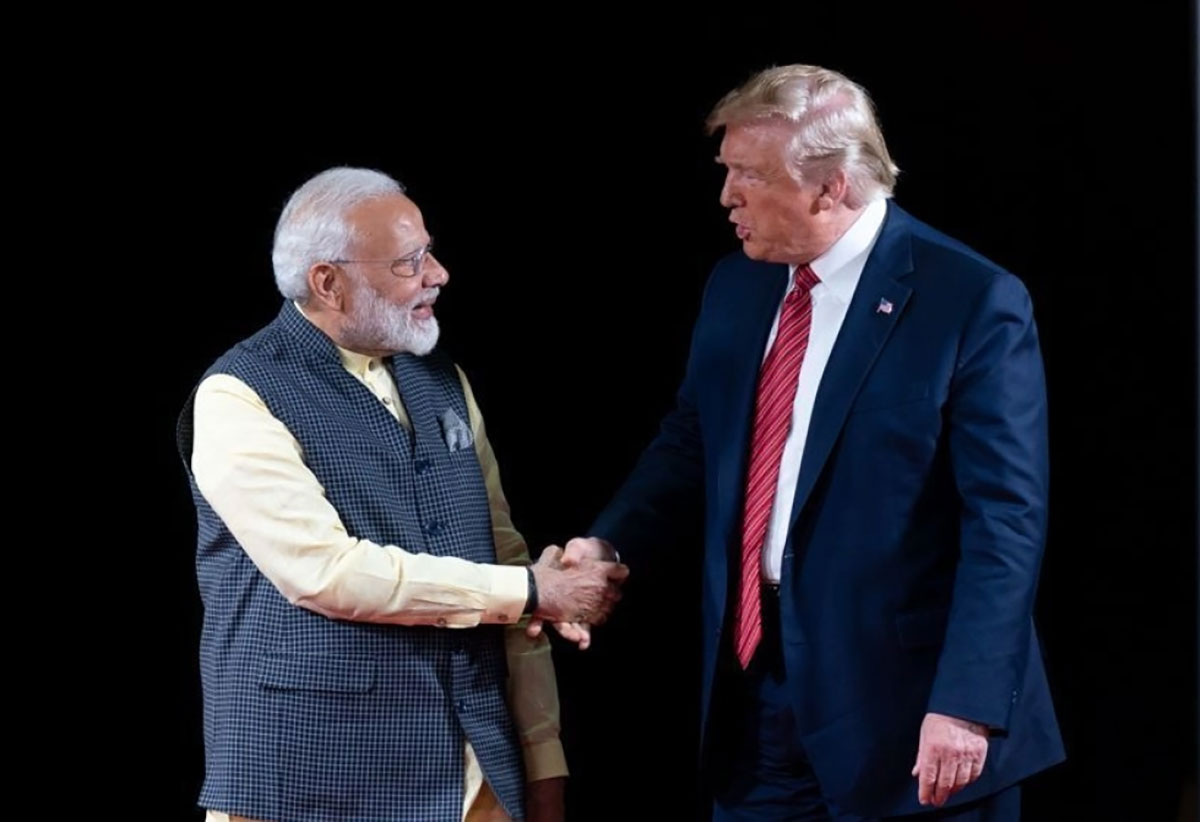
A Modi-Trump conversation would be especially consequential because it could address strains in the bilateral relationship directly, while the Quad offers a wider framework in which both sides can demonstrate cooperation. Still, India should avoid making the grouping a referendum on its relationship with Washington or a platform for performative confrontation with Beijing. India’s strongest role is to keep the Quad practical, inclusive in its regional approach and resilient to shifts in US priorities.
The week’s defining image may be Trump moving from Quad partners in Manila to Xi and Putin in Shenzhen. India’s task is to ensure that neither the photo opportunity nor power politics substitutes for regional agency. The Quad’s test is useful cooperation, APEC’s is meaningful economic dialogue, and the trilateral’s is whether it can reduce risks without pretending that three leaders can settle the world’s conflicts alone.
(The writer is a New Delhi-based senior commentator on national, international, defence and strategic affairs, environmental issues, an interfaith practitioner, and a media consultant. Ideas are personal.)