by Iqbal Ahmad
The Rimbara and Veshow valleys hold remarkable archaeological, spiritual, literary and natural treasures. Recent district festivals offer an opportunity to rediscover their neglected heritage and develop sustainable tourism circuits.
The Rimbara and Veshow valleys of South Kashmir possess an extraordinary inheritance of archaeological remains, ancient routes, spiritual traditions, folklore, literature and natural landscapes. Yet, despite their historical and cultural significance, much of this heritage remains unexplored, undocumented and largely absent from Kashmir’s mainstream tourism narrative.
Recent initiatives by the administrations of Shopian and Kulgam districts have brought renewed attention to these adjoining valleys. The Jashni Harud Festival, organised by the Shopian administration along the Rimbara, and the Veshow Festival, organised by the Kulgam administration, represent initial efforts to showcase their cultural, literary and natural wealth.
For decades, Kashmir’s tourism map has revolved largely around Gulmarg, Pahalgam and Sonamarg. The Rimbara and Veshow valleys, despite offering considerable possibilities for heritage, nature-based and adventure tourism, have remained relatively neglected.
Mountain Heritage
The Panchal Valley, particularly its upper stretch along the Rimbara in Shopian, has gradually gained recognition following the commissioning of the Mughal Road. Located along the eastern slopes of the Pir Panjal range, the valley extends from the Shopian plains towards the mountain passes connecting Kashmir with the Chenab region and Jammu.
Its dense forests, alpine meadows, mountain springs and historic settlements offer opportunities for both summer and winter tourism.
Peer Ki Gali, Aliabad Sarai, Dubjan, Padpawan, Sukhsaria and Lalgulam are among its important destinations. These areas receive considerable snowfall during winter and could support snow tourism and winter sports. However, much of this potential remains untapped.
The valley also preserves a rich folklore tradition. The celebrated legend of Himal and Nagrai, narrating the romance between a human princess and a mysterious serpent prince, is closely associated with this region. The British scholar James Hinton Knowles recorded a version of the tale in his collection Folk-Tales of Kashmir.
Springs traditionally associated with the legend are identified locally with Safanomen and Balpora. Other important sites include Kapal Mochan, the shrine of Syed Kareem Shah at Peer Ki Gali and the shrine of Syed Baha-ud-Din Shakar Ganj at Arhama.
Another intriguing tradition surrounds Lahanthoor, an isolated hillock encircled by the historic villages of Kumdalan, Nagisaran and Memendar. Local folklore holds that the legendary treasure of the Kauravas lies buried beneath it. Such traditions form an important part of the valley’s intangible cultural heritage and deserve systematic documentation.
Ancient Routes
The mountain corridor through the Pir Panjal has witnessed centuries of political movements, trade and cultural exchanges. It is traditionally associated with an ancient Salt Route through which salt from the Punjab region was transported into Kashmir.
One of the historical personalities connected with this corridor is Mihirakula, the White Hun ruler. Historical accounts record his defeat in northern India and his subsequent association with Kashmir. Local traditions connect his journey with the Pir Panjal pass and preserve an account of an incident involving elephants at Hasvanj. According to the legend, after one of his elephants fell to its death near a gorge, the ruler ordered other elephants to be pushed down as well.
Reports of Mihirakula’s coins from this region add to its numismatic significance, although their precise findspots and archaeological contexts require investigation.
The route is also associated with King Avantivarman. His chief minister, Sura or Suravarman, is traditionally credited with establishing Surapura, believed to correspond to present-day Hurpora.
During the reign of Sultan Zain-ul-Abidin, the corridor is associated with the construction of a gateway called Ilahi Darwaza. Historical traditions also connect the Sultan with the settlement of labourers from the Bimber region in the locality.
The Mughals subsequently developed the mountain corridor into an important imperial route, establishing resting places, inns and other facilities for travellers. Remains of Mughal-period structures and historical artefacts are still reported from different locations along the route.
The Mughal Road, therefore, represents much more than a scenic mountain highway. It preserves an important chapter of Kashmir’s political, commercial and cultural history.
Archaeological Gaps
Despite the archaeological attention received by the upper and lower Jhelum valleys and the Lidder Valley, the adjoining Rimbara and Veshow valleys remain insufficiently explored.
Stray discoveries of ancient stone tools, coins and other archaeological objects have been reported from different localities. Recent discoveries around Hurpora further underline the need for systematic surveys and scientific investigations.
The region’s archaeological potential warrants the attention of historians, archaeologists and heritage institutions. Proper documentation could reveal important chapters of Kashmir’s early settlement patterns, trade networks and cultural interactions.
Veshow’s Treasures
The Veshow Valley of Kulgam possesses an equally remarkable inheritance of archaeological, architectural, literary and spiritual treasures.
The recent Veshow Festival, organised by the district administration at Government Degree College, Kulgam, attempted to bring several dimensions of this heritage together. Beyond cultural celebrations, the event incorporated themes of trade, skill development and entrepreneurship, with participation from technocrats, traders and resource persons to familiarise young people with emerging opportunities.
Poetic gatherings and musical performances also brought the valley’s literary traditions, rural customs and folklore into focus.
Among its most important historical locations is Devesar, identified in ancient records as Devesarasa. Despite its archaeological significance, the site has yet to receive adequate recognition on Kashmir’s archaeological map.
Devesar has yielded two outstanding examples of Kashmir’s bronze art: a Kushan-period sculpture of Lord Buddha and an intricately decorated bronze doorframe attributed to the reign of King Shankaravarman. Locally known as Barputh, the doorframe depicts thirty-three manifestations of Vishnu.
Both antiquities are now preserved in the Archaeology Gallery of the SPS Museum at Lal Mandi, Srinagar, and have received recognition in international archaeological and art-historical literature.
Archaeological mounds at Kotebal and Kousarbal, along with reported discoveries of ancient coins and artefacts from neighbouring localities, further underline the historical importance of the Veshow Valley.
Rishi Legacy
The Veshow Valley also occupies a special place in Kashmir’s indigenous Rishi tradition. It is closely associated with the life and spiritual legacy of Sheikh Noor-ud-Din Noorani, popularly known as Nund Rishi or Sheikh-ul-Alam.
Whether the saint was born at Khee Jogipora or Qaimoh, both locations belong to this historic valley. Several places are associated with his spiritual journey, including the spring at Khee, the underground cave at Gufabal, the family tombs at Qaimoh and his meditation site at Tismer, near the Hounhang hill rock.
Local traditions preserve accounts of his early life and spiritual experiences. During one visit to Tismer, a traditional grinding stone believed locally to have been used by the saint was found. Such relics, together with oral traditions, deserve proper documentation and historical investigation.
The magnificent shrine of Mir Syed Hussain Simnani at Kulgam is another important landmark of the region’s spiritual heritage. Associated with the reign of Sultan Shihab-ud-Din, the saint is remembered as one of Kashmir’s prominent Syed missionaries.
Hundreds of Rishi, Sufi and Syed shrines scattered across the Veshow Valley reflect its extraordinary spiritual and architectural traditions.
Natural Attractions
Beyond their historical and spiritual importance, both valleys possess remarkable natural beauty.
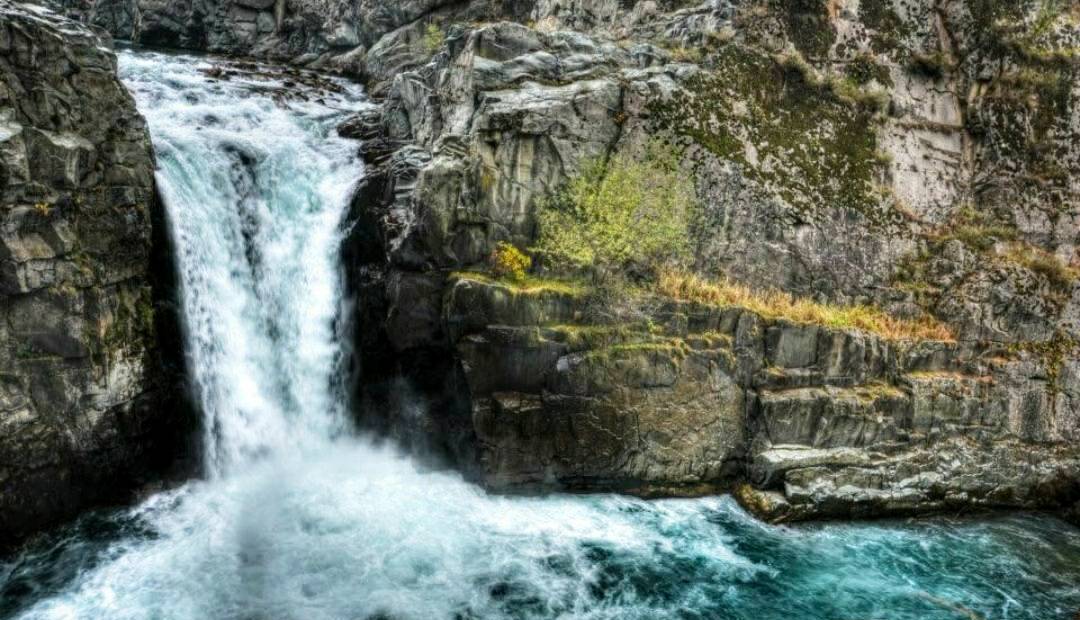
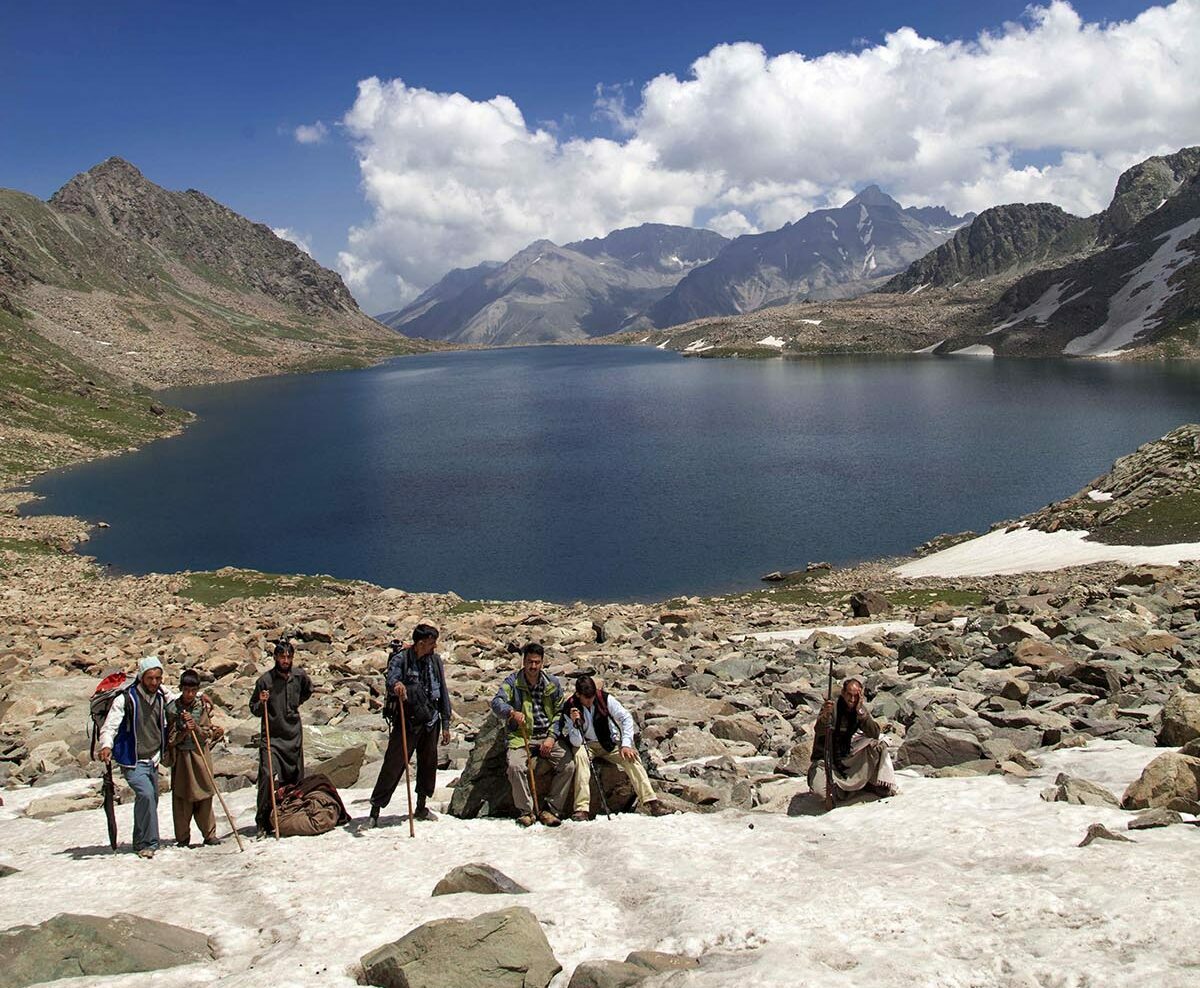
The upper Veshow Valley opens towards alpine meadows, dense forests, snow-covered peaks and mountain springs, including Sarkanch, Brahim Sar, Chher-Sar, Dunth-Sar and Kousarnag. Their waters flow through spectacular landscapes and converge near Kungwattan before continuing towards Aharbal, where the celebrated waterfall forms one of South Kashmir’s most striking natural attractions.
Other destinations include Dandward, D.K. Marg, Zaig Marg, Haka Wass, Chheranbal, Gogal Marg, Chitinand, Astan Marg and Gurwattan.
While Aharbal and Kungwattan attract local visitors during summer, many of these landscapes remain relatively unknown to tourists.
The upper reaches of both valleys offer opportunities for trekking, nature tourism, winter recreation and responsible adventure tourism. Linking their natural attractions with historic settlements, ancient routes and spiritual destinations could create distinctive heritage tourism circuits.
A Larger Vision
The Rimbara and Veshow valleys are not merely picturesque landscapes. They are living repositories of Kashmir’s ancient history, archaeological discoveries, spiritual traditions, folklore and literature.
Much of this wealth, however, remains undocumented. The Archaeology Department needs to undertake systematic surveys of historic settlements, ancient mounds and archaeological sites, particularly around Hurpora, Devesar, Kotebal and Kousarbal. Reported coin discoveries and other antiquities require scientific investigation, documentation and preservation.
The Departments of Tourism, Culture and Winter Sports also need to look beyond the traditional destinations and recognise the potential of these two valleys. Historical routes, spiritual shrines, folklore sites, alpine meadows and winter landscapes could be developed into carefully planned heritage and tourism circuits.

Equally important is the documentation of oral traditions, folk legends, traditional knowledge and rural lifestyles before they disappear with the passing of older generations.
The Jashni Harud Festival of Rimbara and the Veshow Festival of Kulgam should therefore be seen not merely as annual cultural events but as the beginning of a broader effort to rediscover, preserve and promote South Kashmir’s neglected heritage.
With sustained administrative attention, scientific exploration, community participation and responsible tourism development, the twin valleys could emerge as important heritage destinations of Kashmir.
Their rivers have preserved the memories of centuries. It is now for institutions and communities to explore their stories, document their treasures and give their forgotten heritage the recognition it deserves.
(The author is an archaeologist. Ideas are personal.)