by Asad Mirza
The ICJ’s landmark genocide ruling against Myanmar offers the Rohingya legal recognition, but safe return, restored citizenship, individual accountability and reparations will depend on sustained international pressure and compliance.
The International Court of Justice (ICJ) has delivered a landmark judgment holding Myanmar responsible for genocide against the Rohingya, bringing a measure of legal recognition to a community subjected to decades of persecution. But the verdict is only the beginning of a much longer struggle. It cannot, by itself, restore citizenship, guarantee a safe return or bring individual perpetrators to justice. Its real significance will depend on whether Myanmar complies with the Court’s orders and whether governments translate international condemnation into sustained pressure and practical protection.
The Rohingya, a predominantly Muslim ethnic minority with deep historical roots in Myanmar’s Rakhine State, have endured decades of discrimination and state repression. Myanmar’s 1982 Citizenship Law effectively denied most Rohingya citizenship, leaving them stateless and restricting their movement, education and access to essential services. The refusal to recognise the name Rohingya became part of a wider state policy of denying the community’s identity and its place in the country.
From Exclusion
The crisis escalated through successive waves of violence and displacement, including in 1978, 1991 and 2012. In 2016, attacks by the Arakan Rohingya Salvation Army (ARSA) on security posts were followed by military operations. On August 25, 2017, ARSA attacked police and military positions. The military response, however, was vastly more destructive.
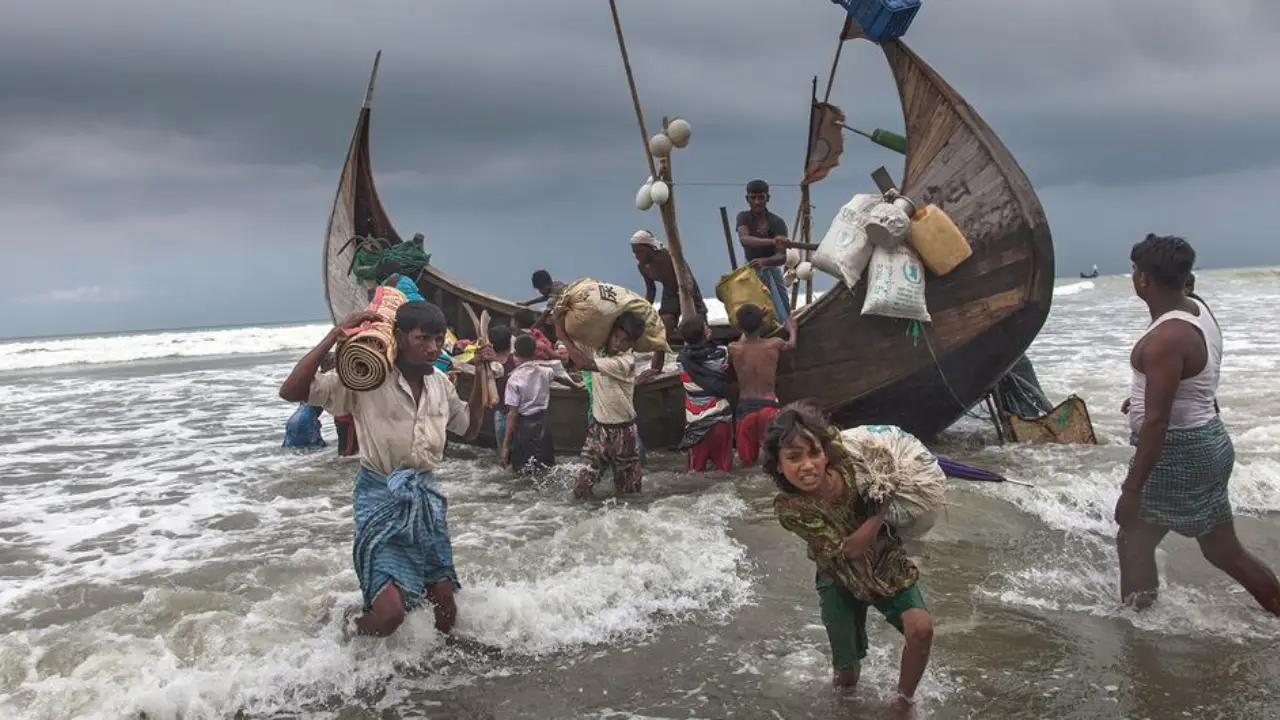
In the weeks that followed, security forces burned villages, killed civilians and committed widespread sexual violence. More than 700,000 Rohingya fled across the border into Bangladesh.
The mass exodus was not an isolated humanitarian emergency. It followed years of systematic exclusion and left hundreds of thousands of Rohingya inside Myanmar facing severe restrictions. A 2018 United Nations fact-finding mission described the 2017 violence as widespread and systematic and called for accountability for senior military leaders. Myanmar rejected allegations of genocide, maintaining that its operations were counterinsurgency measures targeting ARSA.

A State on Trial
In November 2019, The Gambia, backed by the Organisation of Islamic Cooperation (OIC), instituted proceedings against Myanmar at the ICJ, alleging violations of the 1948 Genocide Convention. The case was not a criminal trial of individual military commanders. Rather, it sought to establish whether Myanmar, as a state, had violated its international obligations to prevent and punish genocide.
In January 2020, the Court ordered Myanmar to take provisional measures to protect the Rohingya and preserve evidence relating to the allegations. Myanmar subsequently challenged the Court’s jurisdiction and The Gambia’s standing to bring the case. In July 2022, the judges rejected its preliminary objections, allowing proceedings on the merits to continue.
Hearings were held in January 2026, with survivors’ accounts and other evidence forming a central part of the proceedings.
On November 19, 2026, the Court delivered its judgment, finding that Myanmar committed genocide against the Rohingya during the 2017 clearance operations in northern Rakhine State. It also found that Myanmar had failed to fulfil its obligations to prevent and punish genocide and had breached its obligation to preserve evidence under the Court’s 2020 provisional measures order.
In a nine-to-six decision, the judges concluded that the military campaign was driven by the intention to destroy a substantial part of the Rohingya population. The Court rejected the argument that counterterrorism operations alone could explain the scale and nature of the violence. The judgment established state responsibility under the Genocide Convention, rather than criminal guilt on the part of individual military officials.
What Justice Means?
The Court directed Myanmar to end any continuing violations of the Genocide Convention, enact the necessary legislation to give effect to its obligations, and take immediate and effective steps to investigate people reasonably suspected of committing genocide and prosecute and punish them where warranted.
It also ordered assurances and guarantees against repetition, restitution for the Rohingya, including conditions for safe, voluntary and dignified return and family reunification, and compensation for the damage suffered.
The Court left the amount and modalities of compensation and other reparations for a subsequent phase of proceedings. Myanmar must submit a report within two years detailing the restitution measures adopted and the proposed compensation arrangements. The question of reparations, therefore, remains part of the judicial process.
These directions are binding. However, the ICJ has no police force and cannot itself arrest officials or compel Myanmar’s military authorities to cooperate. Under Article 94 of the UN Charter, a party may refer non-compliance with a judgment to the UN Security Council, which can recommend or decide measures to give effect to it.
That route, however, is politically uncertain. The Council’s enforcement powers are discretionary, and its permanent members can block substantive action through their veto. The practical implementation of the judgment will consequently depend heavily on diplomatic pressure, international coordination and continued scrutiny.
 Recognition, Not Relief
UN Secretary-General António Guterres welcomed the judgment as a powerful recognition of the Rohingya victims of genocide and a reaffirmation that impunity must not prevail. He described it as the first occasion on which the ICJ had found a state responsible for committing genocide.
For survivors watching from refugee camps in Bangladesh, the decision represents an important form of public acknowledgement after years of denial. Yet recognition alone cannot address their immediate concerns. Rohingya advocates have consistently stressed that survivors, particularly women, must be heard and included in decisions concerning their future.
The judgment also places a responsibility on the international community. Governments that have expressed support for the Rohingya must now work towards ensuring that the Court’s findings translate into concrete measures. Political caution, competing diplomatic priorities and differences among major powers could otherwise weaken the momentum generated by the ruling.
Myanmar’s rejection of genocide allegations throughout the proceedings has been a central feature of the dispute. The judgment now provides a definitive legal finding on the state’s responsibility, but it does not automatically resolve the question of individual criminal accountability. That will require separate criminal proceedings and cooperation from states and relevant international institutions.
A Worsening Crisis
The circumstances confronting the Rohingya have changed considerably since The Gambia instituted proceedings. The 2021 military coup ousted the civilian government led by Aung San Suu Kyi, plunging Myanmar into a wider conflict. In Rakhine State, Rohingya civilians have increasingly found themselves caught between the military and the Arakan Army, both of which have faced allegations of serious abuses.
The Arakan Army now controls much of Rakhine State, while Rohingya communities continue to face reports of repression, forced labour and arbitrary detention. The political and military realities on the ground make the prospect of implementing the Court’s directions considerably more complicated.
Meanwhile, refugees in Bangladesh remain confined to overcrowded camps, dependent on humanitarian assistance and without a clear pathway home.
A return that is merely possible on paper would not satisfy the Court’s requirements. It must be safe, voluntary and dignified. This means restoring security, freedom of movement, citizenship and basic rights, alongside credible guarantees against renewed persecution. Simply transporting refugees across an international border would not constitute meaningful restitution.
The Next Test
The immediate challenge is implementation. The Gambia and other supporting states must maintain pressure on Myanmar to comply with the judgment. The United Nations and international governments must monitor investigations, protect evidence and ensure that Rohingya representatives have a meaningful role in shaping return and restitution arrangements.
The subsequent reparations proceedings will also be important. Compensation and restitution must address the losses suffered by individuals and the community, rather than become an exercise in determining financial figures without delivering tangible relief.
The judgment carries significance beyond Myanmar. It establishes that a state can be held legally responsible for genocide under the Genocide Convention, reinforcing the principle that international obligations cannot be dismissed as matters of domestic jurisdiction.
Yet the authority of international justice will ultimately be measured not simply by what courts declare, but by whether governments are prepared to sustain pressure after the headlines fade.
For the Rohingya, justice means considerably more than a historic judicial finding. It means the restoration of identity and rights, accountability for those responsible, the freedom to return home without fear and, above all, the ability to determine their own future.
The verdict is historic. But for a people who have spent decades waiting for justice, the real test begins now.
(The writer is a New Delhi-based senior commentator on national, international, defence and strategic affairs, environmental issues, an interfaith practitioner, and a media consultant. Ideas are personal.)